




Tonight (October 21, 2026), the entire community of developers, system administrators, and businesses operating websites with PHP will enter an important cybersecurity maintenance window. The PHP Security Team has just issued an urgent pre-announcement regarding the scheduled release of security updates for 2 critical vulnerabilities rated up to CVSS v4.0 9.2.
For businesses operating e-commerce systems, SaaS applications, or large enterprise websites on dedicated server platforms, ensuring robust infrastructure is a mission-critical priority. You can also refer to cloud server VPS pricing to develop a flexible resource contingency plan when server upgrades are needed.
1. Overview of the PHP Security Alert: How Dangerous Are the Two CVSS 9.2 Vulnerabilities?
According to urgent announcement from the PHP Security Team, this security release is precisely scheduled for 14:00 UTC on October 21, 2026 (equivalent to 9:00 PM tonight Vietnam time). The PHP development team has issued an early warning to give the global technical community sufficient time to prepare emergency response plans and back up data.
The score CVSS v4.0 9.2 (Critical) represents the highest severity level in software security assessments. Typically, vulnerabilities scoring above 9.0 are directly associated with scenarios such as:
- Remote Code Execution (RCE): Attackers can send specially crafted packets over HTTP/HTTPS to force servers to execute malicious code without requiring a login account (Unauthenticated).
- Buffer Overflow or Binary Data Parsing Errors (Buffer Overflow / Memory Corruption): Causing service outages (Denial of Service – DoS) or extracting sensitive data directly from the RAM of PHP-FPM processes.
- Complete Server Takeover: After gaining access through a PHP process, attackers can escalate privileges to control the entire Linux operating system, steal databases, or install ransomware.
The PHP team is currently withholding detailed information about the CVE identifiers and proof-of-concept (PoC) exploit code to prevent attackers from developing automated attack tools before the release time. However, as soon as the patches are publicly released at 9:00 PM, global botnet networks will rapidly analyze the source code (patch diffing) to identify weaknesses and scan large numbers of servers that have not yet been updated.
2. Which Systems Are at High Risk?
PHP is a scripting language powering more than 75% of websites worldwide. Therefore, the impact of this patch release is extremely widespread, particularly for:
- The WordPress & WooCommerce Ecosystem: The largest market segment, where payment gateways and sensitive customer order data are continuously processed and stored.
- Applications Built with Laravel, Symfony, and CodeIgniter: ERP systems, CRM systems, internal management software, and backend APIs serving mobile applications.
- Affected PHP Versions: All officially supported branches, including PHP 8.1, PHP 8.2, PHP 8.3, PHP 8.4, and even experimental PHP 8.5 releases, will receive their respective point releases.
3. Three Urgent Actions to Take This Afternoon Before 9:00 PM
To ensure data security and avoid business disruptions during peak hours, web administrators and DevOps teams should proactively take these 3 essential actions immediately:
3.1. Audit and Inventory PHP Runtime Environments
Check the complete list of active VPS instances, Cloud Servers, Shared Hosting accounts, and Docker Containers. Use the following command in the terminal to quickly check the running version and modules:
php -v
php -m
systemctl status php*-fpm
Clearly document which specific PHP version each website is using so you can prepare the correct update repository packages.
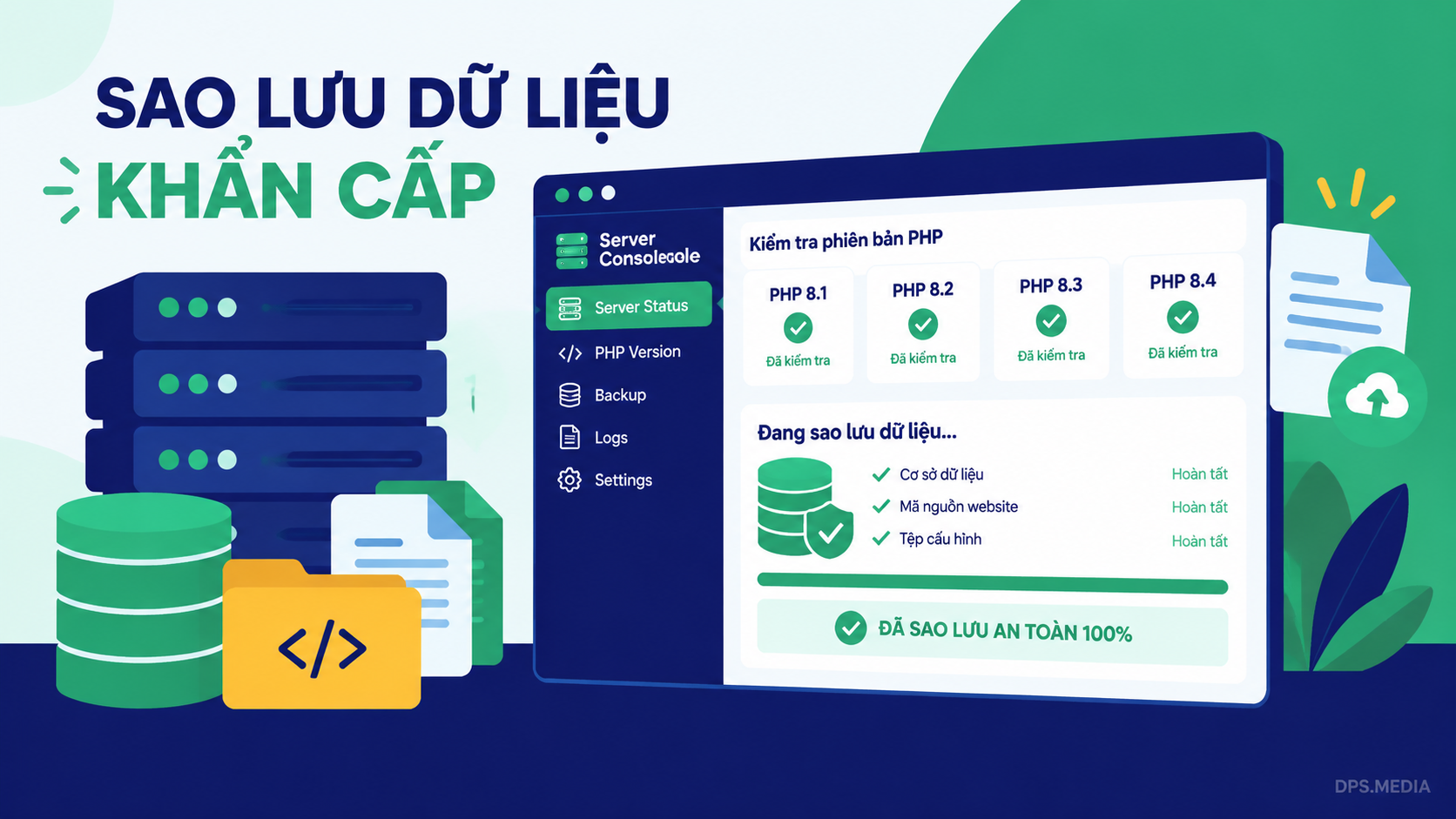
3.2. Back Up All Databases & Source Code (Full Backup)
Never run server software update commands without first creating a complete backup. A standard backup procedure should include:
- Database: Safely export an SQL dump file or create an instant snapshot from the server control panel.
- Source Code: Compress the entire directory
public_htmlor commit the current code version to a Git repository. - Create a VPS Snapshot: If your server supports snapshots, create a full-disk snapshot at 8:30 PM tonight so you can restore the system within 2 minutes if a library conflict occurs.
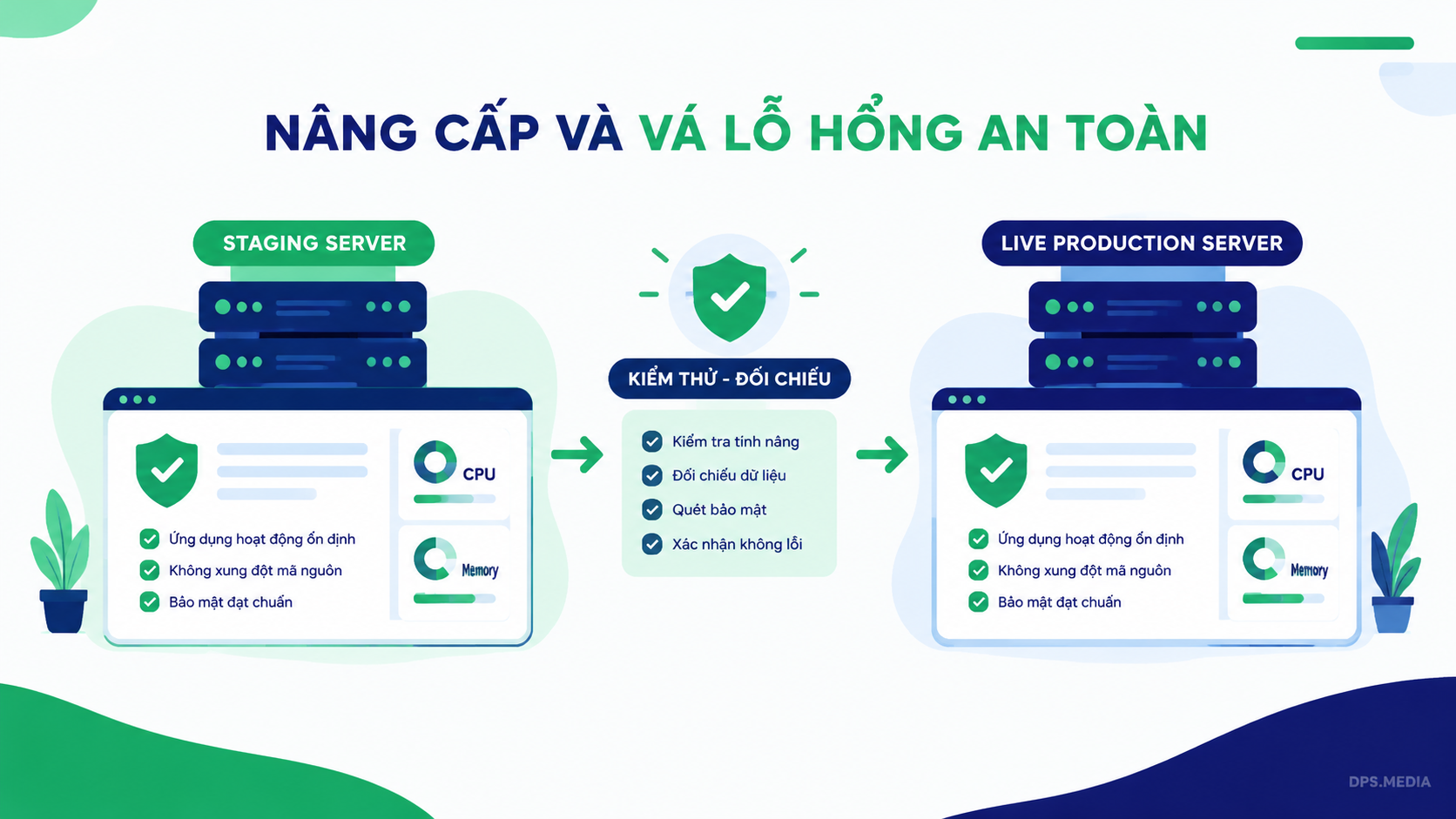
3.3. Set Up a Staging Environment
For websites with numerous plugins or complex custom code, upgrading PHP directly on the Production server may cause a blank page error (500 Internal Server Error) due to conflicts with removed functions. Prepare a Staging copy in advance to test the patch during the first 5–10 minutes before deploying it across all systems.
4. Four-Step Procedure for Safely Updating PHP After 9:00 PM
When the clock strikes 9:00 PM and the homepage of php.net officially publishes the patched source code, follow this standard operating procedure:
- Step 1 – Update Application Package Repositories: Wait for reputable package maintainers such as Ondřej Surý (Ubuntu/Debian) or Remi Collet (CentOS/AlmaLinux) to complete building the installation packages:
# Dành cho Ubuntu / Debian sudo apt update && sudo apt --only-upgrade install php8.2-fpm php8.2-cli # Dành cho Docker docker compose pull && docker compose up -d - Step 2 – Restart PHP and Web Server Services: After installation is complete, restart the processing services so the patches take effect immediately:
sudo systemctl restart php*-fpm sudo systemctl reload nginx # hoặc systemctl reload litespeed / apache2 - Step 3 – Check Activity Logs (Error Logs): Monitor the server log files in real time to detect unusual warnings early:
tail -f /var/log/php*-fpm.log tail -f /var/log/nginx/error.log - Step 4 – Verify Frontend Functionality: Test core business workflows: homepage, shopping cart, checkout, and contact form submission.
5. Server Management & Website Security Services at DPS.MEDIA
For busy business owners without a dedicated technical team on overnight standby, attempting to run terminal commands independently carries significant risks of website downtime or customer data loss.
At DPS.MEDIA, we provide comprehensive management solutions:
- 24/7 Cybersecurity Monitoring: Automatically scan for and patch zero-day vulnerabilities, configure a Web Application Firewall (WAF), and filter and block malicious botnet traffic.
- Server Performance Optimization: Advanced configuration of OpenLiteSpeed, Redis Object Cache, and PHP OPcache to help websites load in under 1 second.
- Multi-Region Data Backup (Multi-cloud Backup): Store independent backups daily on separate cloud infrastructure, ensuring 100% recovery capability in any incident.
Contact our team of technical experts today for assistance with checking and securing your website before tonight's patch release.
DPS.MEDIA JOINT STOCK COMPANY
📍 Address: 56 Nguyen Dinh Chieu, Tan Dinh Ward, Ho Chi Minh City
📞 Hotline / Zalo: 0961 545 445
✉ Email: marketing@dps.media
🌐 Website: https://dps.media
🏢 Tax identification number: 0318700500 | VCB: 1051160909
Ý kiến bạn đọc (9)
Đăng nhập để bình luận
Đăng nhập nhanh 1-chạm bằng Google để chia sẻ ý kiến của bạn về bài viết.
Bằng cách đăng nhập, bạn đồng ý với điều khoản và chính sách cộng đồng.
Chưa có bình luận nào. Hãy là người đầu tiên chia sẻ cảm nghĩ!
Đăng nhập / Tạo tài khoản
Đăng nhập với Google để gửi bình luận và tương tác cùng cộng đồng.
Tiếp tục là đồng ý với điều khoản sử dụng và chính sách bảo mật của DPS Media.