






Every time National Day approaches, e-commerce business groups heat up with a familiar debate that is never easy to settle: Should you turn on vacation mode to take a break or keep yourself on duty at the shop throughout the holiday? The decision selling during the September 2nd holiday is even trickier this year as the holiday lasts 4 – 5 days, coinciding with a period when marketplaces are tightening electronic invoice policies and cutting many major discount codes.
Those who choose to close the shop can breathe a sigh of relief by avoiding stuck orders and goods damaged by rain and storms. But those who choose to keep selling worry about losing traffic after the long holiday. So what practical factors should shop owners consider before switching their store status?
{
“@context”: “https://schema.org”
“@type”
: “VideoObject”,
“name”: “Selling during the September 2 holiday: Should you close your shop for a break or keep processing orders throughout the holiday?”,
“description”: “The extended September 2 holiday puts online sellers in a dilemma: they fear losing traffic if they close their shops, but worry about order backlogs and returns if they continue selling. An analysis of costs, operational risks, and optimization strategies based on real-world experience.”,
“thumbnailUrl”
: [
“https://img.youtube.com/vi/rDbzwF9REkg/maxresdefault.jpg”
“https://img.youtube.com/vi/rDbzwF9REkg/hqdefault.jpg”
],
“uploadDate”
: “2026-08-20T21:12:00Z”,
“duration”
: “PT1M8S”,
“embedUrl”
: “https://www.youtube.com/embed/rDbzwF9REkg”
}
A 5-day holiday: The invisible pressures of keeping up with orders
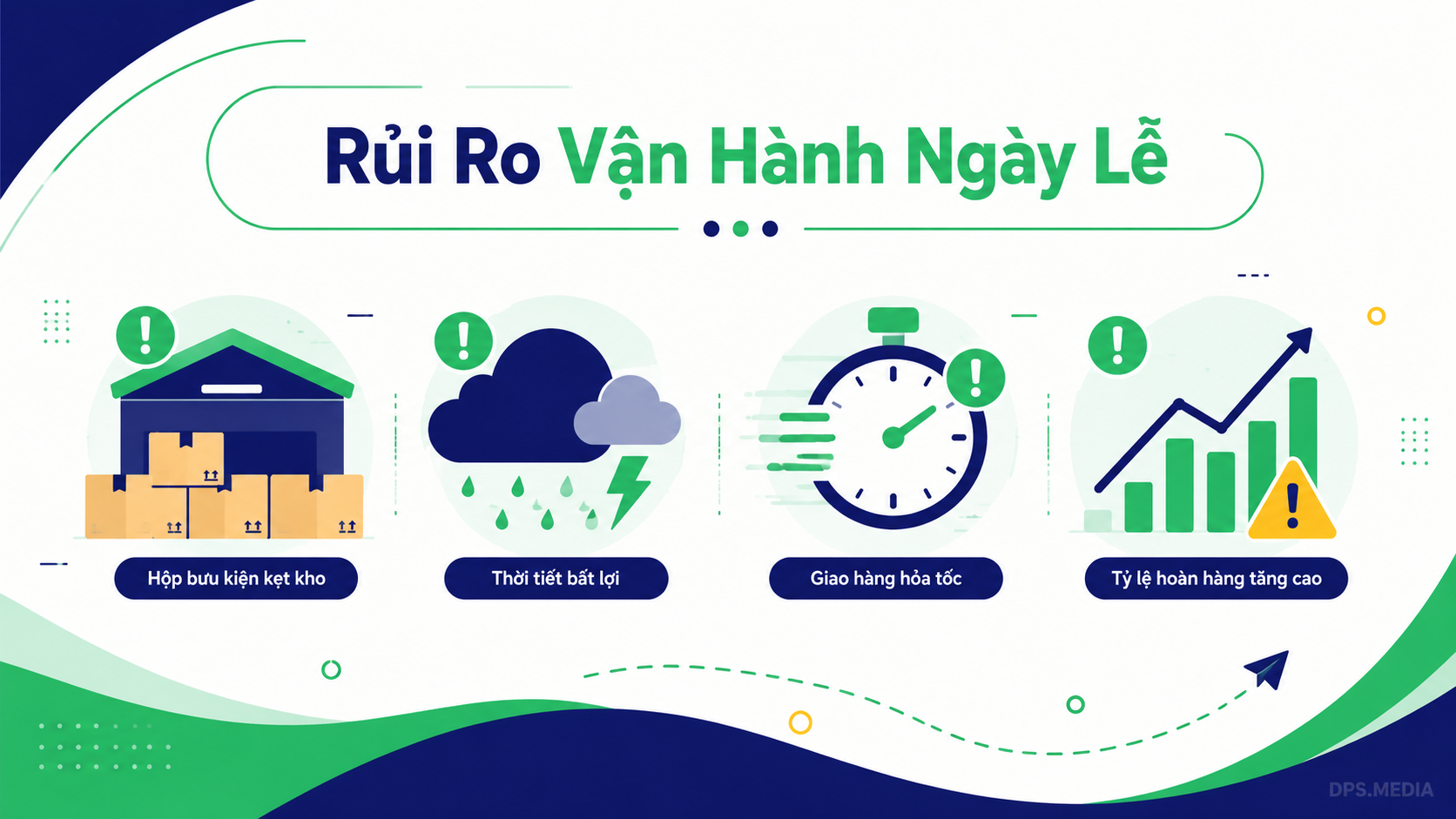
3 major operational risks when keeping your shop processing orders throughout the September 2 holiday
Many people think that customers have more free time during holidays and spend more time browsing their phones, so orders should pour in. In reality, marketplaces such as Shopee, TikTok Shop, and Lazada show a completely opposite picture for most conventional product categories.
Customers flock to travel or return to their hometowns to visit family. Demand for household goods, office fashion, and school supplies clearly slows down. When buyers are not at their usual delivery addresses, the risk of orders being held up at post offices increases dramatically.
Besides weaker purchasing power, the following 3 major operational barriers make many experienced shop owners decide to “let go” and take a break:
- Express delivery crisis: The holiday is a time when many shippers take time off to reunite with their families. Customers place express orders demanding delivery within 2 hours, but the shop struggles to find a driver, sweating as no one accepts the order. Late orders are automatically penalized by the marketplace through reduced ratings or a lower on-time order fulfillment rate.
- Stormy weather & risk of goods getting wet and damaged: Early September often coincides with tropical depressions and widespread thunderstorms. Shippers struggle to make deliveries, packages can easily get soaked, and dented or damaged packaging can lead customers to give a 1-star rating without hesitation.
- Order cancellation & return costs: Orders sent out can get stuck at transit warehouses for 3 – 4 days. By the time the holiday ends and the goods arrive, customers may have returned to work or changed their minds and no longer need them. The shop bears the full two-way shipping costs plus packaging expenses.
According to Duy, the owner of Minh Khang Household Goods): “Last year, I kept the shop open for 4 days during the September 2nd holiday. I received 85 orders, but after the holiday, 16 orders were returned because customers had gone back to their hometowns and had not returned in time, so the postal carrier tried three times without success. In the end, the profit was not enough to cover the return shipping fees and the cost of packing tape and cardboard boxes.”
The fear of closing the shop: Traffic drops and the challenge of maintaining the store
Despite facing many risks, quite a few shop owners still insist on staying open. The biggest reason is not necessarily the profit during these days, but the fear of losing algorithmic visibility.
E-commerce marketplace algorithms operate based on data continuity. When you turn on vacation mode, products temporarily disappear from search results and category pages. When you reopen after 5 days, the shop is like a vehicle with a dead engine that needs time and an advertising budget to get its traffic engine running again.
In addition, for self-employed sellers burdened by fixed premises and staffing costs, stopping sales for 5 days means a break in cash flow. As a 34-year-old community member shared in a seller community: “I am in the phase of working hard to support my family, so taking one day off means losing part of my income. That is why I only dare to take September 2nd itself off.”
Comparison table: Should you close the shop for the holiday or keep selling?
To make the right decision, you can refer to the evaluation table below for each product category and operating model:
| Criteria | Recommended: Turn On Vacation Mode | Recommended: Keep Selling |
|---|---|---|
| Industry | Bulky goods, ornamental plants, fresh food, fragile items. | Outdoor travel gear, souvenirs, beachwear, digital products. |
| Staff & Warehouse | Solo shop with 1-2 people; warehouse staff completely return to their hometowns for the holiday. | A rotating team is on duty; the fulfillment warehouse automatically receives orders 24/7. |
| Shipping channels | Highly dependent on same-day intra-city express delivery. | Fast/Standard orders with familiar postal carriers collecting goods regularly every morning. |
| Business goals | Take a break, recharge, and prepare for the 9.9 Super Sale and Q4 campaigns. | Maintain chat response ratings and hold the Top Selling ranking on the marketplace. |
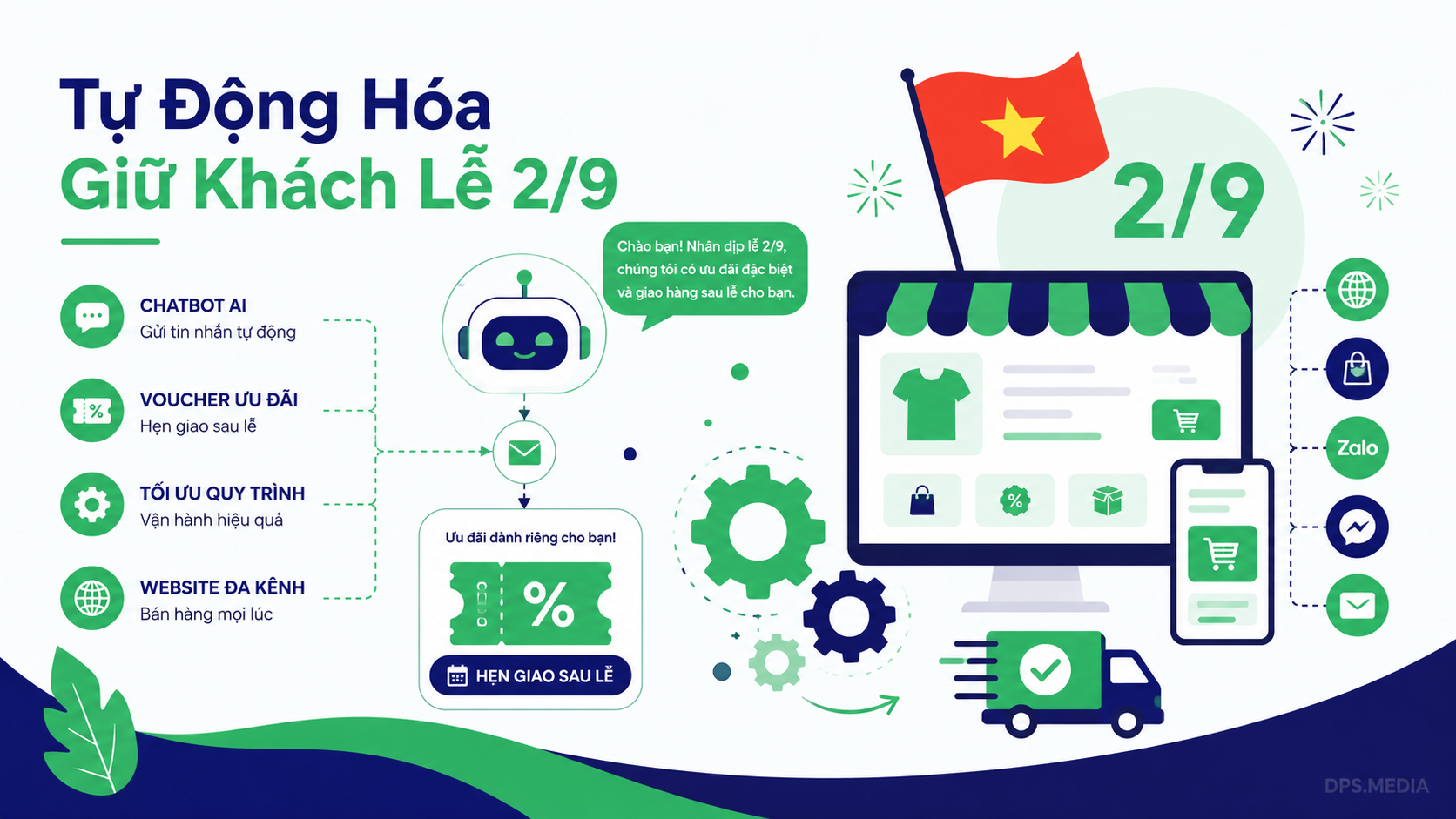
Automated selling solution combining Pre-order and AI Chatbot with DPS.MEDIA
The “Best of Both Worlds” solution: Smart selling without being on duty 24/7
If you want to rest without completely losing customers and traffic, apply a combined automated selling strategy:
1. Extend the order preparation time instead of closing the shop
Instead of turning on vacation mode and making all product links disappear, you can switch products to Pre-order (7 – 15 days) or increase the order preparation time in the Seller Support Center. Customers can still view and place orders normally, while the marketplace will not count orders as late if they are shipped after the holiday.
2. Set up an automated AI Chatbot script to retain customers
Set up an automatic message that clearly states: “Thank you for visiting our shop! Due to the National Day holiday on September 2nd, your order will be carefully packaged and shipped on September 3rd. As a thank-you for your patience, the shop would like to offer you a 10% discount voucher [MÃ_GIAM_GIA].” This approach maintains a 100% chat response rate while eliminating the psychological tendency to cancel orders because of the waiting time.
3. Build an independent sales channel – Reduce dependence on marketplaces
Being at the mercy of holiday regulations, rising marketplace fees, or the hassle of issuing electronic invoices in bulk is the clearest reminder: Businesses should not put their entire fate into a single marketplace channel.
Owning your own ecosystem with an SEO-standard e-commerce website and an automated multi-channel management process will give you 100% control over operating hours, promotional policies, and customer data.
At DPS.MEDIA, We provide a comprehensive solution ranging from SEO-standard website design and professional fanpage management to n8n process automation integration and a 24/7 AI customer care assistant. This helps your store operate smoothly and close orders sustainably even during long holiday periods.
Contact our hotline now 0961545445 or visit DPS.MEDIA (56 Nguyen Dinh Chieu, Tan Dinh Ward, District 1, Ho Chi Minh City) for consultation on multi-channel marketing strategies and to boost sales for the year-end Mega Sale season!
Ý kiến bạn đọc (9)
Đăng nhập để bình luận
Đăng nhập nhanh 1-chạm bằng Google để chia sẻ ý kiến của bạn về bài viết.
Bằng cách đăng nhập, bạn đồng ý với điều khoản và chính sách cộng đồng.
Chưa có bình luận nào. Hãy là người đầu tiên chia sẻ cảm nghĩ!
Đăng nhập / Tạo tài khoản
Đăng nhập với Google để gửi bình luận và tương tác cùng cộng đồng.
Tiếp tục là đồng ý với điều khoản sử dụng và chính sách bảo mật của DPS Media.