




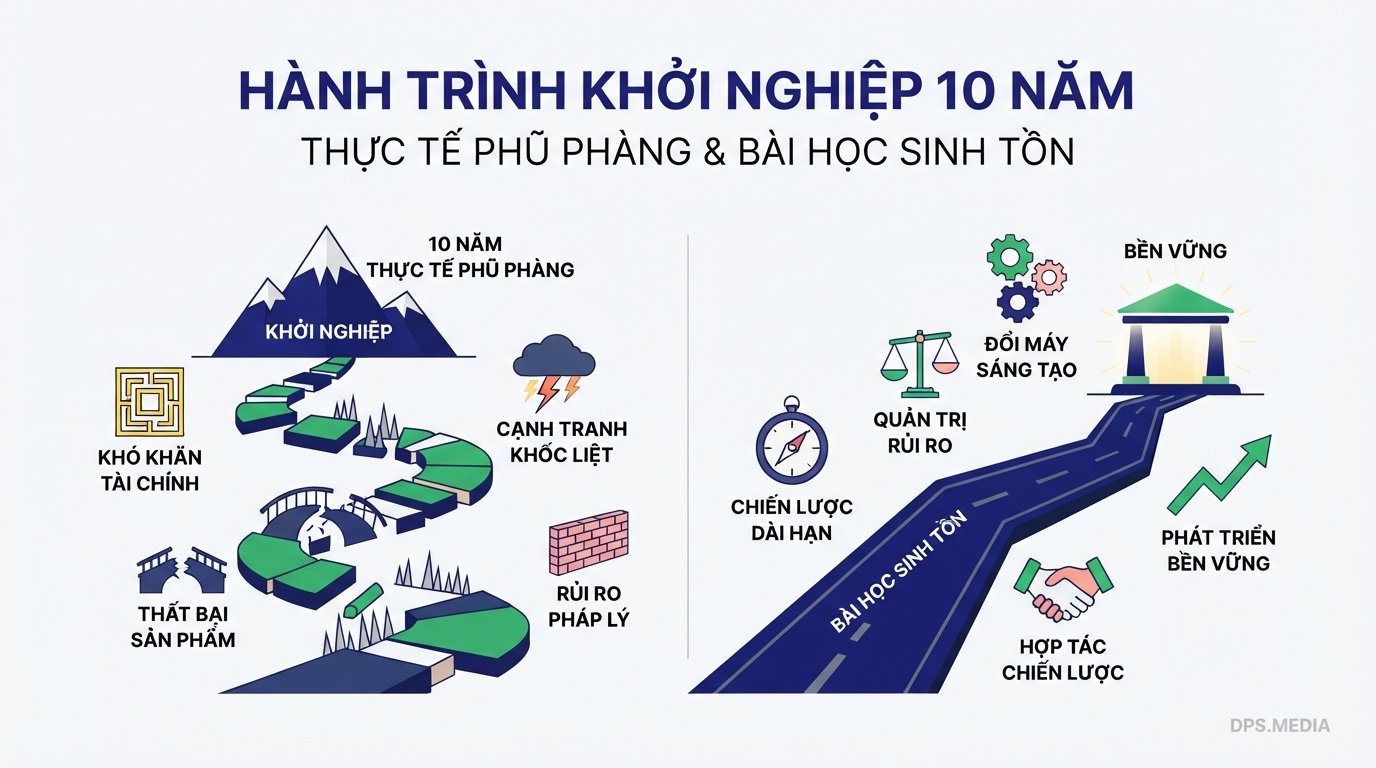

Many people step into startup journey with a dreamy mindset. But the reality of the business world is always harsher than what is written in books: this is not a 1-2 year sprint but a persistent journey lasting at least 10 years. Without careful preparation in both internal strength and mindset, the prospect of giving up is hard to avoid.
1. 90% of Startups Begin Due to Temporary Inspiration
Reality shows that most founders start businesses not from a well-structured plan but from spontaneous emotions:
- Being persuaded or challenged: Seeing friends making waves in business, hearing encouragement or provocation, then becoming curious and jumping in to try.
- Fear of regret: Having a sudden brilliant idea and worrying that if they do not act immediately, someone else will take it.
- Overconfidence: Seeing competitors sell successfully and assuming their own abilities are more than enough to do better.
- Pressure from employment: Being tired of restrictive office life, mistakenly believing that being self-employed will automatically bring time freedom and quick wealth.
- Romanticizing business: Every financial or operational metric is painted in rosy colors through classic books.
Having the spirit to take risks is valuable. However, starting up in a subjective state without preparing management knowledge will quickly put a business in a dangerous situation.
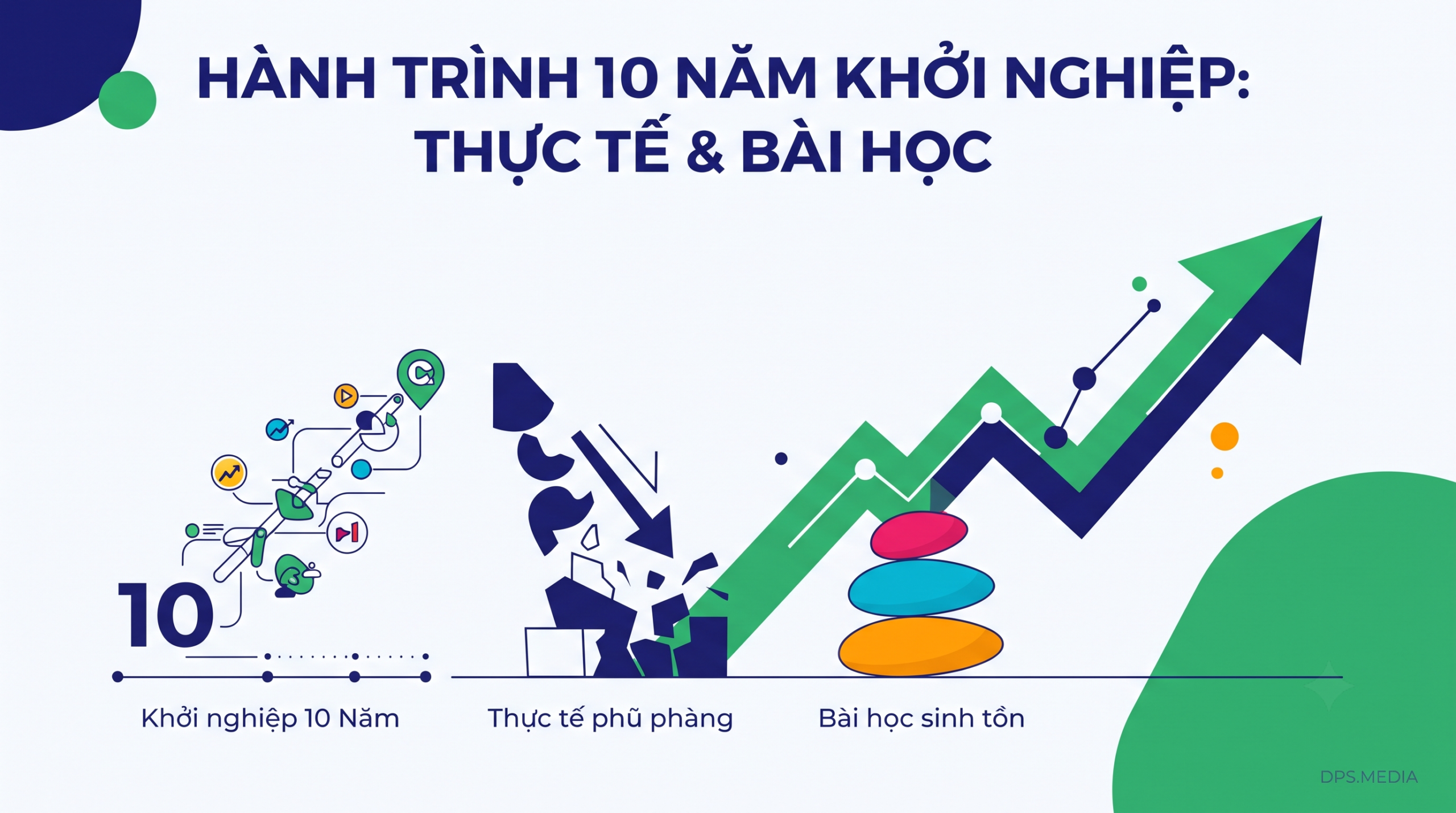
2. 80% Leave the Game in the First Year
The picture of the first year is often not what was expected. About 80% of people who start businesses have to sadly close their stores or dissolve their companies because of a series of overwhelming pressures:
The more they work, the more stuck they feel. Costs arise every day but revenue cannot cover the break-even point. Problems never considered before such as legal procedures, tax declarations, internal disputes, or violation penalties suddenly appear. Anxiety about an uncertain future exhausts many people and makes them say: “If I had known, I would have just stayed employed”.
10-Year Startup Journey: 3 Life-or-Death Deciding Stages
Based on experience co-founding and operating more than 15 large and small businesses, the first 3 years are the turning point that determines whether a brand can survive the 10-year journey. Many cases are lucky enough to find a profitable opportunity in the first year, but collapse immediately when market changes occur in the second or third year. Conversely, if a business struggles for 36 months without finding a way out, stopping to change direction is a wise choice.
The first 3-year stage: Break, fix, and survive
The ultimate goal of the first 3 years is not to create a lot of money, but to keep the business alive to complete 4 pillars:
- Finding a business model and a product that meets the right market needs (Product-Market Fit).
- Building a core team and a connected company culture.
- Establishing a temporarily stable operating system to minimize manual errors.
- Defining a growth formula capable of scaling.
Having too much money in the early stage can sometimes be a double-edged sword that causes founders to waste money unnecessarily. Learning to operate with limited capital and applying Growth Hack thinking is the strongest foundation. These foundations must be shaped by hand and cannot simply be bought with money.
The next 5-year stage: Expansion and profit optimization
After passing the narrow 3-year gate, the next 5 years are when the business focuses on scaling up and achieving financial results:
- Focus on building a reputable brand identity and expanding across strong distribution channels.
- Nurture a loyal customer base while owning a highly practical Marketing & Sales team.
- Automate processes, optimize operating costs, and accumulate both fixed assets and business knowledge assets.
Refer to more research on business startups around the world to see that sustainable development models always require a sufficiently long accumulation period.
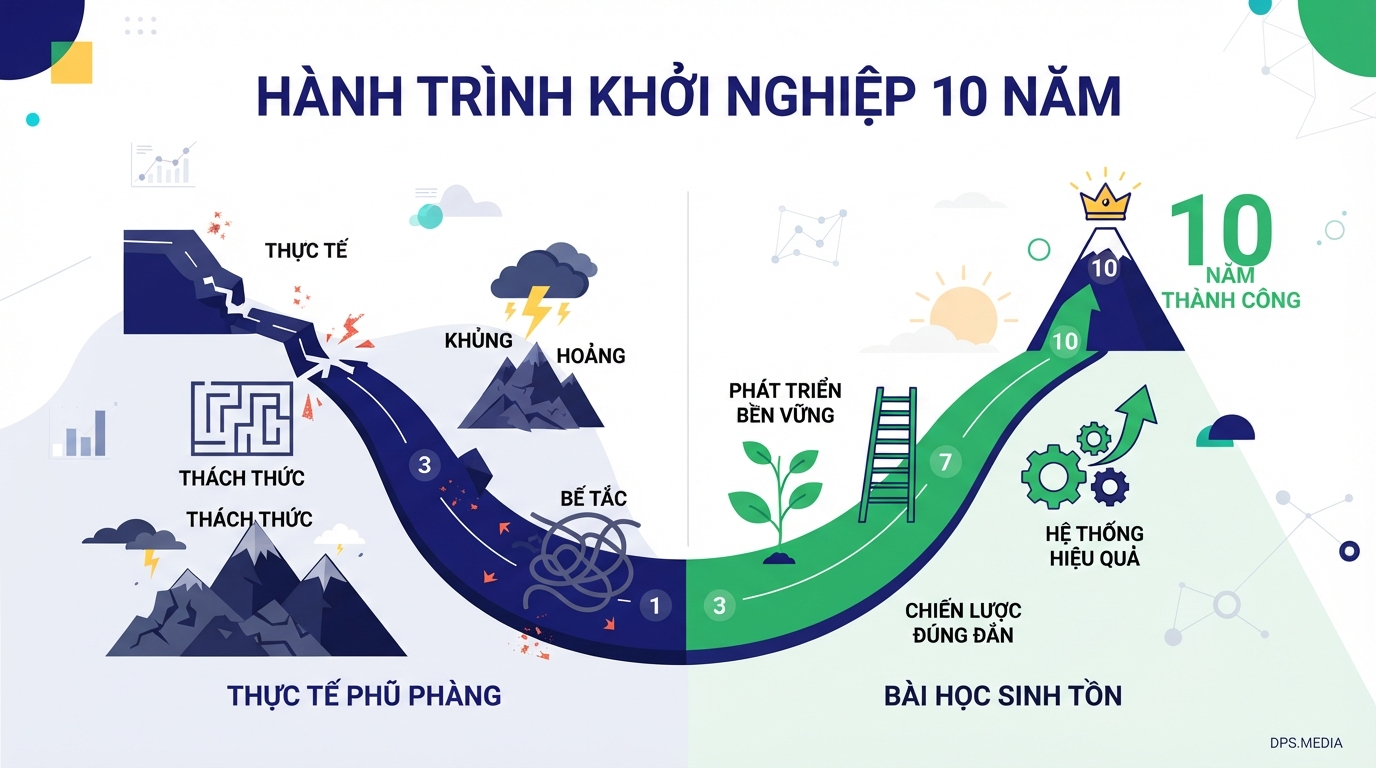
3. Secrets to Maintaining Motivation When Starting Up
To avoid being knocked down by initial pressure, entrepreneurs need to seriously answer 4 core questions from the first day they press the start button:
1. Why am I starting a business? Is it for money, reputation, personal passion, or solving a social mission?
2. What are the actual resources? Clearly identify personal strengths, weaknesses, and competitive advantages.
3. How is the market moving? Deeply understand the competitive landscape and industry trends.
4. What challenges are ahead? Create response scenarios for financial risks and cash flow issues.
Besides that, participating in networking environments such as VCCA Community will help founders shorten their learning gap. Through numerous real Case Studies—from agricultural business, fashion sales to complex M&A fundraising deals—you will find your own reflection, define a clear path, and gain more fighting energy.
If you are looking for solutions to break through sales and optimize advertising costs for a new business, refer to solutions from DPS.MEDIA's comprehensive Marketing services. DPS's expert team is always ready to provide direct consultation through the hotline 0961545445.
Ý kiến bạn đọc (9)
Đăng nhập để bình luận
Đăng nhập nhanh 1-chạm bằng Google để chia sẻ ý kiến của bạn về bài viết.
Bằng cách đăng nhập, bạn đồng ý với điều khoản và chính sách cộng đồng.
Chưa có bình luận nào. Hãy là người đầu tiên chia sẻ cảm nghĩ!
Đăng nhập / Tạo tài khoản
Đăng nhập với Google để gửi bình luận và tương tác cùng cộng đồng.
Tiếp tục là đồng ý với điều khoản sử dụng và chính sách bảo mật của DPS Media.