




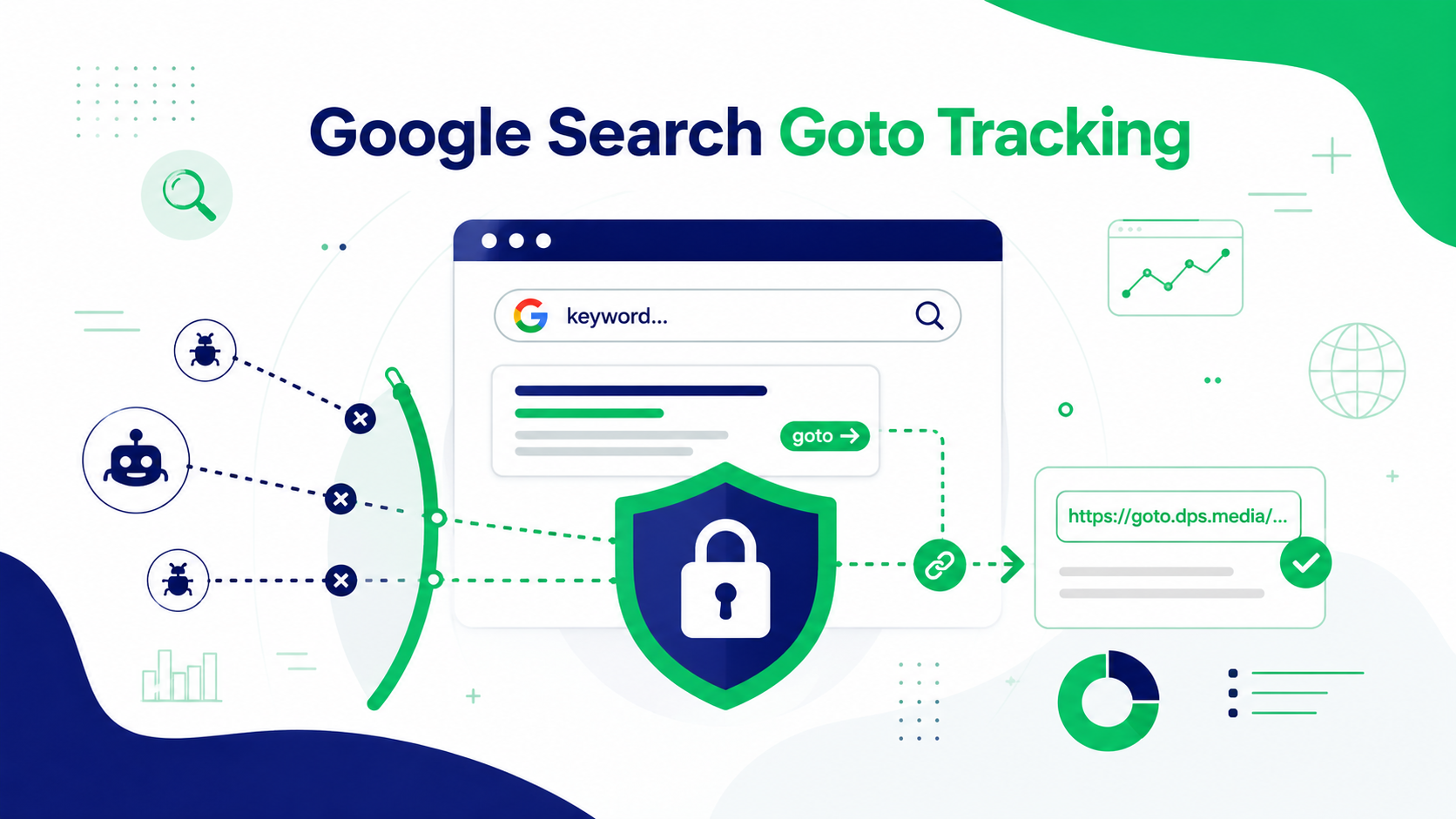

Google has officially confirmed the widespread rollout of a mechanism google search goto tracking on the search engine results page (SERP). Instead of displaying the destination link directly as before, all links on the results page are now wrapped through a server-side redirect URL in the form google.com/goto.... This move aims to protect search resources from the wave of data-scraping bots and new-generation AI tools.
A Google representative confirmed this change: "We have a long history of applying technical measures against evolving forms of abuse, and we regularly take steps to protect both our services and users."
How does the google search goto tracking mechanism work?
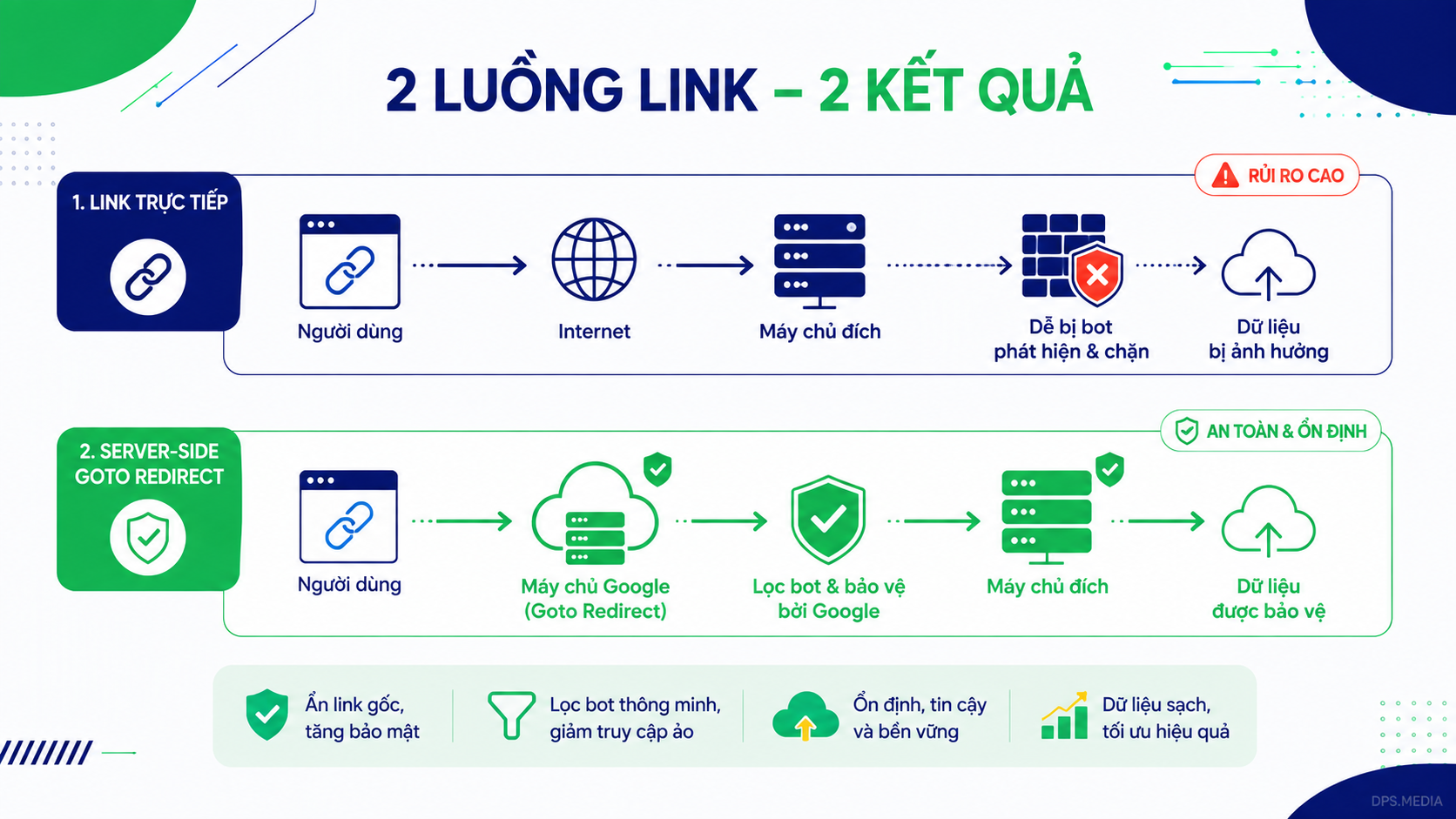
Before this update, Google used direct links combined with JavaScript events (mousedown or ping tracking) to monitor users' click behavior. With the old structure, data-scraping software only needed to read the returned HTML code to accurately extract the URL of each top-ranked website.
However, the new mechanism has completely changed the game. When a user hovers over or clicks a search result, the actual link is converted into the format https://www.google.com/goto?url=... accompanied by complex encoded strings.
According to technical analysis by Derek Perkins, founder of the Nozzle rank-tracking tool, as reported by Search Engine Roundtable, Google began testing this feature in July 2026 and has now covered nearly 100% of residential IP providers.
The key point is that the character strings in the goto parameter cannot be decoded offline. Any party wanting to know the actual destination page must send a real HTTP request to follow the entire redirect chain from Google's servers.
Why is Google taking such strong measures against data-scraping bots and AI?
It is not difficult to see that Google's top priority with this upgrade is to establish a defensive barrier against the wave of large-scale data exploitation:
- Blocking AI tools from "illegally scraping" results: Numerous AI search tools and large language models continuously extract Google's answers, snippets, and rankings in real time to serve their users without sharing traffic or paying licensing fees.
- Increasing proxy and request costs by dozens of times: A typical search results page contains 50 to 100 secondary links. If a bot previously needed only 1 request to retrieve all the data for 1 keyword, it now has to make as many as 50 – 100 separate redirect requests. This severely reduces collection speed and causes proxy server operating costs for data scrapers to skyrocket.
- Maintaining absolute control over click-behavior data: Processing navigation entirely at the server layer (server-side redirect) allows Google to minimize the situation where browser extensions block tracking on the client side.
Practical impact on the SEO industry and Digital Marketing professionals
The emergence of the new mechanism brings both technical disruption and opportunities to filter the market:
- Rank Trackers: SaaS platforms specializing in keyword rank tracking such as Ahrefs, SEMrush, or internal tools will have to adjust their scraper architecture. Rank updates may take slightly longer, and service package fees may increase modestly due to the cost of decoding redirect links.
- Custom data-scraping scripts: If your business is maintaining simple Python or Puppeteer scripts to monitor competitors every day, these scripts will likely keep receiving links
google.com/gotoinstead of the real URL, leading to inaccurate reports. - Organic Traffic: For real users browsing the web in a standard browser, the redirect process takes only a few milliseconds and is completely transparent. Therefore, actual traffic and the website's SEO rankings are not negatively affected.
Smart adaptation strategies for businesses
Instead of trying to find ways to "break" Google's increasingly dense technical barriers, businesses and marketing professionals should proactively change their working methods:
First, prioritize extracting data from official sources such as the Google Search Console API and Google Trends API. Data from official APIs is always clean and accurate, and never faces the risk of IP blocking or changes to the SERP structure.
Second, apply Automation Workflows combined with AI to deeply analyze on-site user data instead of focusing solely on tracking every ranking fluctuation each hour.
Third, focus on the core essence of SEO: building Topical Authority, optimizing customer experience, and fully satisfying readers' search intent.
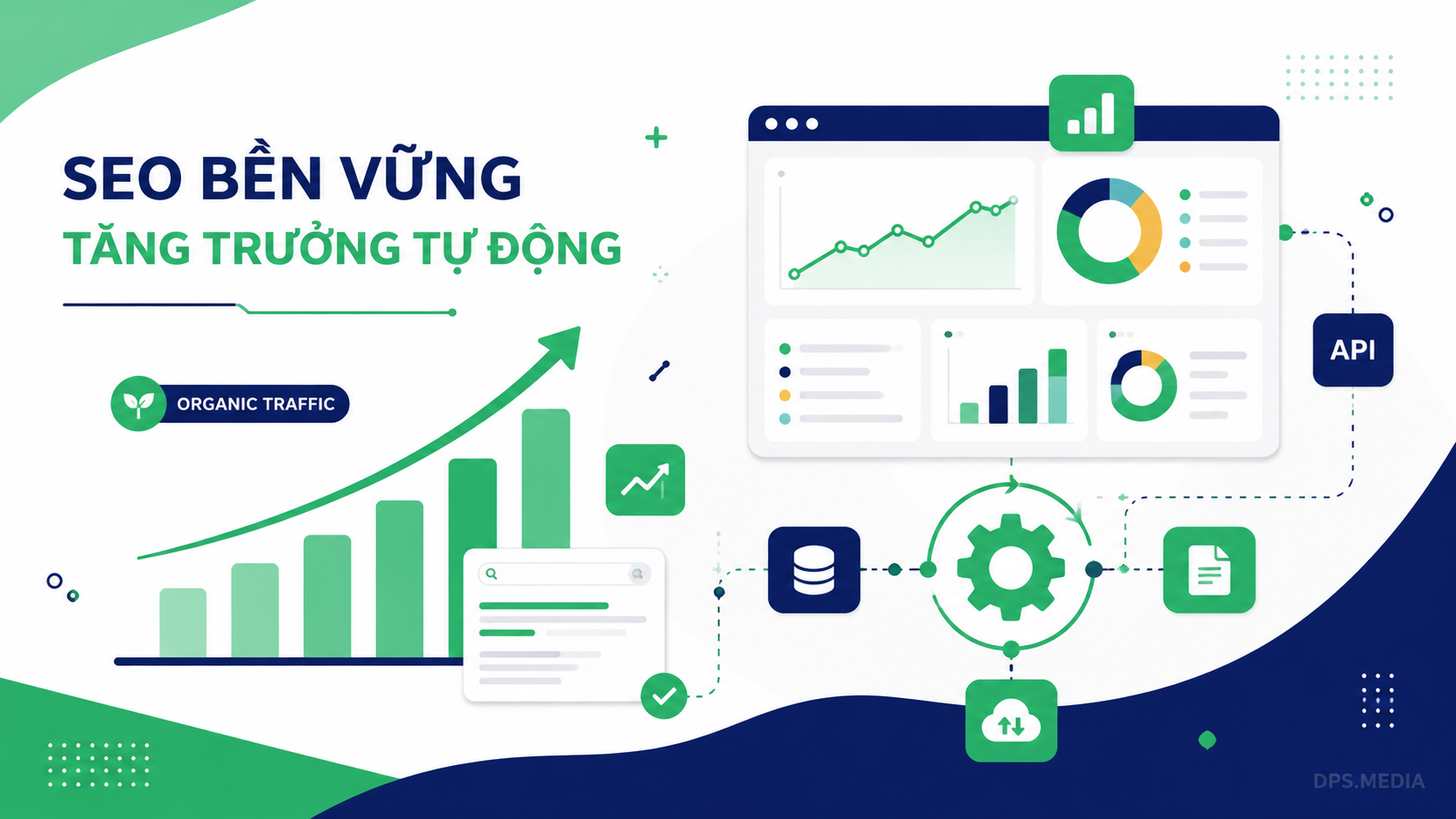
Partner with DPS.MEDIA to build a solid SEO & Automation foundation
In a context where search engines are constantly updating their algorithms and tightening their technical infrastructure, having a systematic and sustainable Digital Marketing strategy is the key to helping businesses maintain their competitive advantage.
At DPS.MEDIA, we provide comprehensive, properly structured SEO services, conversion-optimized WordPress website design, and modern AI-powered marketing automation systems, helping businesses accelerate revenue without relying on short-term tactics.
For businesses seeking advice on sustainable SEO strategies and operational automation solutions, please contact us immediately via Hotline/Zalo 0961545445 to receive the most detailed support from the DPS.MEDIA team of experts.
Ý kiến bạn đọc (9)
Đăng nhập để bình luận
Đăng nhập nhanh 1-chạm bằng Google để chia sẻ ý kiến của bạn về bài viết.
Bằng cách đăng nhập, bạn đồng ý với điều khoản và chính sách cộng đồng.
Chưa có bình luận nào. Hãy là người đầu tiên chia sẻ cảm nghĩ!
Đăng nhập / Tạo tài khoản
Đăng nhập với Google để gửi bình luận và tương tác cùng cộng đồng.
Tiếp tục là đồng ý với điều khoản sử dụng và chính sách bảo mật của DPS Media.