




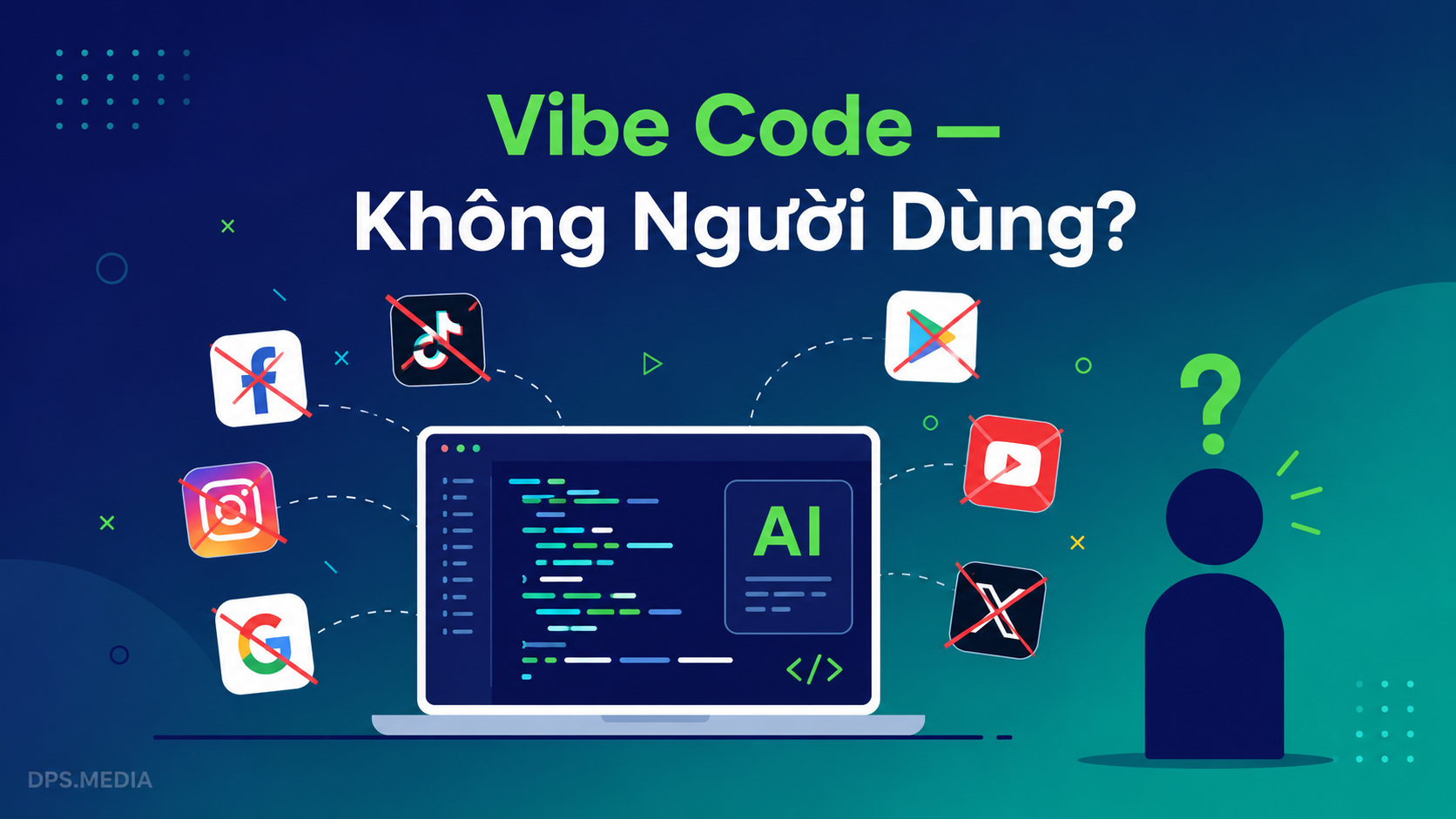

The Vietnamese programming community is having an interesting debate: why do most apps built with Vibe Coding — meaning using AI to write almost all the code — appear and then quietly disappear, with no real users ever visiting them?
This is not a theoretical question. More than 80 comments in the Vietnamese developer community have exposed this issue in a surprisingly straightforward way. And the answer does not lie in AI, does not lie in technology — it lies in the mindset of the product builder.
1. “I Build What I Like — Not What People Need”
This is the most common problem. One comment put it simply: “Doing business for yourself always feels better than selling to others.”
Another user wrote: “Simply because we think people will use it, but in reality they do not need it.”
This trap is very subtle. Vibe Coding makes product building 5–10 times faster. But being faster means: if you are heading in the wrong direction, you reach the wrong destination faster. No one validates the real problem — no user interviews, no validated MVP — then the finished app is just a personal toy.
The classic principle being ignored: sell what people need, not what you currently have.
2. No Business And Marketing Knowledge
Many comments pointed out directly: “No business knowledge. No programming knowledge. It would be strange if they did not fail.”
One developer honestly shared: “I thought just uploading to the App Store would bring customers. Turns out there are only a dozen downloads a day.” Apple takes 30% of revenue, traffic goes to zero, and no one knows how to run ads.
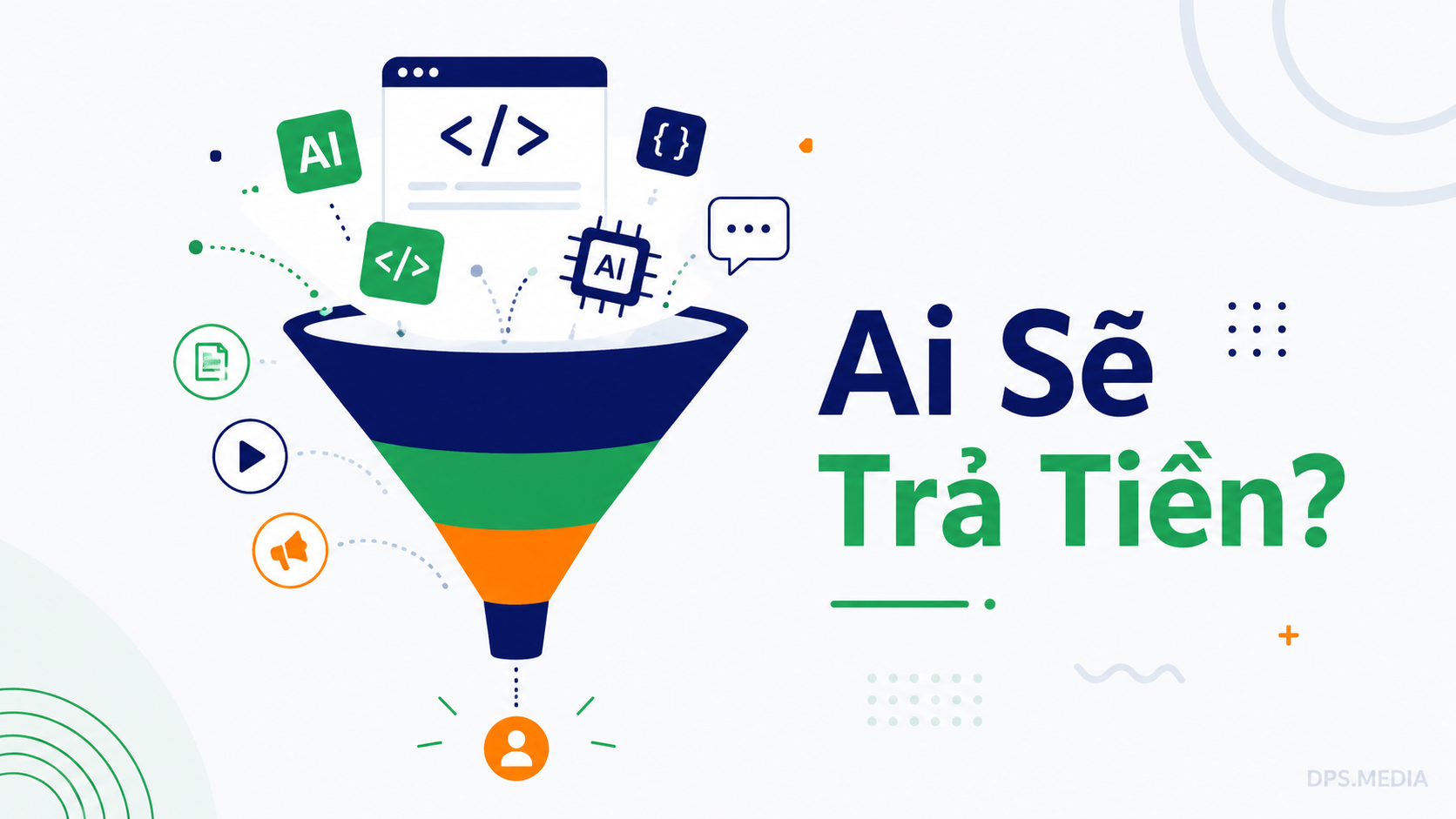
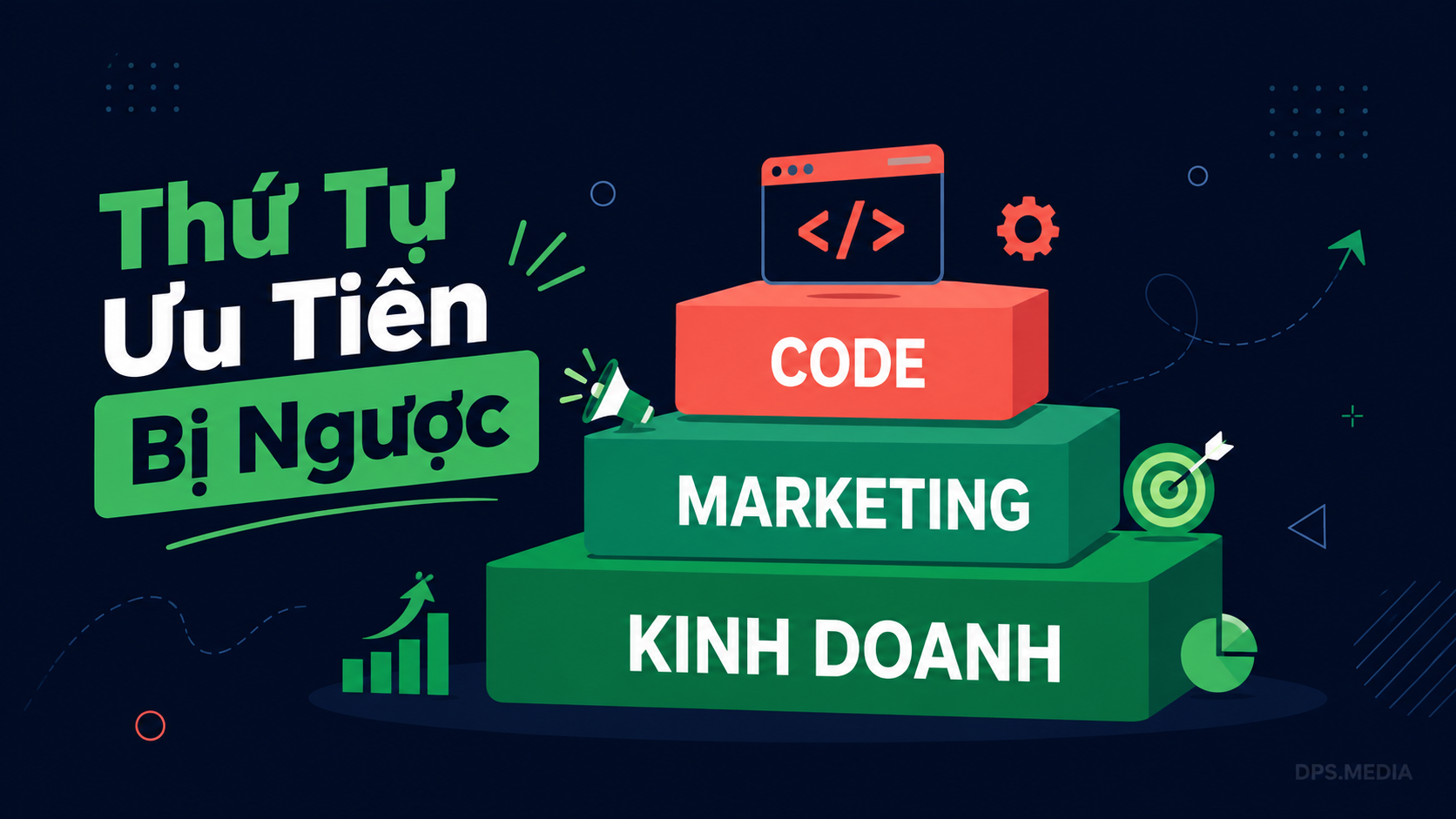
In reality: an app needs an entire ecosystem behind it — sales team, support, QA, marketing, infrastructure. Code is only 20% of the problem. The remaining 80% is business. Vibe Coding reduces that 20% down to 2%, but the 80% business part remains unchanged, and no one takes care of it.
3. The Market Is Saturated With Clone Apps
A practical perspective from the community: “People are too amazed by what AI can do rather than what it can solve for market problems.”
AI allows anyone to create expense trackers, to-do lists, astrology apps, and calendars. The problem: the market already has thousands of such apps — many free and supported by professional teams. When everyone can build those things, the competitive advantage is zero.
As an experienced programmer commented: “If AI can do it, all those developers out there can do it too — they already removed the entry barrier from the start.”
4. Missing The Business Analyst Step — Not Understanding User Insights
A profound opinion from the community: “It is a marketing problem. You do not understand customer insights yet. AI can write code but cannot solve real-world problems.”
Vibe Coding projects often skip the BA (Business Analyst) stage — researching actual user requirements, analyzing behavior, and validating hypotheses. The result: “The app is beautiful, has few bugs, but if it does not match user needs, the app is useless.”
Real users do not follow the scenarios AI suggests — they break every assumption with behaviors no one anticipated.
5. Vibe Coders Do Not Understand What They Are Writing
This is the least discussed risk: “Even the people who vibe code themselves do not know what they are writing.”
When bugs happen — and they will — “everything is perfect until someone discovers a bug and exploits it, then asking AI to fix it may reveal more bugs.”
Vibe Coding works best when it falls into the hands of people who already have real-world experience with that problem. One developer shared: “I used vibe code to rebuild an entire app I had previously built for a client — the code and functionality results were no different. Whether vibe code is good or not depends on the expertise you already have from doing that project in real life.”
6. Vibe Coding Dies More Often — Because It Creates More
An interesting perspective for balance: “Many traditionally coded projects that take a long time still die early. Vibe code dies more often because the speed of creating them is faster, so the number of apps created is larger, making the deaths more visible.”
Startup failure is nothing new. The failure rate of traditional startups is still 90%. Vibe Coding does not make that rate worse — it just makes the failure cycle faster and cheaper, and that is exactly a good thing if you learn something from each failure.
So Who Succeeds With Vibe Coding?
Looking at real cases in the community:
- People with deep domain understanding: Developers who have built that project for real clients before, now using AI to rebuild faster.
- People solving internal needs: Using Vibe Code to automate their own business processes — without needing to convince the outside market.
- People with existing relationships and distribution channels: “Relationships mean having users” — short but true. Distribution beats product.
- People who combine it with marketing teams: Build quickly then run ads, measure conversion, and continuously adjust — do not just hold the app and wait for traffic to come naturally.
Practical Lessons
From the perspective of the Digital Marketing team at DPS.MEDIA, the problem with Vibe Coding is no different from the problem of every digital product: coding is easy, distribution is hard.
Before typing the first AI prompt, you should be able to answer:
- Who will pay for this product? (not “users in general”)
- What solution are they using? Why will they switch to you?
- Which channel will you reach them through? SEO? Ads? Network? Community?
- How much does it cost to acquire 1 paying customer? Do you have enough budget?
Vibe Coding is an excellent tool — like a good hammer. But a good hammer cannot help you build the right house if you do not have a blueprint.
If your business needs a practical Digital Marketing strategy to bring products to the right users — from SEO, Content to multi-channel Ads — please contact DPS.MEDIA for a free consultation. Hotline/Zalo: 0961545445.
Ý kiến bạn đọc (9)
Đăng nhập để bình luận
Đăng nhập nhanh 1-chạm bằng Google để chia sẻ ý kiến của bạn về bài viết.
Bằng cách đăng nhập, bạn đồng ý với điều khoản và chính sách cộng đồng.
Chưa có bình luận nào. Hãy là người đầu tiên chia sẻ cảm nghĩ!
Đăng nhập / Tạo tài khoản
Đăng nhập với Google để gửi bình luận và tương tác cùng cộng đồng.
Tiếp tục là đồng ý với điều khoản sử dụng và chính sách bảo mật của DPS Media.