








Vietnam Fashion Industry Restructuring Report 2026: In-Depth Analysis of Revenue Capacity, Operating Models, and Marketing Shifts
Positioning the Macro Status and Industry Standing of the Textile and Garment Sector on the Global Map

Entering 2026, Vietnam's fashion and textile industry stands at a historic crossroads, where traditional growth drivers based on labor-intensive production are gradually giving way to a complex ecosystem that demands high levels of technology, data, and sustainability.
The macroeconomic picture shows that after the country's total export turnover reached a record US$475 billion in 2025 (equivalent to 17% growth over the same period last year), the macroeconomic target set by the Government for 2026 is to add approximately US$38 billion to total export value, aiming to set a new record.
To achieve the ambitious target of $550 billion in total import-export turnover in 2026, the economy must sustain average monthly export revenue of $45 to 46 billion.
In this overall picture, the textile and garment industry plays an irreplaceable role as one of the core pillars.
After a long period of negative impacts from global supply chain disruptions and the 18.1% decline in the global apparel and footwear market (down to USD 1.45 trillion) in 2020, Vietnam's textile and garment industry has demonstrated extraordinary resilience.
At the end of 2025, the industry's export value had recovered strongly, reaching approximately USD 46 billion, marking a compound annual growth rate (CAGR) of about 5.6% over the period from 2021 to 2025.
Based on this recovery momentum, independent industry surveys forecast that textile and garment export turnover will approach US$48 billion by the end of 2026, while the industry's official strategy has set an ambitious export target of US$50 billion.
This recovery and growth is not merely a mechanical increase in volume but also affirms Vietnam's solid position as the world's third-largest apparel exporter, trailing only two manufacturing superpowers, China and Bangladesh.
Notably, Vietnam currently holds a 6.4% share of global apparel exports, a figure reflecting core competitiveness forged over decades.
The analysis chart above visually illustrates the strategic crossroads that Vietnam's fashion industry faces in the new economic cycle.
With the average wage of garment workers at approximately $300/month, labor costs in Vietnam are currently three times higher than the $95/month rate in Bangladesh and twice as high as the $145/month rate in India.
This factor indicates that Vietnam can no longer, and cannot, maintain an absolute competitive advantage based on cheap labor.
When profit margins of manufacturing enterprises are severely squeezed by rising input costs and tough tariff barriers from the US market (which imposes tariffs of 20% to 40% on apparel imports from Vietnam), growth momentum must undergo a thorough shift.
The production system is being restructured from a “volume-based growth” model to a “higher value-added growth” model.
Market data shows that this structural shift has begun to yield encouraging results.
Despite bearing higher labor costs, labor productivity in Vietnam's apparel sector continues to grow at an average rate of 3.5% per year, reflecting improvements in management skills and the application of technology on factory floors.
More importantly, on the international stage, Vietnam has officially surpassed Bangladesh in the production and export of high-end specialized apparel, while also establishing the number-one position in speed-to-market among all Asian countries exporting to the core U.S. market.
Financial Structure, Investment Capital, and Macroeconomic Spillover Effects
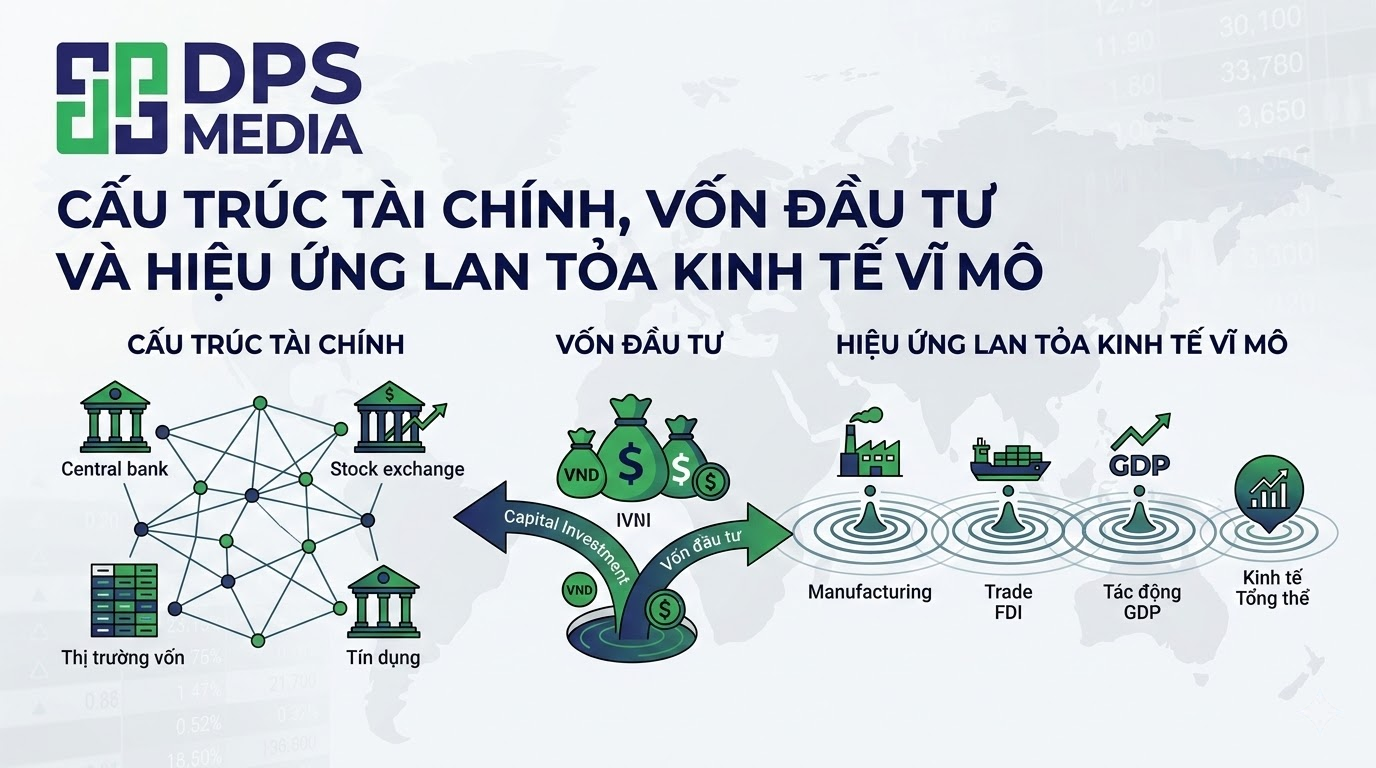
The importance of the textile, garment, and fashion industry lies not only in export turnover but also in its deep roots in the country's macroeconomic structure.
Quantitative economic models indicate that the garment industry currently directly contributes approximately 15% to Vietnam's total Gross Domestic Product (GDP), while accounting for 16% of the total national industrial output value.
Amid a volatile global economy, the industry continues to serve as a shield protecting the country's balance of payments, generating a massive trade surplus of up to USD 20 billion per year.
This inherent strength is reinforced and sustained by a steady, continuous flow of Foreign Direct Investment (FDI).
Each year, the textile and garment industry attracts about USD 2 billion in new FDI, with foreign-invested enterprises currently accounting for as much as 60% of the country's total textile and garment export value.
However, this industry does not operate as an isolated island; rather, it creates a broad network of multiplier effects on the domestic economic structure.
Macroeconomic analysis data indicates that the multiplier effect of the garment industry on domestic services reaches 1.8x, meaning that every US$1 billion in value created within the textile and apparel ecosystem will generate an additional US$1.8 billion in value across supporting industries, trade and services.
This ripple effect is most clearly reflected through the lens of logistics and transportation.
Secondary logistics activities alone, serving the movement of raw materials and finished textile and garment products, have generated a revenue segment of up to US$5 billion.
This massive volume of goods means that garment freight transport accounts for as much as 12% of total national road freight volume, sustaining the livelihoods of tens of thousands of small and medium-sized transport enterprises.
In terms of social welfare, the industry's capacity to absorb labor remains remarkably impressive: for every additional USD 1 billion in export value, the industry directly creates 150,000 to 200,000 new jobs, playing a pivotal role in poverty reduction and maintaining social welfare stability in urbanizing areas.
In terms of corporate finance, the financial health of textile and garment companies is assessed as relatively solid.
The average debt-to-equity ratio of enterprises in the industry remains at a safe level of 1.2 for listed public companies.
This moderate level of financial leverage gives businesses enough room to access long-term borrowing to invest in deep technology.
The apparel industry's market capitalization also accounts for as much as 18% of total market capitalization on the Ho Chi Minh City Stock Exchange (HSX), reflecting institutional investors' solid confidence in the industry's long-term profitability, despite short-term fluctuations in the economic cycle.
The national budget also directly benefits from the industry's prosperity, with export tax revenue from garments contributing approximately 4% of total budget revenue.
To sustain growth momentum and attract high-quality capital flows, the Government continues to maintain flexible corporate income tax incentives (Corporate Income Tax – CIT), ranging from 10% to 20% depending on whether factories are located in economic zones, industrial parks, or remote areas.
This incentive is a sharp competitive tool that helps Vietnam gain an edge over rival countries in attracting Research and Development (R&D) centers of global fashion brands.
Analysis of Domestic Revenue Scale and Shifting Segment Dynamics

While exports serve as the money-printing engine that shapes industrial scale, the domestic fashion retail market is a fertile ground reflecting the maturity of the consumer economy.
Vietnam's retail market has officially set a new baseline in 2025, with total market size reaching USD 269 billion, the highest level in the past 5 years.
This trajectory is reinforced by consumer services revenue growth holding steady at 9% to 10% year-on-year, driven by young consumers (Gen Z and Millennials), who currently account for 60% to 70% of total foot traffic at shopping centers nationwide.
Within this macro retail landscape, measurements of the size of the domestic fashion market alone vary depending on methodology.
Aggregated statistics indicate that total domestic retail sales of clothing and apparel are estimated to reach USD 6 billion.
However, if only the branded fashion market is considered under modern retail standards, the market value is estimated at 3.5 billion USD.
Regardless of differences in measurement criteria, the domestic market is forecast to continue growing in line with the Law of Long-Term Value Added.
Historical analysis shows the domestic textile and garment market reached a scale of $18.0 billion (including the value of circulating raw materials and accessories) during the 2020-2025 period, and is expected to sustain a compound annual growth rate (CAGR) of 4.38% over 2026-2034, targeting a massive valuation of $26.5 billion by 2034.
The fragmentation of this USD 3.5 billion market is witnessing fierce market share battles between international fast-fashion giants and the remarkable rise of Vietnamese brands.
Multinational groups such as Zara and H&M continue to maintain absolute leadership in revenue per square meter of store space and retail efficiency, setting demanding standards for inventory turnover speed.
At the same time, brands such as Uniqlo continue to expand their footprint, moving beyond major metropolitan areas such as Hanoi and Ho Chi Minh City to penetrate deeper into the Central region, with plans to open a large-scale retail center in Hue.
Counterbalancing this external pressure, the ecosystem of domestic brands (Local Brands) is demonstrating strong vitality.
The retail value of the domestic-brand segment is growing at a CAGR of up to 15%, far outpacing the overall industry growth rate.
High-profile mergers and acquisitions (M&A) involving office-wear fashion chains such as Elise and NEM have created "catalysts" in capital flows and governance, professionalizing the operating machinery of Vietnamese fashion.
In parallel, designer-centered business models, notably the SixDo brand of designer Do Manh Cuong, have openly stated their ambition to capture domestic market share and build an operating model capable of directly competing with Zara on home ground.
Core Product Segment Performance and Structural Shifts
The fashion revenue landscape is not evenly distributed; instead, cash flow is concentrated in highly specialized product niches.
Post-pandemic shifts in lifestyle, combined with micro-trends in health and comfort, have driven sharp growth in several core segments:
Looking more closely at the data structure above, the sportswear segment leads with 18% growth, strongly driven by the “athleisure” trend, where the line between training wear and office wear is increasingly blurred.
Meanwhile, the children's apparel segment proves to be an excellent defensive sector amid inflation, generating USD 2.5 billion, as parents typically prioritize cutting personal spending before reducing expenses for young children.
The intimate apparel segment, with its high technical barriers to fine craftsmanship, generates US$1.8 billion in turnover, reinforcing Vietnam's advantage in securing orders that demand high precision.
The 9% growth in the Denim product category and the 15% growth in winter apparel exported to Northern Europe continue to demonstrate the flexibility of machinery and equipment systems in Vietnam's industrial zones in meeting diverse weather conditions and materials.
Inflation Dynamics, Price Elasticity of Demand, and Strategic Pricing
Revenue momentum in 2026 is heavily influenced by macroeconomic variables such as inflation and living-cost pressures.
Empirical data from the General Statistics Office, collected in January 2026 in key localities (such as Nghe An), shows that explosive purchasing power during the Lunar New Year holiday created a massive demand pull, driving the Consumer Price Index (CPI) up sharply by 2.26% compared with the same period last year.
Taking a closer look at the CPI basket, the “Clothing, Headwear and Footwear” category recorded a price increase of 1.61% in just one month, and rose 2.36% compared with the same period of 2025.
The rise in CPI within the fashion category reflects a dual pressure: on one hand, rising raw material and logistics costs compel manufacturers to pass part of the burden on to retail prices; on the other hand, consumers face shrinking disposable budgets.
Consumer behavior research from international organizations such as Euromonitor shows that, in 2026, fashion buyers in Vietnam are adopting a spending mindset of “price-sensitive but demanding on quality” (price-conscious but quality-demanding).
Although the economy has shown signs of slowing, the apparel and footwear market continues to demonstrate remarkable resilience, but its revenue structure has been distorted by pricing strategies.
To maintain cash flow and clear inventory, brands have been forced to step up promotional intensity through large-scale mega discount sales running continuously throughout the year.
The consequence of overusing promotions is the erosion of brand loyalty, as consumers constantly hunt for value instead of remaining loyal to a specific brand.
To escape the race to the bottom on pricing, smart retailers have had to redefine the "value curve" by integrating functional innovations, such as temperature-regulating smart jackets, UV-resistant fabrics, or high-tech sustainable materials, to justify retail price points in the premium segment.
New Distribution Models: The Dual Structure of E-commerce
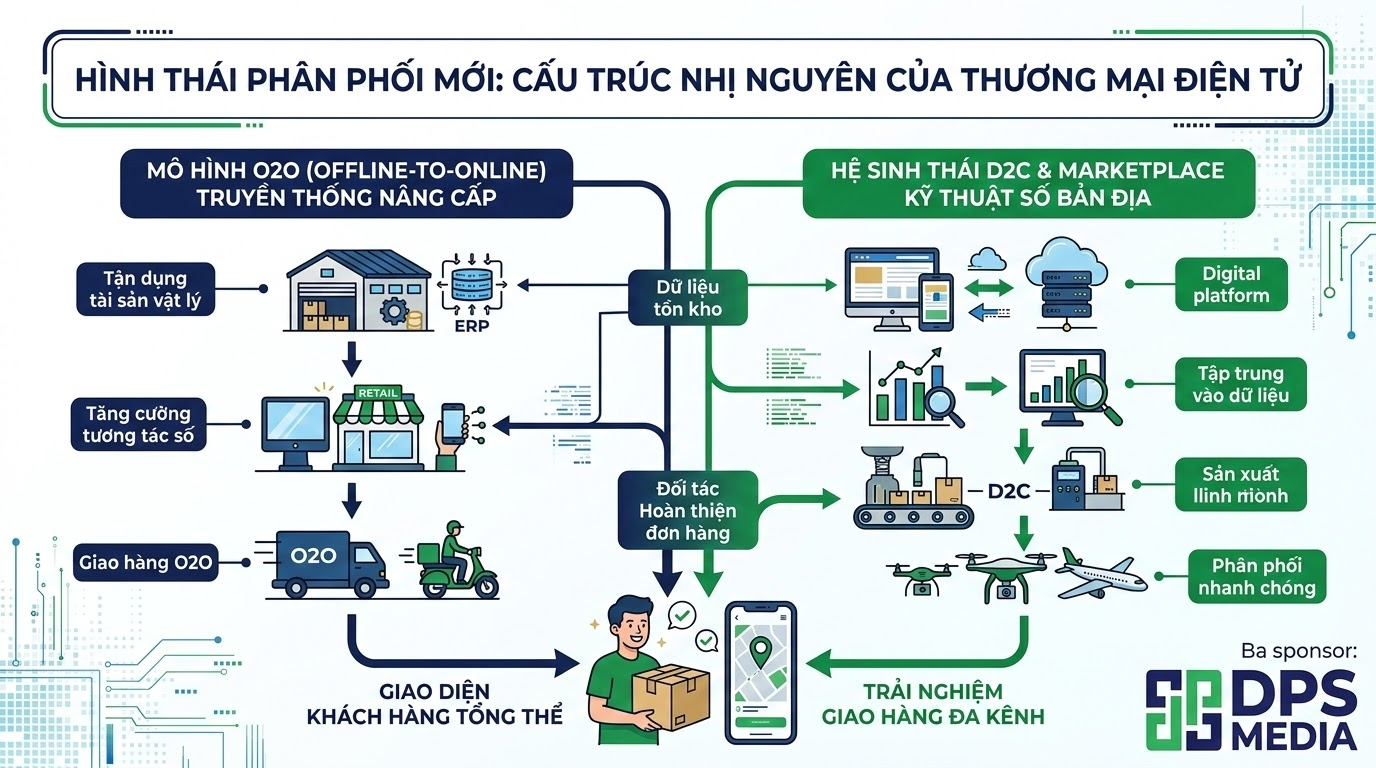
In 2026, the distribution channel structure of Vietnam's fashion industry has been permanently reshaped by the absolute dominance of the e-commerce (TMĐT) ecosystem.
The structural shift from traditional physical retail channels (offline-first) to the digital space is no longer an experimental trend but a mandatory operational reality.
The current online race has consolidated into a fierce duopoly between two technology giants, Shopee and TikTok Shop, pushing other veteran platforms to the sidelines.
Market Share Analysis and Algorithmic Pricing Strategy
As of early 2026, analytical data shows a pivotal shift in market share.
Shopee, a long-established e-commerce platform, still maintains its leading position but is under serious erosion pressure, with its overall revenue market share falling from 58% earlier last year to only about 52%.
This massive market share gap has been quickly captured by TikTok Shop, with its "entertainment retail" (Shoppertainment) model.
This short-video-based platform has climbed to capture 46% market share (up sharply from 39%).
The 6% gap between the two platforms is narrowing by the day, while once-dominant rivals such as Lazada and Tiki now barely hold on with a combined market share of just 2%.
Competition lies not only in overall market share figures but is also reflected in the characteristics of the fashion category on each platform.
Fashion is precisely the spearhead of TikTok Shop's offensive; it is one of the rare segments in which TikTok Shop's revenue contribution carries overwhelming weight, even surpassing Shopee in certain younger customer segments.
By contrast, Shopee's revenue basket is more safely diversified, spread evenly across the Home & Living, Beauty, Fashion, and Technology categories.
The core difference that determines the profit margins of these two platforms lies in content distribution algorithms and pricing strategy.
TikTok Shop dominates the low-price segment, thoroughly exploiting users' fear of missing out (FOMO) through continuous livestream sessions.
Behavioral data shows that the majority of fashion orders on this platform fall in the price range below 350,000 VNĐ.
Shopping behavior here is highly impulsive and spontaneous, resulting in short customer lifecycles on the platform and highly volatile return rates.
TikTok Shop's average selling price (ASP) ranges from 118,000 to 123,000 VND, an optimal price point that allows users to make payment decisions without much financial hesitation.
On the other hand, Shopee positions itself as a true digital commerce hub.
Although Shopee's ASP is somewhat lower (from 97,000 to 114,000 VND) due to the dilution from millions of extremely low-priced accessory products, the platform nonetheless holds absolute control over high-value transactions.
Transaction data in the segment from over VND 3.5 million to VND 10 million almost entirely belongs to Shopee.
Customers are willing to pay large amounts on Shopee thanks to low “trust costs”: a transparent dispute resolution system, clear after-sales policies, safe e-wallet fund holding, and the credibility of official stores.
This trust is quantified by the Shopee Mall store ratio reaching 39%, maintaining a safe gap compared with TikTok Shop Mall's 34%.
Directly operating Mall storefronts helps fashion brands eliminate distribution intermediaries, optimize net profit margins, and establish an invaluable direct feedback loop with end consumers.
The "Dual Strategy" Model: A Theoretical Framework for Multi-Channel Resource Allocation
Amid the fragmentation of the digital market, marketing strategists have established a new operational theoretical framework for 2026, named "Dual Strategy."
Painful lessons from Beauty & Personal Care corporations in 2025 have demonstrated a harsh truth: heavy reliance on any single platform carries a risk of catastrophic revenue loss.
Major brands such as ANESSA, La Roche-Posay, and L’Oréal Paris lost significant market share in the first half of 2025 due to strategic missteps: they devoted all their resources to chasing the explosive growth of TikTok Shop (which at one point contributed up to 50.6% of total beauty care industry revenue) while neglecting to defend their traditional stronghold on Shopee.
By contrast, brands that excellently apply a parallel allocation strategy, such as d’Alba (maintaining 77% of revenue from Shopee and 23% from TikTok) or Beplain (57% from TikTok and 43% from Shopee), have achieved sustainable market share growth.
Applying this principle to the fashion industry in 2026, the Dual Strategy is defined with specialized functional roles for each ecosystem:
TikTok Shop in the role of “The Launchpad”: This platform is not designed to build loyalty but serves as a funnel creator.
It is the most powerful Zero Moment of Truth for the Gen Z customer base.
Through creative content and campaigns combined with Key Opinion Consumers (KOCs), TikTok's distribution algorithm creates “assumed demand” among users.
Revenue here depends little on seasonality or major sales campaigns, but is continuously driven by the virality of short videos.
Shopee's role as the "Pillar Platform": If TikTok is where customers are discovered, Shopee is the buffer that addresses the challenge of Customer Lifetime Value (CLV).
Shopee serves as a “stable destination” (stable destination), where customers return to make repeat purchases (re-purchase).
A clear category hierarchy, integrated loyalty programs, and a robust logistics network turn Shopee into a channel that secures stable cash flow, especially during peak consumer cycles.
Optimal resource allocation for 2026 requires brands to channel creative budgets into TikTok Shop, and to use customer care and regular promotion budgets to consolidate market share on Shopee.
Consumer Behavior Psychology and the Pillars of Contemporary Marketing
Within the framework of in-depth analyses from the Global Trend Forecasting Organization (WGSN) presented at the Aquafina Vietnam International Fashion Week Fall/Winter, the behavioral psychology structure of consumers in 2026 witnessed a profound reversal.
The era of advertising gimmicks that capture instant attention is coming to an end.
Consumers are becoming increasingly selective and highly defensive in the face of the noise of the online space.
Purchasing motivation is shifting from "attention maximization" to a demand for "sustainable cultural presence" (cultural sustainability) and emotional depth.
Successful brands do not just sell clothing; they sell authentic values and the ability to decode personal identity.
This micro-level insight led to abandoning traditional customer segmentation models based on demographics.
Instead, WGSN proposes a market segmentation approach based on “psychographic groups” (psychographics), dividing consumers into distinct profiles based on lifestyle, value systems, and how they receive information.
Building on this psychological foundation, a framework of 5 strategic marketing "guiding principles" has been established for 2026, which leading brands such as Canifa, Ivy Moda, and Eva De Eva have thoroughly applied:
Personalization through Artificial Intelligence (AI Application): AI is no longer an infrastructure factor but has become a direct touchpoint.
Personalization has reached the level of micro-level historical analysis.
A typical example is fashion apps, such as Ralph Lauren's “app styling” or Zara's purchase-history-based recommendation system, which automatically build a personal digital wardrobe for each individual and reduce consumers' “decision fatigue.”
Measuring Customer Happiness: Fashion products must serve a mental therapy function.
Shopping is being reshaped into a process that elevates emotional quality, requiring marketing messages to be tied to confidence and natural comfort rather than imposing toxic beauty standards.
Multi-touchpoint Diversification Ecosystem: The brand’s presence must extend beyond the limits of a 6-inch screen.
Seamless omnichannel experience means customers can see outdoor 3D advertising (OOH), interact with livestreams on TikTok, place orders through Shopee, and choose to visit a physical store to pick up goods and try products.
Lifecycle Experience: Brand value does not end at the point of payment.
Brands are designing extended touchpoints throughout the product lifecycle, including customization services, garment repair, and trade-in programs that extend product lifespan and strengthen brand attachment.
Purposeful Social Interaction: Clothing is a non-verbal communication tool.
Marketing campaigns in 2026 focus on building communities, creating spaces for consumers to express their social identity and connect with individuals who share the same ideology.
Consumer Ethics and the Era of Sustainable Fashion
Closely intertwined with the demand for emotional depth is the explosive rise of the sustainable consumption trend.
Sustainability in 2026 is no longer an empty buzzword in press releases (greenwashing); it has been ruthlessly quantified into real purchasing decisions made with hard cash.
Striking empirical data shows that apparel produced from sustainable/organic cotton yarn (sustainable/organic cotton) from Vietnam has surged by 40%.
At the same time, textile product lines using recycled polyester materials also recorded a 25% increase compared with the same period last year.
These sudden growth figures illustrate a behavioral economics reality: consumers worldwide, and the middle class in Vietnam, are willing to pay a surcharge (green premium) for products that demonstrably reduce environmental impact.
Amid inflation and low-price competition, sustainability has transformed into an absolute competitive advantage.
It gives brands a sound rationale for pricing products in the premium segment (premiumization), protecting profit margins from the erosion of the brutal price war taking place in the low-end fast fashion segment.
Operations Management, the Digital Supply Chain Revolution, and Green Logistics
Behind the glamorous transactions on e-commerce platforms and the personalized advertising films, the circulatory system of the fashion industry – Supply Chain Management and Logistics – is undergoing a painful but necessary major surgery.
2026 marks a major milestone as the Vietnamese Government officially issues and applies a series of new logistics adjustment policies effective 01/01/2026, compelling the entire ecosystem to shift from traditional physical management models to data-driven management and green standards.
The Necessity of Green Logistics and Emissions Standard Pressure
"Green Logistics" has officially been stripped of its voluntary Corporate Social Responsibility (CSR) veneer to become a legally binding technical barrier.
This transition is taking place in parallel with the Government’s tightening of emission control regulations for road and sea transport vehicles, closely tied to international environmental agreements.
For textile enterprises, which consume up to 10% of the national total energy, the energy and emissions challenge is a matter of survival.
The development of mega clean energy infrastructure projects, such as the 1.5 GW Quynh Lap Liquefied Natural Gas (LNG) Power Plant worth USD 2.3 billion in Nghe An or the integrated carbon capture project Masela LNG, serves as a foundation for providing stable and cleaner power to textile and dyeing industrial clusters, helping supply chains meet global environmental targets.
Beyond macro infrastructure, for export groups entering the European Union (EU) and U.S. markets, green transition pressure is doubled by stringent legal frameworks such as Environmental, Social, and Governance (ESG) Standards and, especially, the Carbon Border Adjustment Mechanism (CBAM).
Any apparel shipment whose carbon emissions cannot be traced across the entire product lifecycle faces the risk of punitive tariffs or complete removal from the supply chains of international brands.
Environmental compliance costs are creating a massive barrier to entry for the industry; for instance, investing in and operating industrial wastewater treatment systems that meet standards is currently adding an average of 2% to the basic production costs of businesses.
In an industry characterized by high volume and low margins, a 2% increase in costs represents a huge amount of frozen cash flow.
However, in the long term, this stringency acts as a natural Darwinian filter, eliminating small-scale workshops with outdated technology and leaving the field to corporations with strong financial capacity.
Data Nervous System: ERP, WMS, and RFID Keys
Under the policy direction since the beginning of 2026, physical warehouses are no longer viewed merely as covered structures housing goods.
They must evolve into multifunctional logistics centers, seamlessly integrating traditional storage, wholesale distribution, import-export routing, and the capacity to handle hundreds of thousands of small e-commerce orders (e-commerce fulfillment) each day.
The government requires all operational data to be circulated on digital platforms, allowing customs and tax authorities to conduct automated cross-checks and reconciliation.
Digital data and connectivity standards have officially become the new “soft infrastructure” or “nervous system” of Vietnam’s logistics industry.
However, the fashion industry is characterized by an extremely short product lifecycle, high seasonality, and a vast number of stock keeping units (SKUs) with many variations in size and color.
Manual management is impossible.
The only solution lies in integrating Radio-Frequency Identification (RFID) technology as the backbone of the Warehouse Management System (WMS).
Ultra-small RFID tags, attached to each individual product unit (item-level tagging) right from the factory packaging stage, carry a unique identifier containing complete information on product code, production date, and material description.
As shipments pass through RFID scanning gates at the central warehouse, the WMS system will identify them and automatically update inbound and outbound stock quantities in the database with an accuracy of approximately 99.9%, without any manual carton-opening intervention.
This technology not only cuts thousands of labor hours spent on monthly stocktaking but also thoroughly resolves the problem of goods loss, while simultaneously creating a clean database for Artificial Intelligence (AI) systems to learn from and produce accurate inventory turnover forecasts, helping release a large amount of working capital currently tied up in warehouses.
Despite the clear, quantifiable benefits, the industry's digital transformation remains stuck in a profound paradox regarding its technology absorption capacity.
Market statistics show that while the spread of payment technology is occurring at a dizzying pace – with 60% of textile and garment workers already proficient in receiving wages and conducting transactions via e-wallets and digital platforms – at the enterprise management level, the picture is extremely bleak.
Currently, only a mere 5% of enterprises in the garment industry have successfully deployed and smoothly operated a fully integrated Enterprise Resource Planning (ERP) system with all modules.
The serious disconnect between workers' basic technology awareness and the administrative apparatus's capacity to master digital governance infrastructure is a fatal bottleneck.
The core cause does not lie in a shortage of infrastructure hardware, but in a severe crisis of high-quality logistics talent: the labor market is critically short of teams capable of designing data architecture, operating AI-driven logistics systems, and thoroughly understanding new international legal regulations.
If this gap is not urgently closed, Vietnam's competitive advantage in cost and speed will be completely neutralized by regional competitors that have successfully digitized.
Strategic Implications and Vision for a Sustainable Ecosystem
The year 2026 is by no means a linear continuation of previous years, but marks a structural inflection point for the entire Vietnamese fashion and textile ecosystem.
Multidimensional pressures, from the erosion of the low-cost labor advantage and the specter of global inflation weighing on consumers' wallets, to the tightening of cross-border environmental barriers, have placed the textile industry in a position of “transform or perish”.
To achieve and sustain export turnover of USD 50 billion in a volatile world, the textile and garment supply chain must maximize the capacity of USD 2 billion in annual FDI capital, directing these cash flows toward building circular industrial parks, upgrading smart textile dyeing machinery systems, and synchronously investing in AI-integrated ERP and WMS modules.
Transforming a labor-intensive processing operation into a management model driven by data flows is no longer an option but a survival imperative.
In the domestic retail arena, worth billions of USD, where growth rates and levels of complexity are increasingly approaching those of developed markets, decoding consumer psychology in 2026 demands unprecedented sophistication.
Vietnamese brands are holding a once-in-a-millennium opportunity to use their local cultural empathy as a weapon against the expansion of global fast-fashion conglomerates.
This requires marketing managers to be adept at walking a tightrope in a dual-natured e-commerce landscape: they must know how to ignite fleeting consumer desire with short-form content on TikTok Shop, while also building a fortress of trust and a durable customer lifetime value on Shopee.
In summary, the future of Vietnam's fashion industry will no longer be measured purely by the millions of tons of cotton or billions of meters of fabric shipped out each month.
It will be defined by the production system’s ability to reconcile economic performance with the planet’s ecological limits, by the speed at which an RFID data stream can travel from the factory through electronic customs to the Fulfillment warehouse, and by the degree of alignment between the brand’s ethical value system and consumers’ aspiration for a happier life.
Only by perfecting this multidimensional model can Vietnam's textile industry truly shed its image as the world's contract manufacturing workshop and rise to become a creative hub that shapes sustainable value chains and consumption trends across the Asian region in the new era.
References:
- Vietnam textile-garment sector targets $50 bn in exports in 2026 – Fibre2Fashion
- vietnam’s textile and garment industry targets us$50 billion in exports in 2026 – HONG KONG BUSINESS ASSOCIATION VIETNAM
- Global Fashion Industry Statistics – FashionUnited
- Vietnam’s Textile and Garment Industry: Growth Outlook 2026 …
- Vietnam Apparel Industry: Data Reports 2026 – WifiTalents
- The dynamic cycle of Vietnam's retail market begins: Scale …
- Vietnam’s fashion market reaches a value of US$3.5 billion – baodautu
- Vietnam Textile Market Size, Share, Growth and Report 2034 – IMARC Group
- Apparel and Footwear in Vietnam | Market Research Report – Euromonitor International
- Nghe An: Consumer Price Index (CPI) for January 2026 rose 2.26%
- Shopee and TikTok Shop lead in sales revenue scale at …
- From TikTok Shop to Shopee: A Dual Strategy for Long-Term Growth …
- Consumer Landscape 2026: Forecasting Habits, Trends and Their Impact on Brand Strategy | Advertising Vietnam
- Consumer trends for 2026 revealed at the seminar on …
- 6 marketing strategies for Vietnamese fashion brands 2026 …
- Sustainable Fashion: When Green Logistics Is No Longer Just a Trend but …
- 2026 Logistics Trends and Policy Updates for Businesses
- LNG Bunkering Market Growth (2026): Masela Project, Vietnam Power Plant & GTT Carrier and Asia’s 2026 Market
- AI and Automation in Supply Chain Management
- RFID Technology Application Solutions in Warehouse Management – A.I Tech
- Vietnam accelerates green logistics to join the global supply chain
- Vietnam – Explore reports – Euromonitor.com
- Womenswear in Vietnam | Market Research Report | Euromonitor

Ý kiến bạn đọc (9)
Đăng nhập để bình luận
Đăng nhập nhanh 1-chạm bằng Google để chia sẻ ý kiến của bạn về bài viết.
Bằng cách đăng nhập, bạn đồng ý với điều khoản và chính sách cộng đồng.
AI forecasting can cut inventory by 40%, which sounds impressive. But for a small fashion shop, the cost of deploying AI, ERP, or WMS may exceed the inventory savings. Is it really worth the investment?
We didn't deploy the entire system at once. Instead, we started with sales data and demand forecasting for the core product group. Working step by step keeps costs easier to control, and it's essential that the input data is clean enough.
Exactly, a small shop doesn't necessarily need a dedicated WMS. If you don't have many SKUs yet, good inventory management, order synchronization, and a weekly best-seller report will solve most of the problem.
Livestreaming and KOL/KOC content accounting for more than 65% of the marketing budget seems to follow current trends, but would it be too risky if the brand relied on a few short-video platforms? If the algorithms change, would revenue be significantly affected?
This is also something I keep in mind. Social commerce can drive sales very quickly, but brands should keep their customer data and build their own channel in parallel, to avoid a situation where revenue grows while the customer base sits entirely on the platform.
Small online sellers also face KOCs who perform well today but drop sharply next month. In my view, split the budget: test many small KOCs, then keep those with real conversion rates, and do not judge only by views.
Sustainable fashion and ultra-fast fashion are somewhat contradictory. If production gets faster but customers buy and discard more quickly, the total waste volume remains a major problem.
Delivery time dropping from 3.5 to 1.8 days is a notable figure. Fashion customers who have to wait several days really do switch to other shops.
Increasing domestic supply to 65% helps reduce the risk of supply disruption, but cost and raw material quality still need further analysis. Localization does not always mean cheaper.
Chưa có bình luận nào. Hãy là người đầu tiên chia sẻ cảm nghĩ!
Đăng nhập / Tạo tài khoản
Đăng nhập với Google để gửi bình luận và tương tác cùng cộng đồng.
Tiếp tục là đồng ý với điều khoản sử dụng và chính sách bảo mật của DPS Media.