




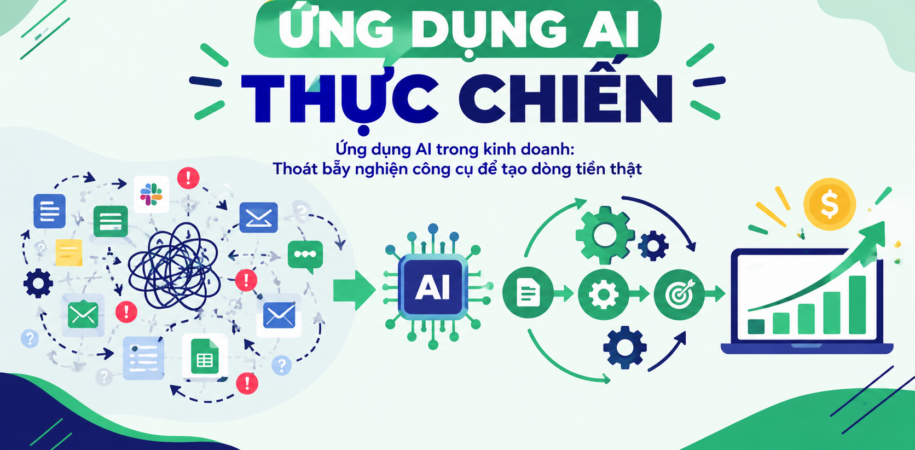

Recently, on technology forums and startup communities, one topic has been receiving broad agreement from business leaders: applying AI in business is not about owning how many cutting-edge tools, but about the ability to generate real cash flow.
A veteran expert in Global E-commerce recently shared a thought-provoking perspective: many cross-border sales teams use only a basic paid account yet generate hundreds of thousands of USD in monthly revenue. In contrast, quite a few domestic businesses are obsessed with testing dozens of open-source models and building complex automation workflows with dozens of steps, but ultimately see no breakthrough in business results.
This paradox points to a reality: the gap between “researching tools for fun” and “applying AI to make money” is a major mindset trap that many SME business owners fall into.
The “Process Designer” Trap: When Technical Busyness Does Not Generate Profit
It is not hard to come across posts showcasing endlessly long drag-and-drop diagrams on platforms like Make, n8n, or Dify. Connecting one language model to a vector database, routing through three layers of review, and only then returning the result to a spreadsheet. It looks massive and professional. But when asked about financial effectiveness: how many leads did that system bring in over the past month? Most answers are a perfectly round zero.
Many managers are confusing technical effort with economic value. You can spend three weeks perfecting an AI-powered automated email workflow just to save 15 minutes a day, while your old customer database sits neglected for months without anyone following up.
| Comparison Criteria | Tool-Centric Addiction Trap | Result-Centric Thinking |
|---|---|---|
| Main goal | Discovering new features, testing new models | Solving revenue or cost bottlenecks |
| Level of complexity | Building multi-layer workflows dependent on many APIs | Maximizing simplicity, focusing on 1-2 profitable touchpoints |
| Success Metric | A smoothly running system with advanced technology | Increased sales, higher conversion rates, fewer labor hours |
| Deployment time | Spending many weeks fine-tuning without putting it into practice | Implementing it immediately and validating with real data |
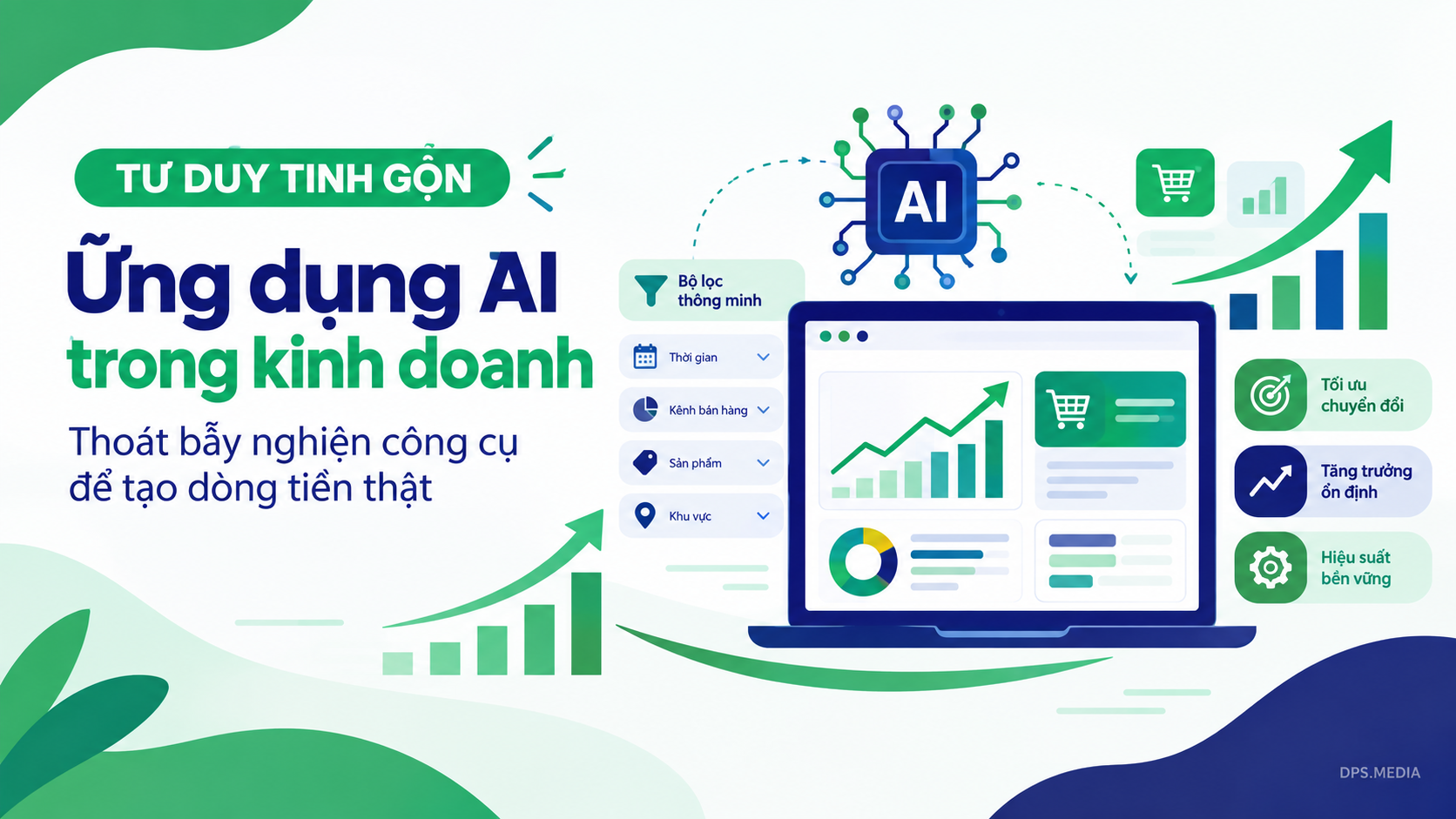
3 Core Lessons from Business Teams Generating Real Cash Flow
Why do international sales teams and lean digital businesses achieve outstanding success when integrating AI into operations? Their secret lies in practicality:
1. Fuel Existing Infrastructure That Already Has Growth Momentum
International businesses already have solid tracks in place: large markets, convenient payment gateways, and seamless logistics networks. They do not use AI to reinvent the wheel. They simply use it as a premium fuel to make the machine run faster:
- Instead of hiring translators and spending many days: a well-crafted prompt can localize 200 pages of product content into German and French within hours.
- Instead of spending thousands of USD creating photography setups: generative image tools can produce numerous perspective shots suited to the preferences of each region.
- Instead of manually handling live chats across time zones: automated scripts can immediately respond to questions about delivery times and technical specifications.
2. The Sharp Dagger Principle: One Tool Solves One Key Problem
A common account costing a few hundred thousand VND per month is more than enough to make a difference if you use it in the right place. Practical businesses do not need thousand-link autonomous systems. They only need AI to excel at one specific task that delivers the highest conversion:
For example, at An Khang technology accessories store, natural language processing technology was applied for one sole purpose: scanning hundreds of negative reviews of competitors on e-commerce platforms to identify customer pain points. As a result, the product development team improved the packaging and user instructions, helping reduce the return rate from 4.8% to 1.2% in the very first month.
3. Artificial Intelligence Only Amplifies Core Capabilities; It Cannot Replace Business Thinking
If the person implementing it lacks foundational knowledge of marketing, products, or customer behavior, the tool will only produce a large volume of soulless content in a short time. Conversely, a specialist with deep expertise in customer insights will know how to turn a virtual assistant into ten highly capable collaborators.
It is market understanding and data analysis capabilities that serve as the core leverage. Technology acts like a magnifying glass, amplifying those capabilities many times over.
A 3-Step Roadmap for Lean AI Automation Implementation for SMEs
To avoid wasting budget and effort on impractical technology projects, small and medium-sized businesses should follow the following three-step validation process:
Step 1: Identify the Biggest Labor-Consuming Bottleneck
Make a list of the repetitive tasks performed every day in the business: compiling report data, writing product descriptions, categorizing customer feedback, or extracting invoice information. Select exactly one process that currently consumes the most working hours and start automating it.
Step 2: Standardize the Process Before Using Software
Automating a chaotic process only creates chaos on a larger scale. Before connecting any system, clearly write down the steps on paper: what information is included in the inputs, what are the processing criteria, and what should the output look like. Once the manual process is clear, setting up automated scenarios on platforms such as n8n will be very fast and accurate.
Step 3: Evaluate Effectiveness Using Specific Financial Metrics
Every solution put into operation must answer the question: how much cost does it save the business or how much additional revenue does it generate? If, after one month of implementation, the business sees no improvement in order processing time or operating costs, be willing to stop and restructure rather than stubbornly piling more costs onto new tools.
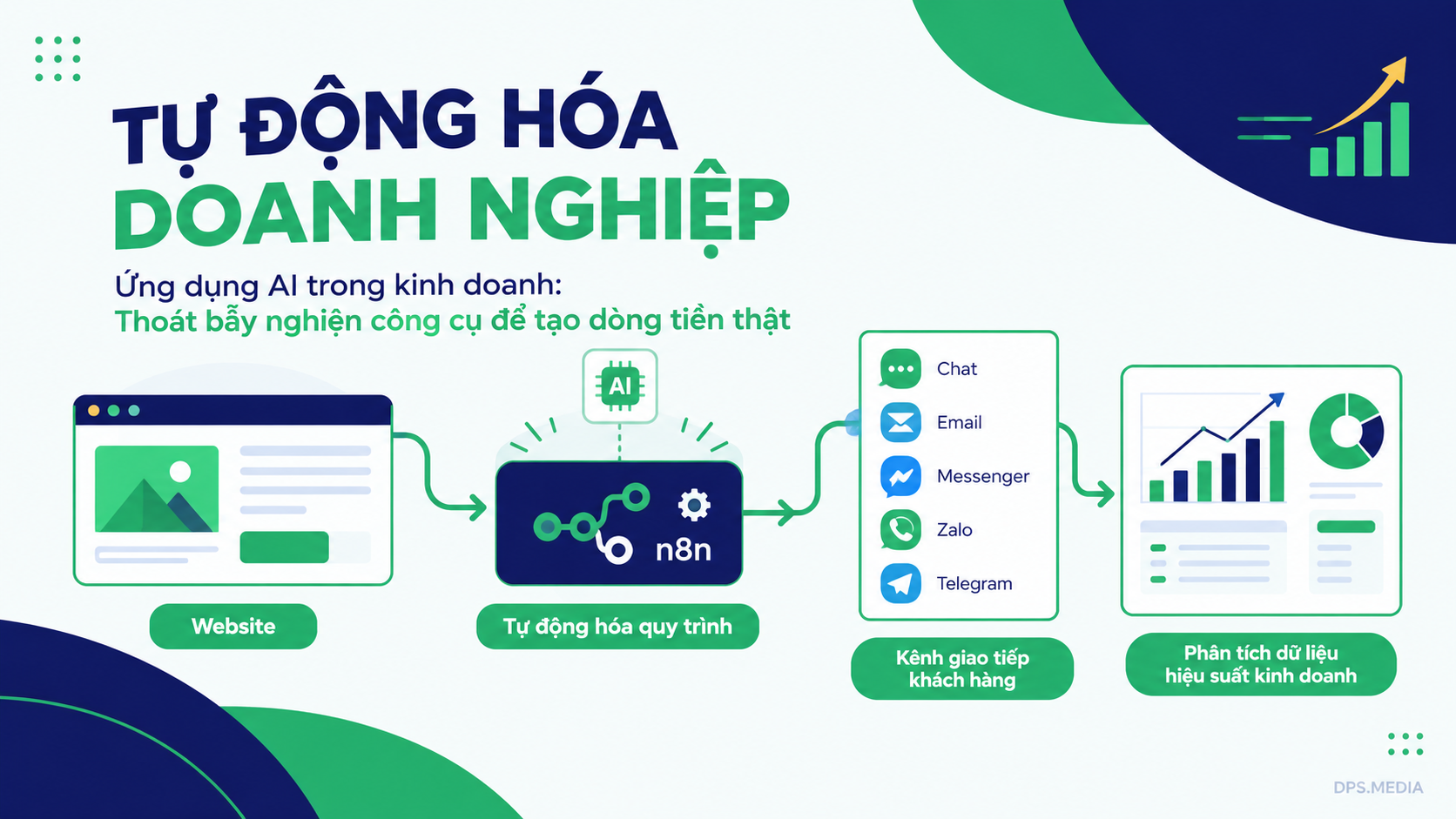
Practical Process Automation & AI Integration Solutions from DPS.MEDIA
Understanding the concerns of business owners amid the digital transformation wave, DPS.MEDIA we not only provide comprehensive Digital Marketing services (holistic SEO, multichannel advertising, sales channel management) but also work alongside SMEs to build practical AI-powered automation systems.
Our team of experts focuses on designing streamlined n8n workflows that connect seamlessly between SEO-optimized WordPress websites, CRM systems, and sales platforms. Instead of drawing complicated processes that drive up costs, DPS.MEDIA is committed to delivering practical solutions: optimizing the time required to create SEO-standard content, accelerating customer response times, and streamlining operations.
Businesses that want to learn more about how to optimize costs and apply artificial intelligence to their specific business models can contact us directly for advice on a suitable roadmap:
DPS.MEDIA – Effective Marketing & Practical Automation Solutions
Hotline / Zalo: 0961545445
Address: 56 Nguyen Dinh Chieu, Tan Dinh Ward, District 1, Ho Chi Minh City
“Effective Marketing, with All Our Heart”
Ý kiến bạn đọc (9)
Đăng nhập để bình luận
Đăng nhập nhanh 1-chạm bằng Google để chia sẻ ý kiến của bạn về bài viết.
Bằng cách đăng nhập, bạn đồng ý với điều khoản và chính sách cộng đồng.
Chưa có bình luận nào. Hãy là người đầu tiên chia sẻ cảm nghĩ!
Đăng nhập / Tạo tài khoản
Đăng nhập với Google để gửi bình luận và tương tác cùng cộng đồng.
Tiếp tục là đồng ý với điều khoản sử dụng và chính sách bảo mật của DPS Media.