








Peak hours at a busy café or milk tea shop are the toughest operational test. When a marketing campaign attracts 40 to 50 customers arriving together at 8h30 in the morning, long lines of buyers and delivery drivers crowd together, impatiently inching toward the cashier. Meanwhile, baristas in the kitchen still have spare capacity. The most damaging bottleneck in food & beverage (F&B) has long turned out to be neither taste nor location, but the lone ordering counter.
Faced with this challenge, the emergence of Maavon software with the philosophy “The counter-free F&B ordering model” with the policy Basic Free for life is generating lively discussion among Vietnamese establishment owners. Is Maavon truly a revolution that frees staff and reduces costs, or merely a passing technology trend? Compared with established “giants” such as iPOS.vn, CukCuk (MISA), and KiotViet, which option best suits your business model? This article provides a detailed practical and technological analysis.
What Is Maavon? What Makes the “No Order Counter” F&B Model Different
Unlike most traditional point-of-sale (POS) software, which focuses solely on digitizing the cash register at the counter, Maavon (developed in maavon.com) positions itself as an AI-era F&B chain management and operations solution pioneering the elimination of ordering counter queues.
1. The Philosophy of Removing Bottlenecks: From Sequential to Parallel Ordering
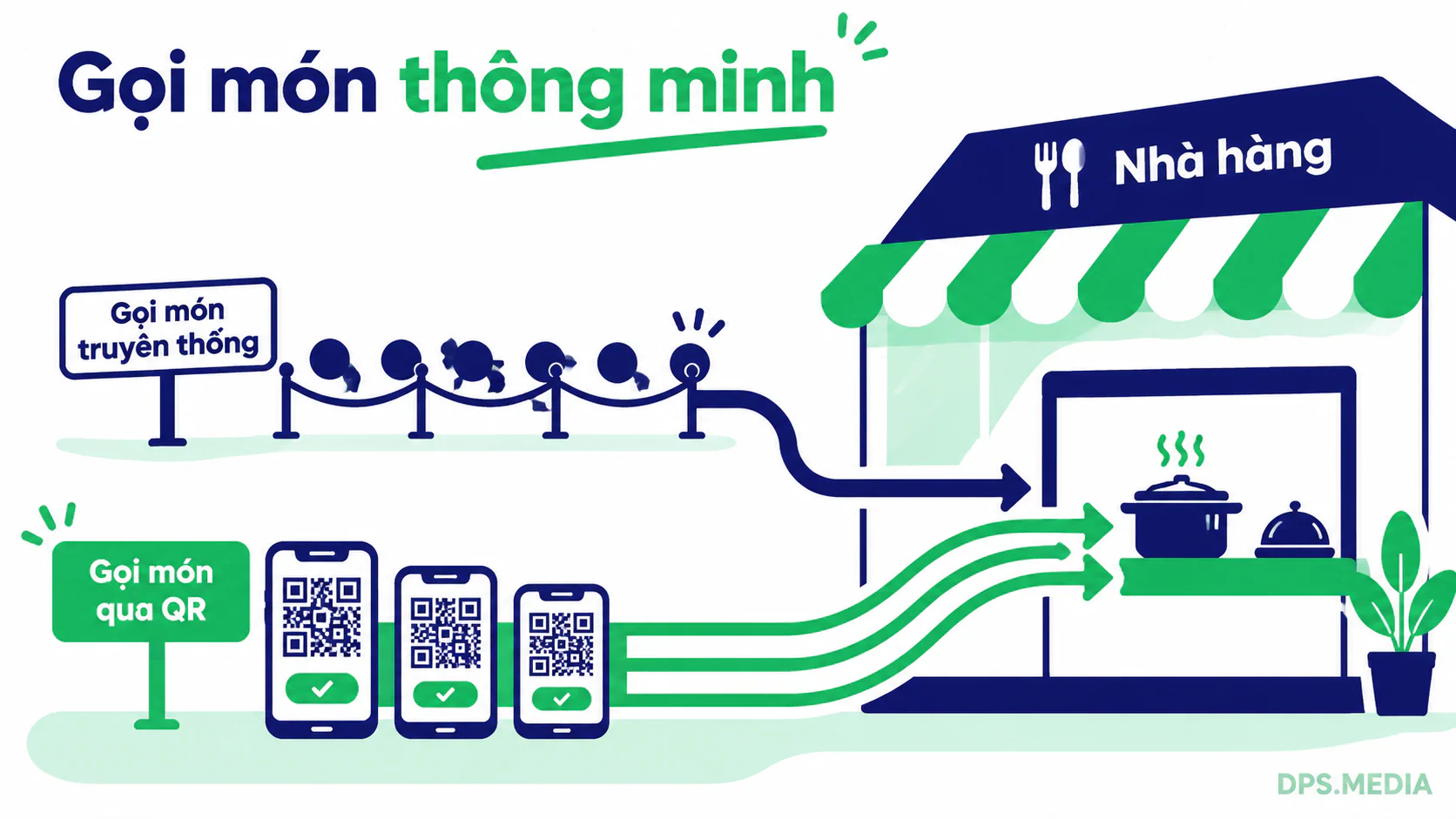
Consider a familiar operational scenario: even an efficient cashier takes an average of 2 to 3 minutes to greet customers, recommend items, record preferences (sugar, ice, toppings), collect payment, and print a receipt per customer. With 30 customers in line, the last customer must wait a full 60 to 90 minutes to finish ordering. Many customers have quietly left, discouraged by the queue.
Maavon completely resolves that bottleneck by switching from the mechanism sequential ordering (1 employee serving customers sequentially) to the mechanism parallel ordering. Every customer's or delivery driver's smartphone immediately becomes a point of sale (personal POS). 50 customers entering together can simultaneously scan QR codes on their phones to choose items and pay. The time for all 50 customers to finish ordering drops from nearly 2 hours to just 3 to 5 minutes.
2. Applying 3 smart QR code types in actual operations
Many assume QR ordering is nothing new because earlier software already offered it. However, Maavon's breakthrough lies in specialized operational routing through 3 separate QR code types:
- Table QR codes: Placed directly on each dining table. Customers freely choose their preferred seats, scan the code, order, and pay directly on their phones without staff having to bring menus and record orders manually.
- On-site QR codes (for takeaway customers / Takeaway): Upon reaching the entrance, customers or delivery drivers simply scan the QR code on the notice board or in front of the counter, choose items, pay, and relax in a seat or wait on their vehicles for their pickup number to be called.
- Take-home QR codes / Remote ordering: Regular customers can scan remotely or access the online menu 10 minutes before arrival. When they arrive by vehicle, their drinks are packaged and ready for immediate pickup.
3. Maavon Basic Free for life: A breakthrough or a marketing tactic?
One of the largest barriers for small shop owners starting out is annual licensed software costs, usually ranging from 2.000.000 đ to 5.000.000 đ per year. Maavon breaks this barrier through its policy of Maavon Basic Free for Life (0đ).
Notably, Maavon's Basic version is not a “feature-limited trial” designed to force an upgrade after 15 days. This Free version provides complete practical sales operations: unlimited orders, unlimited logged-in devices, unlimited printers, unlimited menu categories, and chain management for up to 20 branches. Maavon's founder follows the philosophy that core functions such as checkout, receipt printing, and App Food order intake (ShopeeFood, GrabFood) are basic infrastructure that should be universally free; businesses pay only when they genuinely need advanced recipe-based inventory management (Control), automated customer care (Growth), or AI-powered chain operations (Smart AI).
Detailed Comparison Table: Maavon vs iPOS.vn vs CukCuk vs KiotViet
To give F&B business owners the most objective and comprehensive perspective, we have compiled a head-to-head comparison of Maavon and the 3 most popular sales management platforms in Vietnam today:
| Evaluation Criteria | Maavon | iPOS.vn | CukCuk (MISA) | KiotViet (F&B) |
|---|---|---|---|---|
| Core operating philosophy | No order counter; customers order simultaneously through QR codes | Advanced counter operations and dedicated POS equipment | Table service management optimized for restaurants | Multi-industry POS sales, extended to small cafes |
| Software licensing costs | 0 đ (Basic Plan free for life with unlimited orders) | From 1.800.000 đ to 3.600.000 đ / year / point of sale | From 1.200.000 đ to 3.500.000 đ / year / store | From 2.400.000 đ to 3.600.000 đ / year / store |
| Speed of clearing peak-hour queues | Very fast (customers act independently, avoiding counter congestion) | Depends on the cashier's operating speed | Depends on the number of staff tablets used for ordering | Queues can easily become congested during sudden customer surges |
| Synchronize App Food orders (Grab, ShopeeFood) | Built into the Free version, consolidated into one KDS stream | Strong integrations available (through specialized partner Hubs) | Supports order integration with GrabFood and ShopeeFood | Includes connections to popular delivery providers |
| Recipe-based inventory management & Accounting | Available in the upgraded plan (Control), focused on streamlined operations | Highly specialized for large chains, with detailed loss control | Superior accounting capabilities (MISA synchronization) | Basic recipe quantities and batch-based inventory management |
| Required Hardware Infrastructure | Minimum: existing phone/tablet + receipt printer | Usually requires dedicated POS equipment, cash drawers, and KDS | Works well on touchscreen POS terminals or PCs | Flexible use on phones, tablets, or desktop computers |
| On-site technical support | Centralized through the online academy ecosystem & digital channels | On-site technical staff network across 63 provinces and cities | An extensive call center and branch support network | Nationwide sales and customer service teams |
1. Comparing customer experience and operational workflows
While iPOS and KiotViet reflect traditional selling habits (customers waiting for staff to operate registers), Maavon completely redefines modern consumer behavior. Customers gain full control: browsing clear food photos on their phones, choosing sweetness and ice levels, and adding notes without fear of cashiers mishearing in noisy establishments. This reduces order errors by 100% while creating a comfortable, civilized dining experience.
2. Comparing initial investment costs
To set up a complete point of sale running traditional software such as iPOS or CukCuk, a new business owner needs a budget of 15.000.000 đ to 25.000.000 đ, including: a 2-screen touchscreen POS register, 1 year of licensed software, a cash drawer, and accompanying accessories. With Maavon, however, owners can immediately use an old tablet or smartphone as the cashier screen, place QR codes on tables, and connect a thermal printer costing only around 800.000 đ to operate smoothly. With lifetime software fees of 0 đ for Basic, this offers an overwhelming competitive advantage for household businesses and small establishments entering the market.
3. Comparing the depth of chain management and financial accounting
However, established traditional software such as iPOS.vn or MISA CukCuk excels in the depth of its Back-office management. For large restaurant chains with 10 to 50 branches, complex menus containing hundreds of dishes, and strict ingredient controls down to each gram of beef or milliliter of fresh milk, iPOS and CukCuk provide exceptionally rigorous loss-control reporting, accounting, and inventory permissions. Maavon currently prioritizes point-of-sale speed and streamlined workflows; advanced inventory and artificial intelligence modules remain under phased development.
Practical Assessment: Advantages & Limitations of Implementing Maavon
Undeniable Key Advantages
- Directly reduce cashier staffing by 1 to 2 people: Because customers order independently and pay by scanning VietQR codes for bank transfers, establishments do not necessarily need a dedicated employee operating the cash register. This employee can assist with drink preparation or clearing tables, substantially reducing monthly payroll costs.
- Increase average revenue per order (Natural Upselling): When browsing engaging digital menus with attractive images, customers are 18% more likely to add toppings, side dishes, or larger drinks than when answering hurriedly at the cashier.
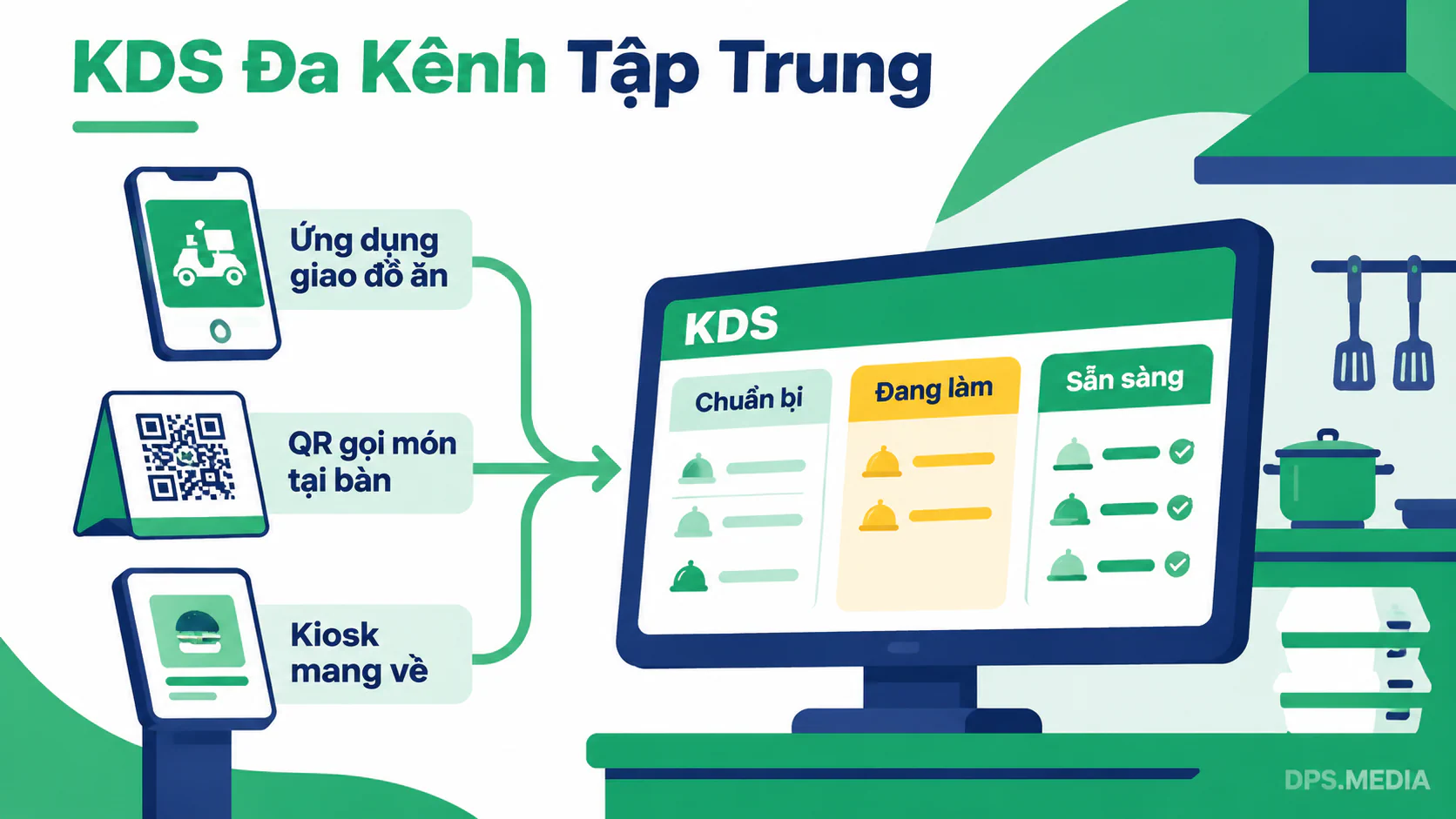
- Intelligent multichannel order consolidation: Orders from dine-in customers, takeaway buyers, and App Food drivers synchronize to the bar/kitchen KDS screen in chronological order, eliminating order confusion or forgotten items.
Considerations for owners before switching
- Cash payment habits among some older customers: Although QR scanning is booming, some older customers or those accustomed to cash may initially find self-ordering unfamiliar. Establishments should still have a flexible staff member available to assist when needed.
- Depends on the establishment's Internet connection: Phone-based ordering requires stable establishment wifi or customers with reliable 4G/5G mobile connections for immediate scanning and payment.
When Should You Choose Maavon? When Should You Choose iPOS or CukCuk?
The ideal business model for Maavon
- Coffee, milk tea, and lemon tea shops with heavy peak-hour traffic: Where service speed and clearing queues are essential to revenue.
- Takeaway shops, Fast Food outlets (Fast Food), and modern sidewalk drink stalls: Compact establishments serving mainly takeaway customers or outdoor seating areas.
- Startup restaurant owners seeking maximum cost savings: Need professional software ready for immediate operation without recurring monthly or annual licensing costs.
Business models that should prioritize traditional solutions such as iPOS or CukCuk
- Fine Dining restaurants or drinking establishments with repeated ordering: Where customers expect full waiter service and frequently request table changes or complex bill splitting/combining.
- Large F&B chains with standardized accounting procedures: Requires direct integration with business accounting software (MISA SME, SAP, Fast) and hardware technicians providing on-site troubleshooting 24/7.
Advice From DPS.MEDIA: Automation & Cost Optimization Strategies for F&B Businesses
At DPS.MEDIA, when advising F&B chain partners, we always emphasize that: “Technology truly delivers its power only when it resolves financial pain points and improves cash flow performance”.
Intelligent sales software such as Maavon is an excellent stepping stone for reducing point-of-sale operating costs. However, sustainable growth and a revenue breakthrough require a coordinated combination of streamlined operations and effective multichannel marketing strategies:
- Build an automated loyal-customer funnel: Instead of letting customers scan a QR code, order, and leave, integrate customer data from the software into automated Zalo ZNS or Zalo OA follow-up workflows to send birthday discount codes and bring customers back on quieter weekdays.
- Optimize brand visibility on digital maps (Google Maps SEO): Ensure your establishment consistently appears among the top 3 search results for nearby customers, accompanied by hundreds of positive reviews to maximize organic walk-in traffic without expensive advertising.
- Create engaging short-form video content: Create TikTok/Reels-style videos reviewing food and the venue experience to generate strong brand visibility across social media.
Frequently Asked Questions About Maavon Software (FAQ)
Is Maavon's Basic package genuinely free for life, or is it only a trial?
Completely free for life. Maavon Basic has no usage time limit (no expiration), no percentage fee per order, and no reductions to core sales functions. Establishments pay only when voluntarily subscribing to advanced management services such as recipe-based inventory control or in-depth analytics.
Should a small cafe with only 1 drink preparation counter and 5 tables use Maavon?
Highly recommended. Maavon does not require purchasing bulky, expensive cash registers. You can immediately use your personal phone or tablet and print QR codes for 5 tables so customers can order independently, making operations more professional and easier without spending 1 dong on software licensing.
How should establishments assist customers who do not have smartphones or do not want to scan QR codes?
Maavon software still includes a complete traditional Cashier sales interface on the establishment's screen. Service staff can select items directly on the establishment's tablet or phone to assist customers unfamiliar with smartphones.
Are orders from GrabFood and ShopeeFood synchronized with Maavon?
Yes. Maavon synchronizes orders from popular delivery apps into one centralized management system and displays them directly on the kitchen KDS screen, eliminating the need for staff to monitor multiple separate phones for orders.
Company Information & Connect with DPS.MEDIA
If your F&B business seeks advice on workflow automation, a streamlined digital marketing ecosystem, and practical operating cost optimization, DPS.MEDIA's experts are ready to support you with the most appropriate solutions.
DPS.MEDIA JOINT STOCK COMPANY
Should change IP if listed > 2 times Address: 56 Nguyen Dinh Chieu, Tan Dinh Ward, Ho Chi Minh City
📞 Hotline / Zalo: 0961 545 445
✉ Email: marketing@dps.media
🌐 Website: https://dps.media
🏢 Tax identification number: 0318700500 | Vietcombank (VCB): 1051160909

Ý kiến bạn đọc (9)
Đăng nhập để bình luận
Đăng nhập nhanh 1-chạm bằng Google để chia sẻ ý kiến của bạn về bài viết.
Bằng cách đăng nhập, bạn đồng ý với điều khoản và chính sách cộng đồng.
The lifetime Basic Free policy interests me most. If the software remains free long-term, where does the provider earn revenue? Are there limits on orders, devices, inventory management, or reporting? I hope the article explains this more clearly.
I have the same question. I previously used free advertising software but had to upgrade to a paid plan for additional inventory management features, so I need to review the terms carefully this time.
When choosing POS software, request a feature allocation table comparing free and paid plans, paying particular attention to deployment, equipment, data storage, and technical support fees. Lifetime free access does not establish total operating costs of 0; test with real order data before migrating the entire system.
Our cafe sells takeaway coffee, and every morning there are times when 10-15 customers wait to pay. If we switch to Maavon's QR ordering, how should we accommodate older customers or those unfamiliar with phones? I am hesitant to eliminate the ordering counter entirely.
I do not think counter-free ordering necessarily means eliminating all cashiers. One staff member can assist newcomers while regular customers scan QR codes independently, still reducing queues.
Exactly. Backup arrangements are essential for customers without internet, with dead batteries, or unfamiliar with scanning. QR codes increase parallel ordering capacity, but the in-store experience still requires human assistance initially.
I think a single establishment and a multistore chain present different challenges. Maavon may make order taking convenient, but ingredient quantities, interbranch inventory transfers, and revenue reconciliation still require careful evaluation.
The QR model sounds suitable for busy milk tea shops. But if customers order many toppings, change sugar or ice levels, or add special notes, is the ordering interface easy to use?
We currently use KiotViet, and staff are familiar with the existing workflow, so switching software would probably require training time. Is there a way to run both systems in parallel for several weeks to reconcile orders and revenue?
Chưa có bình luận nào. Hãy là người đầu tiên chia sẻ cảm nghĩ!
Đăng nhập / Tạo tài khoản
Đăng nhập với Google để gửi bình luận và tương tác cùng cộng đồng.
Tiếp tục là đồng ý với điều khoản sử dụng và chính sách bảo mật của DPS Media.