







Only 3 weeks after creating a buzz with its 3.6 Flash version, Google continued to surprise the industry by officially unveiling Gemini 3.7 Flash. this is regarded as a new-generation workhorse AI model, aimed directly at the developer community, software engineers, and professional AI Agent development firms.
The launch of Gemini 3.7 Flash delivers an astonishing leap in source code processing speed, multi-step planning capability, and accuracy in web interface generation. According to official announcement from the Google Blog, this model not only helps optimize work performance but also lowers operating cost barriers for technology businesses.
Impressive Figures on Reputable AI Leaderboards
Not just advertising promises, Google proves the power of its new model through a series of quantitative test results that outperform its predecessor, the 3.6 Flash:
- FrontierCode 1.1 Main: Achieved 43.6% (far exceeding the 34.4% achieved by the 3.6 Flash version). This metric reflects the ability to write production-ready code on the first run and to handle complex algorithmic logic.
- DeepSWE v1.1: Breaking through to the level of 65.3% (compared with 49.0% previously), demonstrating the ability to fix bugs (debug) and handle real-world technical issues in large-scale software projects.
- WebDev Arena (Arena.ai): Achieved Elo Score 1588 (compared to 1538), affirming its leading position in building complete web applications and designing user interfaces on demand
- GDP.pdf & AutomationBench: Respectively reaching 34.0% (compared to 22.0%) and 30.4% (compared with 17.0%), clearly demonstrating in-depth document analysis capabilities and automated process operation for businesses.
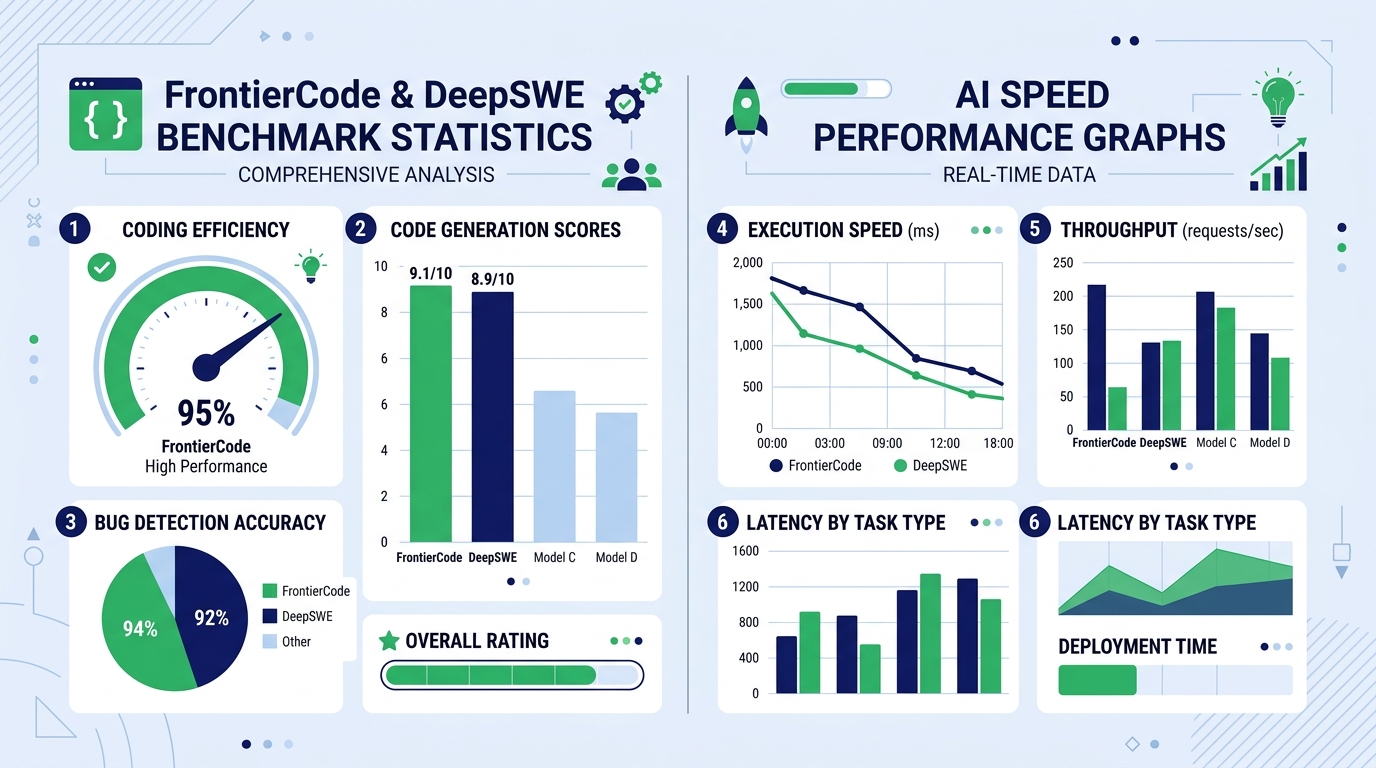
Impressive benchmark score comparison of Gemini 3.7 Flash versus the 3.6 Flash version.
Programming & Web Dev Breakthrough for Developers
The drawback of many previous AI models was their tendency to get “stuck” when encountering complex code errors or generating broken code fragments. Version 3.7 Flash thoroughly resolves this pain point thanks to its improved reasoning algorithm.
When receiving a request to develop a web interface or application, the model can accurately analyze design template files (from screenshots to Design Systems), then export smoothly functioning HTML, CSS, and JavaScript in a single prompt (single-shot).
During multi-step task processing, the model proactively reviews error codes, adjusts its strategy when it encounters obstacles, and strictly adheres to information security principles.
Optimized Operating Costs for AI Agent Development
For technology solution developers, token costs are always a headache. Google has announced an extremely attractive introductory price for Gemini 3.7 Flash: 0.75 USD per 1 million input tokens and 3.75 USD per 1 million output tokens (output).
This price is halved compared to the original cost of version 3.6 Flash. As a result, developers can freely connect the API into automation systems and run 24/7 AI assistants without worrying about exceeding their budget.
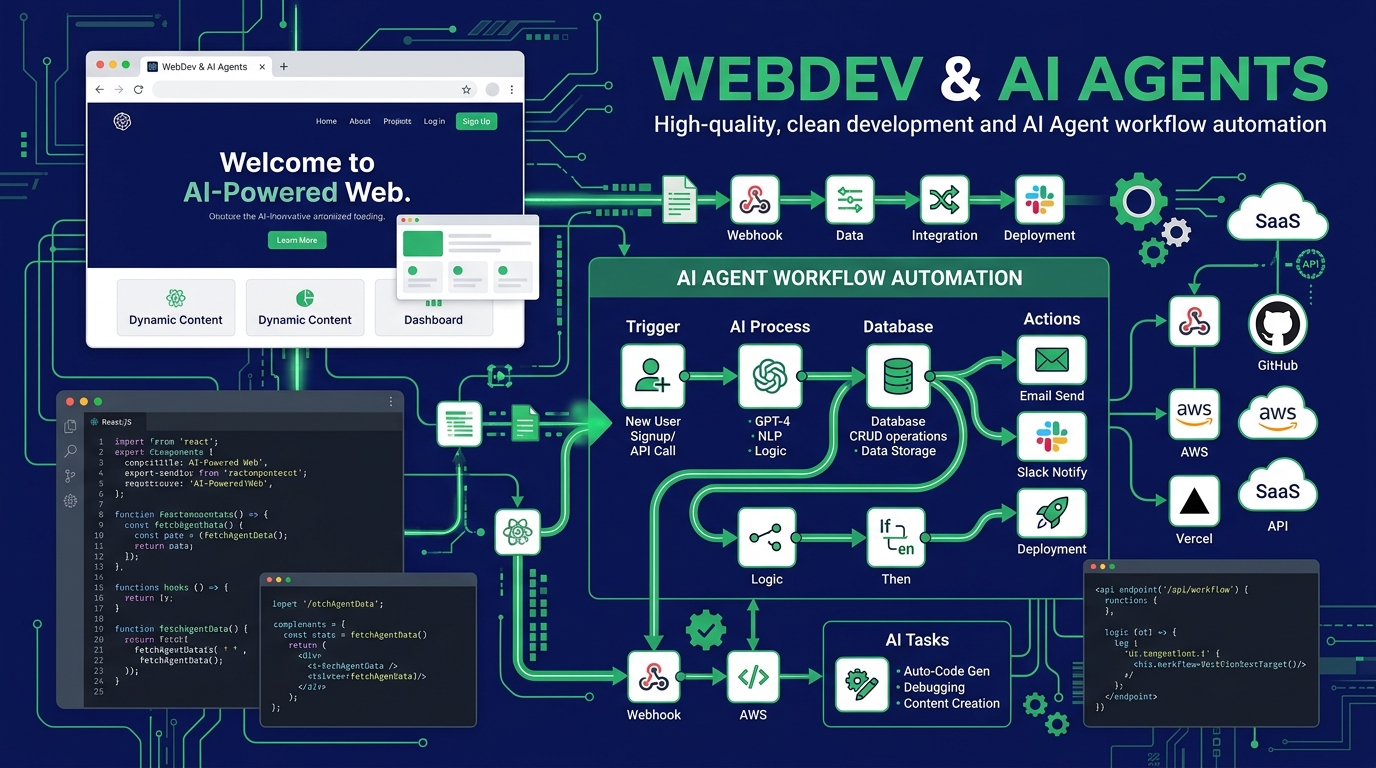
The Gemini 3.7 Flash model supports smooth WebDev development and automates AI Agent workflows.
Practical Applications in SME Business Operations
In practice at An Phat Digital Solutions Company, a unit specializing in management software consulting for retail chains in Ho Chi Minh City, the integration of next-generation AI has brought a clear change. Previously, the technical team had to spend about 4 days building a product introduction landing page and configuring a customer data scanning tool.
Since integrating Google's flagship AI model into an n8n workflow, completion time has been reduced to less than 6 hours. The interface error rate has dropped by more than 65%, helping businesses significantly free up human resources to focus on strategic tasks.
Automation & Digital Marketing Solutions at DPS.MEDIA
The emergence of advanced AI models such as Gemini 3.7 Flash opens up great opportunities for breakthroughs for SMEs in Vietnam. Mastering the technology and applying it correctly will help you save hundreds of working hours every month.
If you are looking for an effective AI implementation roadmap or want to build an SEO-compliant sales website, please explore the solutions at comprehensive AI automation and Marketing services of DPS.MEDIA. With over 7 years of hands-on experience, DPS.MEDIA is committed to delivering measurable results for your business.
Get detailed consultation right away today via Hotline/Zalo: 0961545445 or visit our office at 56 Nguyen Dinh Chieu, Tan Dinh Ward, District 1, Ho Chi Minh City.

Ý kiến bạn đọc (9)
Đăng nhập để bình luận
Đăng nhập nhanh 1-chạm bằng Google để chia sẻ ý kiến của bạn về bài viết.
Bằng cách đăng nhập, bạn đồng ý với điều khoản và chính sách cộng đồng.
A 50% discount sounds appealing, but for a business running an AI Agent continuously, what is the actual cost? Tokens may be cheaper, but when the agent calls the model across many steps, the total bill can go up.
You're exactly right. Costs must be calculated based on total number of calls, context length, and the number of agent steps, not just the price per request. We typically benchmark a complete workflow before deciding on a model.
If a cheaper model completes a task with fewer loops, the savings are still significant. But you should still set token limits and monitor the cost per task to keep the agent from running out of control.
The benchmark gains are quite strong, but if applied to a real project, do the scores actually reflect production code quality? I'm most interested in the rate of code that runs right away and the actual debugging time.
In my view, benchmarks should only be treated as indicators. For real projects, you still need to test stability, the ability to read legacy codebases, and the number of bug-fix iterations. Those factors actually determine productivity.
Exactly. If a model writes 80% of the work but developers still have to review every line, the benefit is completely different from a case where code, tests, and debugging flow seamlessly.
WebDev Arena scores have risen noticeably. If the ability to build interfaces from descriptions is this good, web developers can probably cut a fair amount of time spent on the initial frontend work.
SMEs using AI Agents should probably start with small processes, measure results, and then expand. Don't automate the whole system just because a new model seems more powerful; that easily leads to unexpected costs and hard-to-control errors.
My favorite part is debugging. AI-written code is fast for sure, but fixing a tough bug in a legacy codebase is where the time actually goes, so the DeepSWE score is quite noteworthy.
Chưa có bình luận nào. Hãy là người đầu tiên chia sẻ cảm nghĩ!
Đăng nhập / Tạo tài khoản
Đăng nhập với Google để gửi bình luận và tương tác cùng cộng đồng.
Tiếp tục là đồng ý với điều khoản sử dụng và chính sách bảo mật của DPS Media.