



Have you ever wondered why your video production budget always ends up doubling compared to the initial estimate? This is a common pain point for many SME business owners today. The video marketing market is booming more strongly than ever.
According to the latest statistics for 2024, 91% of businesses have used video as a primary marketing tool. However, a lack of understanding regarding the technical process has turned many clients into easy “prey”. They are easily “drawn” into countless unnamed fees by unreputable providers.
Not clearly understanding the cost components in video production does not just waste money. It also slows down product launch progress and directly affects business strategy. A successful video project does not just need to be beautiful but also must be optimized in terms of investment cost.
In this in-depth article, we will strip down the 5 biggest cost “black holes”. This information is distilled from practical experience handling thousands of projects. Let's dive deep into every corner of the quotation to protect your wallet.
1. Video production process and the “vague” script cost trap”

Why do sketchy ideas “burn” your money?
Many clients mistakenly believe that just providing a general requirement is enough. They often say: “Make me a clip like this viral video”. This is the beginning of a financial disaster in the video production professional.
When the brief is not clear, the production unit will have to interpret the ideas themselves. This leads to the script having to be revised many times. Every major revision consumes the time of the creative team and project managers.
Agencies often charge very high “creative hour” fees. If you do not finalize the concept from the start, these hours will increase exponentially. Pre-production costs can account for up to 30% of the total budget if not controlled carefully.
According to experience from experts at DPS.MEDIA, a detailed brief helps save 40% of incurred costs. Clarity from the beginning is the key to protecting your budget.
List of items easily overcharged in the script
- Market and competitor research fees (often inflated).
- Detailed frame-by-frame Storyboard drawing fee (unnecessary for small projects).
- Voice-over writing fee calculated by word count instead of project package.
- Costs for too many unnecessary brainstorming meetings.
- Script editing fee exceeding 3 times (usually charged very expensively).
- Script translation fee into other languages (if any).
- Content strategy consulting fee (sometimes separated from production fees).
Real-life example of script budget waste
A real estate company in District 2 wanted to make a video introducing a new project. They only gave the requirement “luxurious and classy” without a specific script. The production unit drew up 5 different script directions for the client to choose from.
The result was the client being charged an extra 15 million VND for “idea consulting” costs. Meanwhile, if they had prepared core selling points (USPs) in advance, this cost could have been completely cut. The project was delayed by 2 weeks just because of the idea approval stage.
Another case was an F&B chain wanting to make a TikTok video reviewing food. They required the script to be “humorous” but did not approve the dialogue details. When arriving at the scene, the actor's dialogue did not match the boss's intention, forcing a filming halt to rewrite the script on the spot. The waiting cost of the entire film crew was added to the final invoice.
Comparison table of standard and wasteful pre-production costs
| Work item | Optimized Cost (VND) | Wasteful Cost (VND) | Reason for difference |
|---|---|---|---|
| Concept Development | 2,000,000 – 5,000,000 | 10.000.000+ | Lack of direction, many revisions |
| Detailed Scriptwriting | 3,000,000 – 6,000,000 | 15.000.000+ | Requirement for overly detailed Storyboard |
| Location Scouting | 1,000,000 – 2,000,000 | 5.000.000+ | Multiple trips due to lack of finalization |
| Pre-Production Meeting (PPM) | Free / Package | 3,000,000 / session | Charging consulting fees by the hour |
Advice from DPS.MEDIA experts
To optimize costs video production right from the first step, prepare a very detailed Creative Brief. You need to clearly list goals, target audience, key message, and expected budget. Do not hesitate to ask the production unit to commit to the number of free script revisions in the contract.
2. Wasting on unnecessary video production equipment
The 4K, 8K technology and cinema camera pitfalls
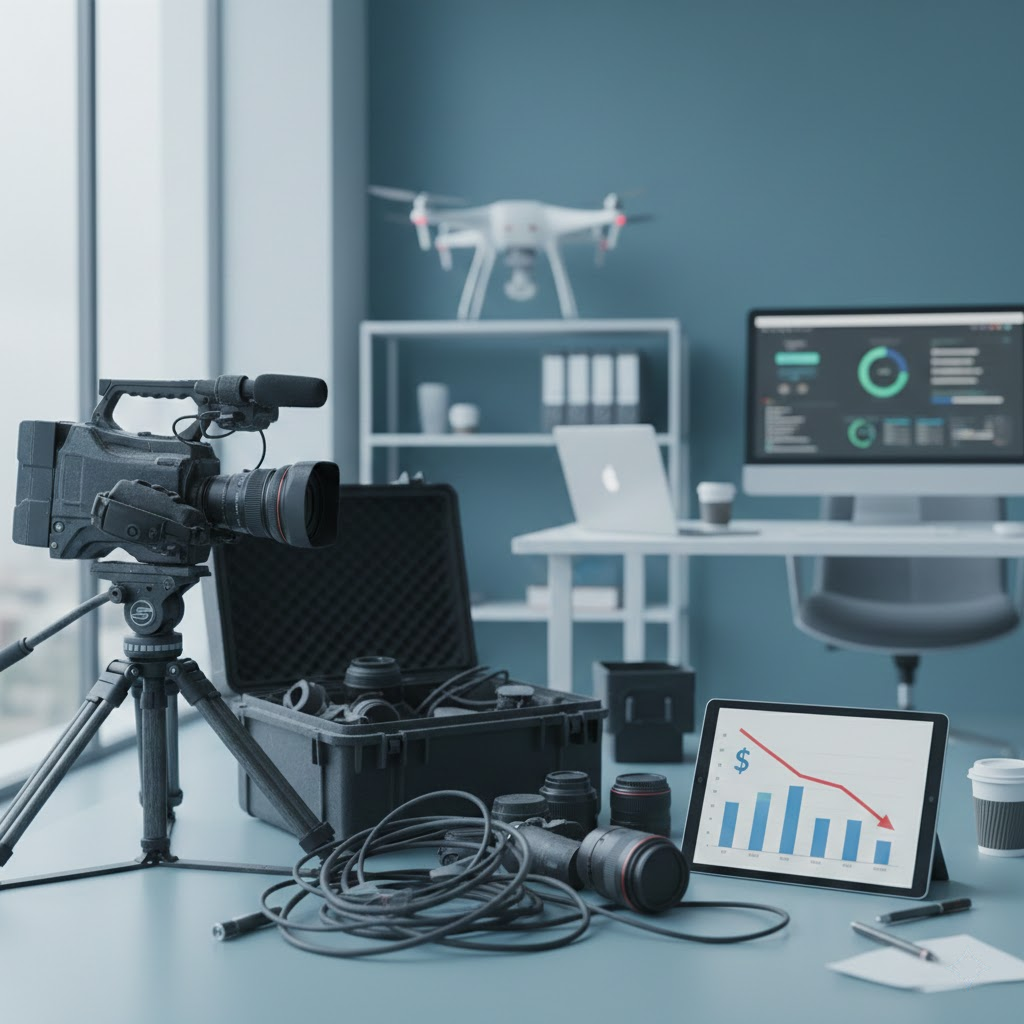
One of the most common tricks is “scaring” clients with technical terms. Production units often advise you to shoot with RED, ARRI, or Sony Venice cameras for the best images. However, for the majority of online marketing videos, this is completely redundant.
If your video is only released on Facebook or TikTok, viewers mainly use mobile phones. Phone screens cannot display the full difference between a 500 million camera and a 50 million camera. Renting expensive equipment pushes the cost of video production extremely high.
Furthermore, files shot from these cinema cameras are very heavy (RAW). This entails that hard drive storage costs and film editing computer configurations must also increase. You are paying for pixels that your customers will never see.
How is the film crew personnel “drawn” extra?
In addition to equipment, the number of personnel is also a place easily prone to waste. A simple interview shoot only needs 1 cameraman and 1 sound technician. However, quotations often feature extra: director, assistant cameraman, script supervisor, and technical supervisor.
Using too many unnecessary personnel is not only expensive in terms of wages. It also incurs costs for food, travel, and management. The bulkiness of the film crew sometimes even disrupts your business operations at the filming location.
According to research by DPS.MEDIA, SMEs usually waste about 25% of the budget on redundant personnel. Streamlining the production team is a smart trend today.
List of equipment often “inflated” in rental price
- Cinema cameras (RED, ARRI) for simple social videos.
- High-power cinema lighting systems (HMI) in small spaces.
- Specialized camera movement equipment (Dolly, Crane) that is unnecessary.
- Highest-end microphone series used for Hollywood.
- Expensive Cine Prime lenses instead of convenient Zoom Lenses.
- Expensive wireless director monitors.
- Satellite livestream equipment when stable wired internet can be used.
Typical example of equipment waste
A spa owner wanted to film a video introducing an acne treatment procedure. The production unit advised using a RED Komodo 6K camera to “focus on every pore”. The rental cost for the camera and lens set was up to 15 million/day.
In reality, when uploaded to Facebook, the video is compressed to a much lower quality. Customers cannot distinguish the difference compared to shooting with a regular Sony Alpha camera. That price difference was enough to run ads reaching 50,000 potential customers.
Another case was an internal training video for a corporation. They hired an entire lighting team with a truck carrying equipment. Meanwhile, the setting was just a meeting room with good natural light. This waste came from the lack of honest advice from the service provider.
Equipment needs analysis table by video type
| Video Type | Recommended Equipment (Optimized) | Wasteful Equipment (Should Avoid) |
|---|---|---|
| TikTok / Shorts Video | Phone or compact Mirrorless | Bulky cinema cameras |
| Corporate Introduction Video | Sony FX3 / FX6, LED panel lights | ARRI Alexa, high-power HMI lights |
| Event Video | Shoulder-mount camera, flexible Gimbal | Track Dolly, oversized Crane |
| Interview / Talkshow Video | 2-3 fixed angle cameras, Lavalier Mic | Boom Operator, film recording system |
Equipment cost optimization tips
Ask the unit to video production clearly explain the reason for choosing equipment. You have the right to request “Standard” equipment options instead of “Premium” if the budget is tight. Content quality and lighting are more important than 8K resolution.
3. Professional video production and hidden costs from actors, locations

The “underground” costs when hiring KOLs and actors
The talent fee for actors or KOLs (Key Opinion Leaders) is usually just the tip of the iceberg. The real black hole lies in the accompanying surcharges that you least expect. Those are costs for makeup, stylist, and travel/accommodation costs (if filming far away).
Especially, the working time limit of actors is a big trap. If the shoot lasts beyond the prescribed hours (overtime), the penalty fee can be calculated at 150-200% of the normal hourly rate. Many projects video production have their budgets broken just because of filming 2 hours over.
In addition, the rights to use the actor's image also have an expiration date. You pay for filming the video today, but 1 year later you want to re-run the ads, you might have to pay an additional image copyright renewal fee. This is a clause often overlooked in contracts.
Financial trouble from renting filming locations
Choosing a filming location is not as simple as paying to rent a studio. If filming at a cafe or public location, you might have to pay “protection fees” or building management fees. These items usually do not have red invoices, making it difficult for corporate accounting.
Moving between multiple locations in one day also increases logistics costs. The equipment setup and breakdown time for each move is “dead time”. You still have to pay the entire crew's wages while the camera is not running.
At DPS.MEDIA, we always prioritize advising clients to consolidate locations. Setting up to film multiple angles in the same location helps save up to 30% of the production budget.
List of costs incurred from Talent and Location
- Overtime (OT) fees for actors and makeup crew.
- Special catering costs at the request of KOLs.
- Generator rental costs if the location does not have enough power source.
- Compensation fees for furniture damage at the rental location (very common).
- Filming permit fees in sensitive areas.
- Airfare and luxury hotel costs for Celebs.
- Casting agency fee from 15-20%.
Real-life example of location and actor costs
A fashion brand hired a hot girl to take photos and film a lookbook video. The initial quote was 10 million VND. However, the model requested to have her own makeup artist accompany her for 5 million/day.
Not only that, due to rain, the shoot at the park was delayed for 3 hours. The crew had to rent extra lights to simulate sunlight, costing an additional 3 million. Total incurred costs were nearly equal to the official talent fee. This project video production became a costly lesson in risk management.
Another company rented a villa to film a TVC. They did not check the power source carefully. When all the high-power lights were turned on, the villa's electrical system collapsed. They had to rent an emergency industrial generator at 3 times the normal price to stay on schedule.
Comparison table of Talent hiring costs: Self-sourced vs via Agency
| Category | Contacting yourself (In-house) | Hiring through Agency | Important note |
|---|---|---|---|
| Actor talent fee | Original price (Net) | Original price + 20% management fee | Agency ensures better credibility |
| Legal contract | Self-drafted (High risk) | Tight templates available | Avoid future disputes |
| Creative content | Take responsibility yourself | Agency replaces people immediately | Ensure project progress |
| Schedule management | Consumes personnel to track | Has own manager to handle | Saves your time |
Advice for managing actor costs
Negotiate a package with the actor including makeup and basic costumes. Always have a back-up plan for locations in case of bad weather. A minute-by-minute Production Plan will help you avoid unjust Overtime fees.
4. Post-production video production process and the surcharge matrix

Number of revisions (Feedback) – The invisible trap
This is the stage most likely to cause controversy between the client and the film unit. Contracts often state “3 revisions”, but do not clearly define what counts as one revision. Many clients send small, scattered feedback, each email being a small request.
The companies video production will count each time a file is exported (rendered) and sent out as one revision. When the prescribed number of times is exhausted, they will start charging. Additional revision fees can range from 1-5 million VND for each re-render, depending on complexity.
Especially dangerous are revision requests related to structure. For example: changing the background music after the images have been cut and edited according to the old music beat. This is equivalent to re-editing from scratch, and you will be charged as if making a new video.
Visual effects (VFX) and Motion Graphics
Clients often like videos with many “sparkling” effects. However, visual effects are the item that consumes the most CPU effort and brainpower. One second of 3D visual effects can take a whole day to process. Requesting extra effects outside the script will be charged very highly.
The cost of purchasing copyrighted music and stock footage is also often charged separately. If you want to use a hot song on the market, the copyright cost can be up to thousands of dollars. Many units provide a low initial quote but it does not include these items.
According to 2024 market report, post-production costs are trending upward due to increasing requirements for image quality and visual effects. Businesses need to be alert to overly cheap quotes.
List of expensive post-production items
- Re-render fees due to last-minute requirement changes.
- Commercial music license purchase costs.
- 4K quality Stock Footage purchase costs.
- Multilingual subtitle making fee.
- In-depth Color Grading fee (cinema style).
- 3D animated logo Intro/Outro design fee.
- Long-term Project (source file) storage fee on Agency server.
Example of post-production cost conflict
A software business ordered a 2D animated explainer video. After seeing the demo, the director wanted to change the main character's shirt color from blue to red for better feng shui. It seemed simple, but the artist had to redraw thousands of frames.
The Agency charged an additional fee equal to 50% of the contract value. The client felt “ripped off”, leading to a prolonged dispute. The mistake lay in not agreeing on the Character Design thoroughly before making movements.
Another case involved Voice talent. The client had approved the voice, but after integrating it into the video, found it “emotionless”. Re-recording cost studio rental fees and extra talent fees for the voice actor.
Advice for smooth post-production
Consolidate all revisions into a single file (Excel or Word file) for each feedback session. Designate a single person with the final decision-making power (Decision Maker) to avoid the “too many cooks” situation. Request a low-res Preview version to approve content before Rendering the Full HD/4K version.
5. Legal risks and file handover costs in video production

The story of music and image copyright
The copyright issue is a ticking time bomb in video production. Many videos after being posted on YouTube or Facebook are muted or removed due to music copyright infringement. This ruins your entire marketing campaign.
The cost of purchasing copyrighted music for commercial use is much higher than for personal purposes. Some cheap video making units often use pirated music or low-quality free music. When platforms scan for copyright, the business is the one suffering reputational damage.
Similarly with Fonts. Using commercial fonts without a license in the video can lead to the business being sued. These are hidden legal costs that few people anticipate.
Original file purchase cost (Source File)
Most clients default to the idea that when hiring to make a video, they own everything. Mistake! Industry practice stipulates that clients only own the final product (Final Product – .mp4, .mov file). Project files containing raw footage, visual effects, and editing layers are the intellectual property of the production unit.
If you want to get the original files for future self-editing, you must pay a “Buy-off Project” fee. This cost is usually 50% – 100% of the total contract value. If not agreed upon in advance, you will be shocked when hearing this quote at the last minute.
Products digital advertising associations all recommend that businesses need to clarify intellectual property rights right in the service contract to avoid future troubles.
Checklist for the production contract
- Music copyright clauses (scope of use, term).
- Ownership rights of original files (Source footage and Project file).
- Commitment to project information confidentiality before launch date.
- Legal liability when the video violates advertising regulations.
- Data storage fee after contract liquidation (usually only kept for 3-6 months).
- Clause on using video images for portfolio purposes.
Example of file handover trouble
A large corporation hired an agency to make a Tet TVC. After the campaign, they wanted to shorten the TVC to run on elevator LED screens. They requested the agency to send the source files for the in-house team to cut it themselves.
The Agency refused to send the Adobe Premiere Project file citing creative copyright reasons. The corporation was forced to pay an additional 20 million for the Agency to perform the re-editing (resize). If this clause had been negotiated from the start, they might have saved this money.
Table of common copyright fees
| Type of Copyright | Estimated costs | Risk if violated |
|---|---|---|
| Background Music | $50 – $500 / song Video muted, channel deleted Stock Footage Voice-over Typeface (Font) | Sued by Font author |
Final advice on legal matters
Do not skimp on copyright. It is the insurance cost for your brand. Ask the unit to video production provide music and image License Certificates when handing over the product. This is important legal evidence when working with advertising platforms.
In conclusion, clearly understanding these 5 cost “black holes” will help you become a wise customer. You will hold the initiative in negotiations and ensure every cent of budget spent brings real value.
Conclusion

The journey video production does not necessarily have to be a money-burning race if you master the game. Early identification of cost “black holes” from script, equipment, actors to post-production will help businesses save tens, even hundreds of millions of VND. Transparency and detail from the beginning are the keys to every successful project.
Remember that cheap price never comes with high quality and dedicated service. Instead of looking for the lowest quote, look for the partner with the most detailed and honest quotation. A reputable partner will always advise you on the optimal solution instead of trying to sell extra redundant services.
Key points to remember after this article:
- Prepare a detailed Creative Brief to avoid script revision fees.
- Only rent equipment suitable for the video release platform.
- Strictly control filming time to avoid being charged Overtime fees.
- Consolidate post-production feedback and finalize designs before making movements.
- Negotiate clearly on music copyright and original file ownership rights.
- Always reserve a 10-15% budget for force majeure incurred items.
If you are looking for a reliable, transparent partner in costs and committed to quality, consider carefully. Do not let hidden numbers in the contract affect your marketing campaign's effectiveness. Start your next video project with a proactive mindset and solid knowledge.