




Building an impressive capability profile is the first step for an advertising design company to assert its position and create a sustainable brand in a volatile market. In an era of declining trust and fierce competition, customers don’t just choose partners based on reputation – but also on how businesses tell their stories.
I am Hiển – someone who always believes that, a strong brand doesn’t simply come from good products or services, but must start with presenting capabilities strategically and honestly. Hồ sơ năng lực làm được điều đó: nó cho thấy công ty bạn có tầm nhìn, sự chuyên nghiệp và khả năng đóng góp thực sự cho đối tác. Theo một báo cáo từ Nielsen, 59% doanh nghiệp lựa chọn đối tác thông qua tài liệu năng lực trực quan và có chiều sâu – không chỉ để “xem năng lực”, mà để “hiểu văn hóa và tư duy”.
I myself have witnessed many small creative businesses – despite outstanding talent – being overlooked in major project bids due to the lack of a proper capability profile. The true value of a profile lies not in its length, but in its strategy: how to convey the brand spirit and address the issues customers care about, and demonstrate the ability to solve bottlenecks in modern marketing strategies.
This topic is not only important – but also urgent. In the context of AI changing the way consumers interact with brands, advertising design companies are forced to redefine their roles. And that, first of all, starts with re-examining the capability profile: it must not only tell “who you are”, but also “why you matter”.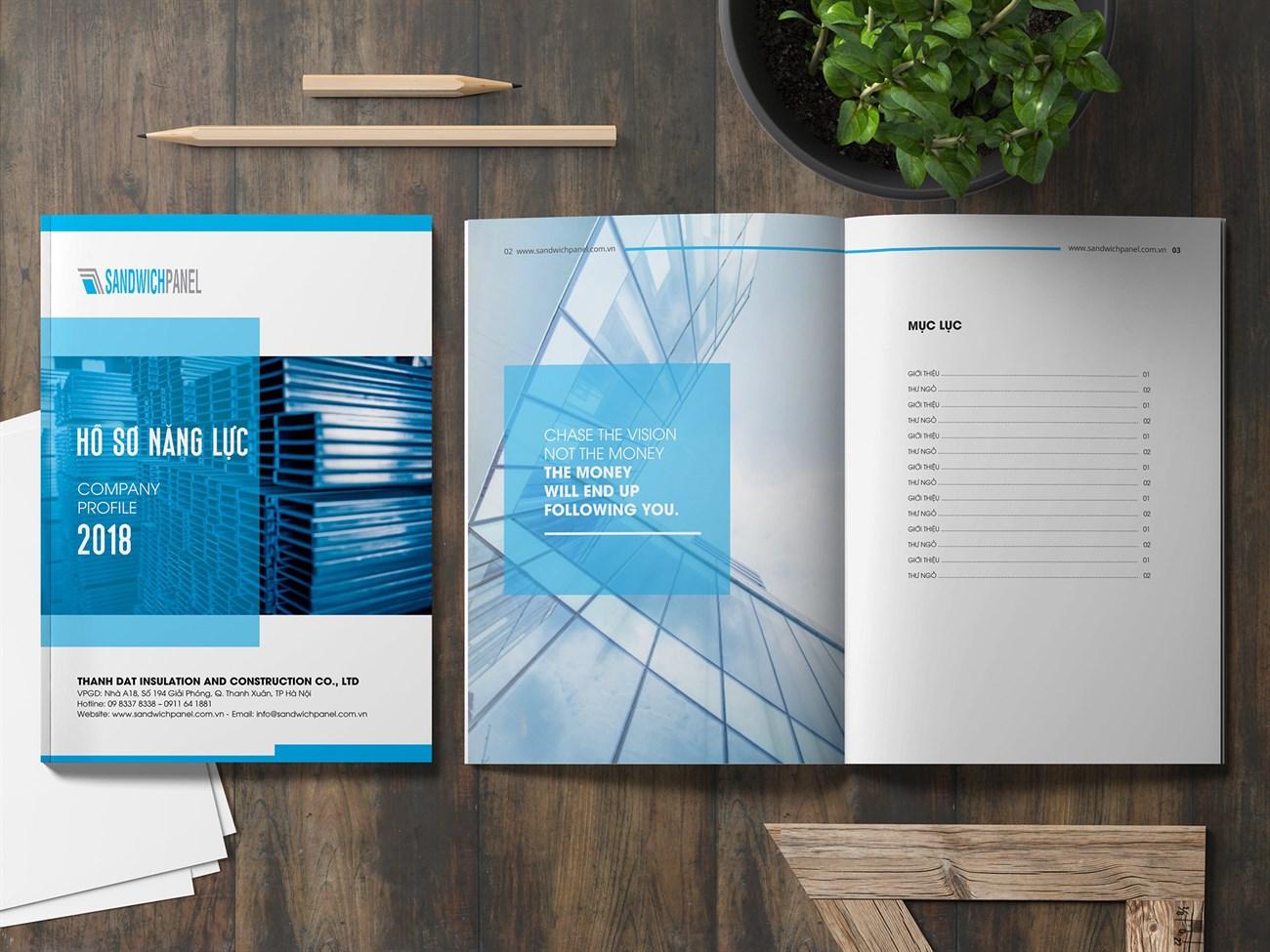
Overview of capability profiles in the advertising design industry
Position value and create an impression from the very first glance
One capability profile in the advertising design industry is not just a service introduction document – it is how a brand asserts its position and expresses its creative spirit. From a design perspective, I often liken it to a company’s “visual ID card”: strong enough for customers to remember, refined enough to build trust.
In fact, according to Jean-Noël Kapferer’s “Brand Identity Prism” model, the capability profile is an important part in shaping the brand’s image through the element visual communication. In the advertising industry, where visual emotions determine 60% of the initial perception, consistency in color, layout, and typography in the profile is vital.
An indispensable component in a professional capability profile
- Brand introduction: Formation history, mission, and core values expressed through a creative storytelling tone.
- Team portrait: Design as a storyteller – so customers understand who is behind the campaigns.
- Typical projects (Case Study): Instead of listing, tell it as a story – practical examples help convey capabilities convincingly.
- Creative process: Making the design process transparent is a way to build trust and encourage dialogue.
A brief description of a successful real-world Case Study
| Projects | Customers | Challenges | Design solutions | Results achieved |
|---|---|---|---|---|
| Rebranding ocha Milk Tea | Ocha Vietnam | Lack of unified identity across all channels | Design a color system, new logo, and a synchronized POSM set | Increase brand recognition by 40% after 3 months of implementation |
The above case study is proof of the power of a capability profile when presented correctly: not simply to “look good” – but to create strategic impact.
The importance of brand identity in building a business image
Building brand identity is a long-term investment in market trust
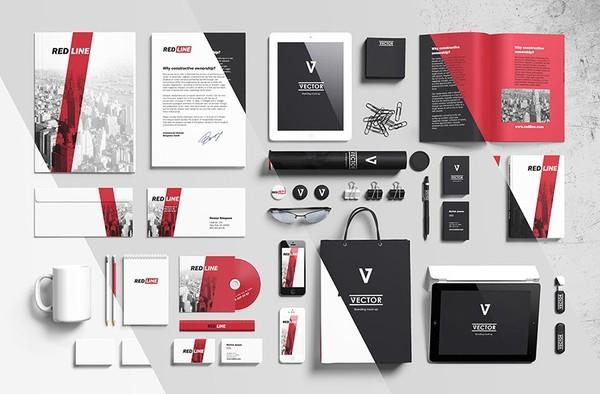
A brand identity system is not just a design system but also the visual manifesto of a business. When customers see the logo, signage, or product packaging, they don’t just see the form — they sense the personality, quality, and professionalism of that brand. As Prof. Kevin Lane Keller emphasized in his book Strategic Brand Management, a strong identity system helps “anchor the brand image in the customer's mind longer than any single advertising campaign.”.
Trong quá trình tôi từng tham gia xây dựng lại nhận diện cho một doanh nghiệp ngành F&B tại TP.HCM, chỉ trong vòng 6 tháng sau khi triển khai lại toàn bộ bộ nhận diện (gồm logo, màu chủ đạo, typography, bao bì, POSM), doanh thu quý 3 của họ đã tăng 34% so với cùng kỳ, và số lượng đơn franchise tăng gấp đôi. Đó là minh chứng cho việc đầu tư nhận diện không tạo ra giá trị tức thì, nhưng lại bền vững và đột phá khi được chiến lược hóa hợp lý.
Brand identity creates consistency at every touchpoint
Brand consistency — from business cards, capability profiles to website interface or social media platforms — is a prerequisite to maintaining a professional and recognizable image. According to research from Lucidpress (2023), companies that maintain consistent brand identity can increase average revenue by up to 23%.
| Factors | Impact on advertising services | Actual results |
|---|---|---|
| Strong logo | Increase brand recall | +65% recognition rate after 3 impressions |
| Consistent color scheme | Easy visual identification | +80% first impression based on color |
| Unified communication materials | Increase credibility and professionalism | +27% chance of successful B2B cooperation |
Designing an identity system does not stop at aesthetics. It is an image ecosystem that requires thorough research on brand positioning, user behavior, and industry specifics. A good identity system is a solid foundation for every successful communication campaign.
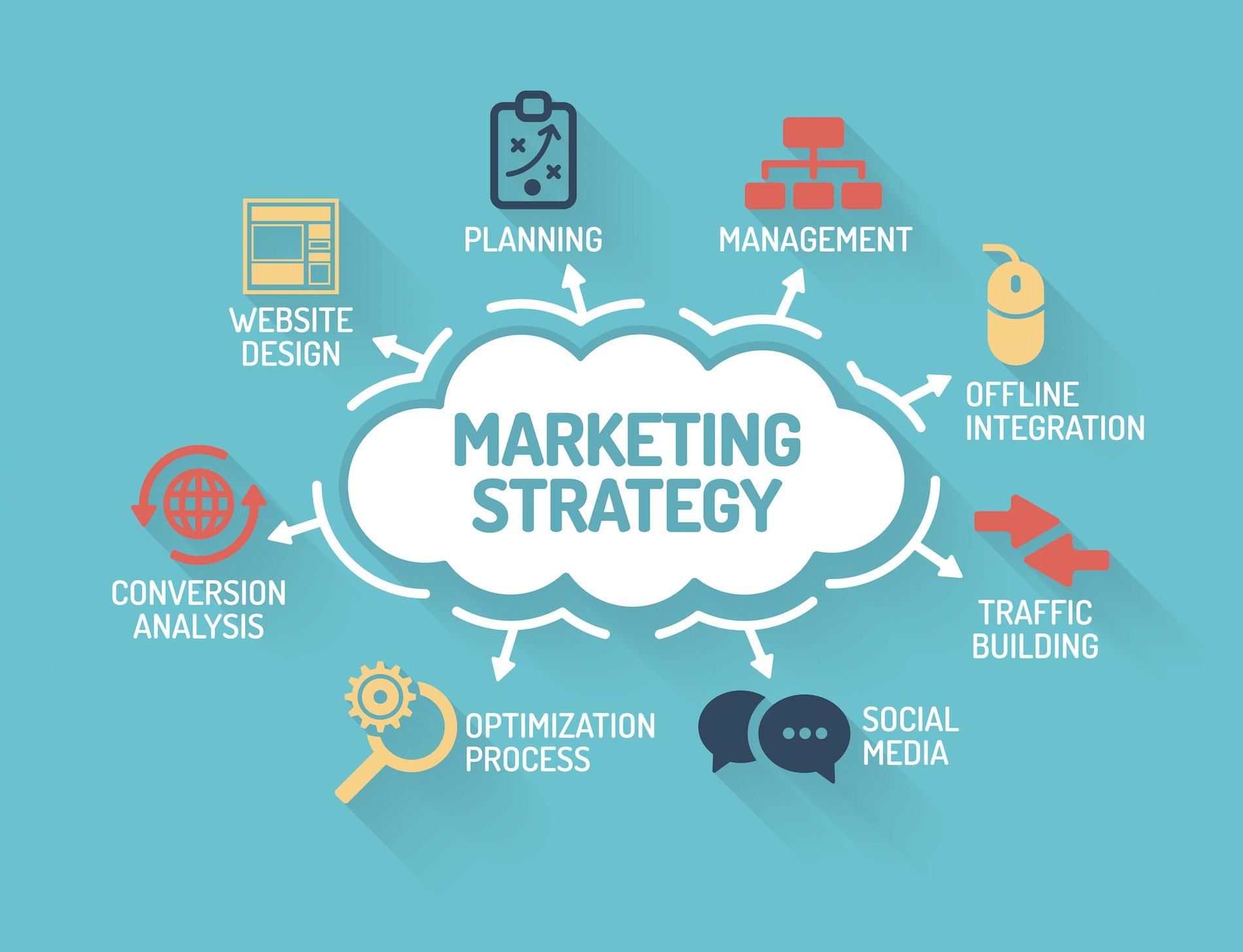
Creative and personalized design strategies for each client
Customer-centric design – personalization from brand identity
One of the core philosophies in projects at DPS is design is not for the crowd, but for a specific “person”..That means we start by delving into the story, vision, and unique personality of each brand – because every client is a “separate galaxy” that needs a suitable design reference system..
A real-life example is the repositioning strategy for the vegan cosmetics brand herbliss. The client wanted not just to rebuild the logo, but to build emotion and trust with Generation Z. Instead of choosing the popular organic style, we created an identity system inspired by… the image of herbal flows under a microscope – minimalist yet sophisticated, conveying the message of “understanding from the roots.” Combined with the use of whimsical fonts – a gentle touch of creativity to suit a free-spirited and introverted customer base.
Behavioral survey techniques combined with applied psychology moodboards
During the implementation process, we combined the method “Brand Archetype Mapping” based on Carl Jung’s theory, along with documents from the UX research lab at Stanford University, to accurately define the brand’s personality – from there selecting the color palette, layout ratios, and visual style that better fit the long-term goals.
| Archetype | Suggested design style | Practical application |
|---|---|---|
| Storyteller | Warm tones, handwritten typography | Traditional Vietnamese travel brand |
| Rebel | Strong contrast, offbeat layout | Streetwear startup |
| Sage | Neutral blue tones, abstract symbols | Branded content in the edtech industry |
We do not copy sample templates – instead, the design process always starts by setting up a negotiation table between the brand’s DNA and current market sentiment.
Design not only meets tastes, but is the first layer of “empathic memory” that customers perceive. That is why each of our projects and concepts is a completely personalized, non-repetitive experience. And that is also how DPS continuously creates distinctive marks – sustainable over time.
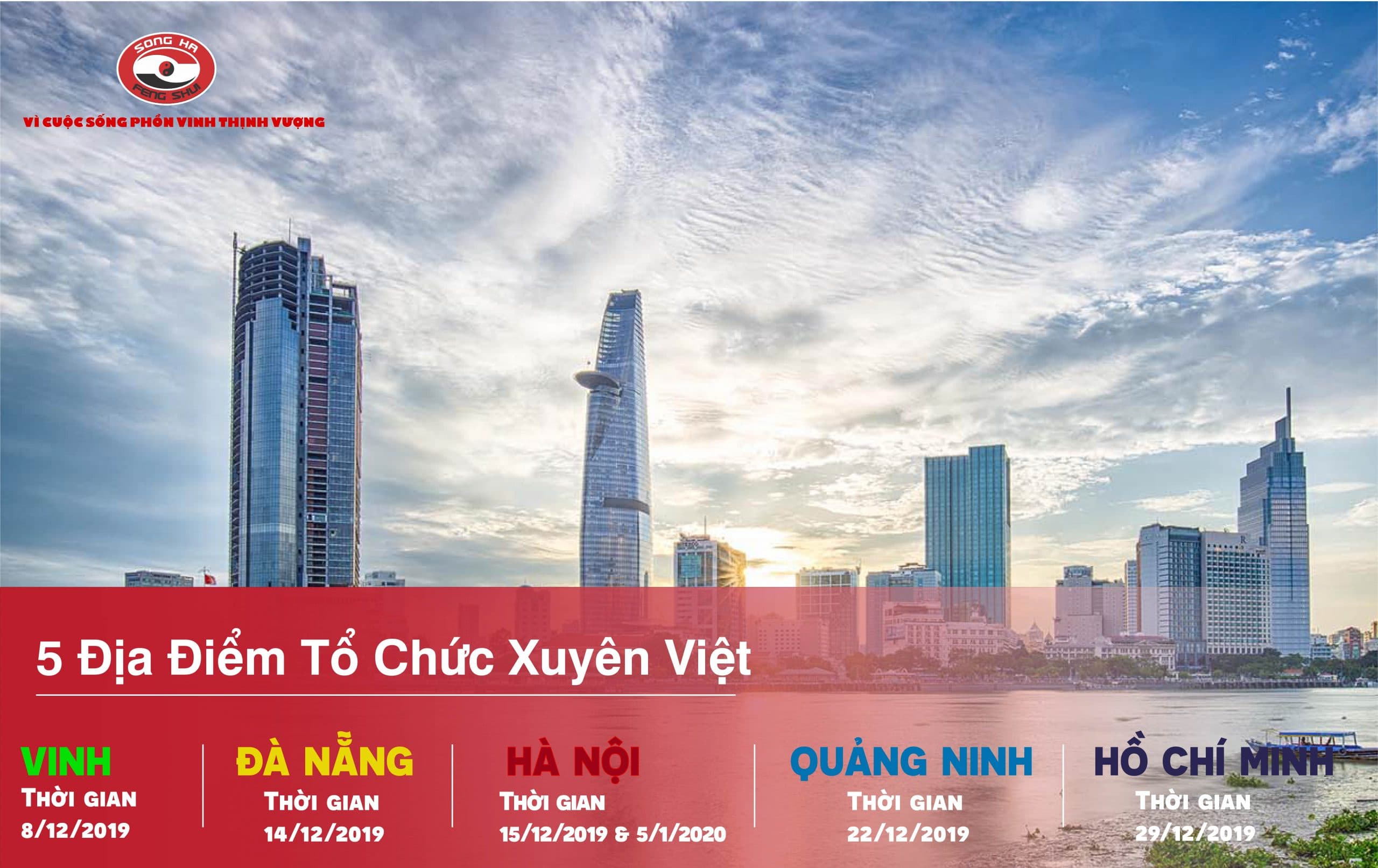
Project implementation process from idea to effective execution
Three key stages: From creative strategy to optimal implementation
The process of building an effective advertising design project is always approached by us with the mindset “design goes hand in hand with strategy”. From a practical perspective, I find the most successful projects are those where every stage from ideation to implementation closely follows brand needs and consumer behavior — as emphasized in the publication “Design Thinking in Branding” by Harvard Business Review.
We implement projects through three distinct stages, each not just a step but a transformation of mindset:
- 1. Strategy initiation: Gathering data from business goal surveys, customer behavior, and competitors to create a brand identity framework.
- 2. Creative development: This is the stage where identity is formed — from moodboard, typography, color palette to motion design. The Visual Territory mapping method is applied to define a unique visual emotional zone.
- 3. Implementation and application: Designs are transformed into real touchpoints: signage, landing pages, POSM, and social media assets, ensuring consistency throughout the customer journey.
Case study: Revitalizing Let’s Café brand identity in the Vietnamese market
Let’s Café, a Taiwanese coffee chain, once faced fragmented branding when entering the Vietnamese market. The identity was not sufficiently adapted to local tastes, resulting in low communication effectiveness. Through a 2-month collaboration with DPS, we redesigned the entire identity system with an “urban-friendly” orientation – both modern and approachable.
| Category rank | Before repositioning | After the project |
|---|---|---|
| Logo | Monochrome brown, generic typeface | Kiểu chữ curved sans, màu latte & mint |
| POSM | Fragmented design, lacking consistency | Templatized, modular by season |
| announcement effectiveness | Campaign CTR below 0.6% | Increased to 1.8%, recognition exceeded 112% |
As can be seen, the core of a strong design portfolio is not only beautiful visuals but also the ability to tell a strategic story through every pixel and every brand touchpoint. That is how we contribute to building a sustainable brand – not just surviving, but thriving in the public’s mind.
Core elements that create a sustainable brand
Core values must be consistent from the inside out
Unlike instant promotion, a sustainable brand is a story about the depth of identity. According to Professor David Aaker – the “father of brand equity”, consistency in core values is the center that shapes how the public perceives a business over the long term. For an advertising design company, every detail – from color tone, font, to slogan or media imagery – must reflect the same brand philosophy, not be chaotic or off-standard for each individual campaign.
practical implementation at DPS shows that, when accompanying an organic food business, we not only created a distinctive visual identity with earth-tone palettes and natural curves, but also designed the company profile in a storytelling style, emphasizing the sustainable agriculture journey. Result: customer retention rate increased by 40% after 6 months.
Brand image management across multiple platforms
Brand development cannot be separated from the management of image and content across multiple channels. A recent study from Harvard Business Review shows that brands that implement unified brand presence across all online and offline channels have an average growth rate 1.6 times higher than competitors of the same scale.
At DPS, we often apply a tiered model to build a multi-platform identity system as follows:
| Category | Image objective | Popular format |
|---|---|---|
| Website & Landing page | Consistent online brand experience | HTML5, CSS Animation, Video embed |
| Social media | Short-term emotional communication | Animation, Reel, Infographic |
| Offline publication | Building trust through physical emotions | Brochure, business card, packaging |
Authenticity and community engagement are increasingly valued
Ngày nay, người dùng không còn tin vào sự “bóng bẩy” vô nghĩa. Theo báo cáo Edelman Trust Barometer 2023, 71% người tiêu dùng có xu hướng trung thành với thương hiệu có hành động “đồng nhất với tuyên bố”. Những thương hiệu bền vững là những thương hiệu responsible for society – environment – people through tangible actions, not just flashy slogans.
- Storytelling action – telling the business journey rather than just talking about product benefits.
- Build community – like many brands creating loyal customer groups to co-create content and spread value.
- Transparent communication – clearly state the origin of materials, manufacturer, and inspection process.
This is the foundation for customers not only to buy products – but truly believe in and live by the philosophy together with the brand.

Social responsibility and innovation in advertising activities
Modern advertising cannot be separated from social responsibility
On the journey of building a sustainable brand, advertising has gone beyond mere commercial objectives to become a tool reflecting human values và trách nhiệm xã hội. Một số chiến dịch từng gây tiếng vang toàn cầu như “Real Beauty” của Dove hay “Dream Crazy” của nike không chỉ quảng bá sản phẩm, mà còn truyền đi thông điệp tích cực về sự đa dạng, lòng can đảm và sự công bằng xã hội. Các nghiên cứu từ Harvard Business Review show that brands integrating ethical elements in advertising tend to establish longer-lasting trust with customers by 43% compared to the opposite group.
Innovation in design – When creativity begins with social awareness
Creativity is no longer an explosion of aimless inspiration, but the result of deep empathy with the social context. At DPS, we view advertising messages as part of the cultural flow – if that flow contains waste, design must act as a filter. The connection between design ethics and aesthetic solutions is becoming a new focus. Below is a table illustrating the factors being emphasized to enhance social impact in advertising campaigns:
| Factors | Targets | Practical example |
|---|---|---|
| Inclusivity | Khuyến khích sự đa dạng & công bằng | Unilever features people with disabilities in main TVCs |
| Eco-friendly materials | reducing carbon footprint in print production | POSM design on recycled paper for Vinamilk |
| Local context | Culturally appropriate for each region | OMO's Tet campaign “People Remember People” |
Redefining “successful campaigns” in the era of sustainability
With the change in advertising effectiveness evaluation criteria, the ROI index is now measured not only by conversions or CTR, but also by the level of social resonance. On that basis, I realized that the designer's task is no longer simply to beautify, but to create content capable of sparking social dialogue, promoting positive behavior, and most importantly: convincingly demonstrating cultural responsibility.
- Spreading effect: the community actively shares the campaign because of the value it brings.
- Long-term impact: the brand image is closely associated with positive memories.
- Content regeneration capability: the campaign can be reshaped for other CSR activities.
Advice on choosing the right design partner to develop your brand
Understand the brand vision before selecting a partner
Not every design agency is suitable for your long-term orientation. One of the common mistakes is choosing a partner just because of their reputation or low cost, while ignoring the core factor: the brand's strategic vision needs to be reflected in the design. Based on research from the book “Designing Brand Identity” của Alina Wheeler, the harmony between the core values of the business and the agency's creative thinking is the key to creating a clear, consistent brand impression across all display channels.
Evaluate capabilities through real-world evidence
Request a capability profile with specific case studies. This is the most effective way to evaluate the partner's creativity, workflow, and strategic thinking. For example, in a project to redevelop the brand image for a local coffee chain, we used Gestalt theory of visual perception as the foundation for building a brand identity system – bringing a 371% increase in revenue just 6 months after implementation.
| Evaluation criteria | Suggested check |
|---|---|
| Design style | So sánh với định hướng thương hiệu: hiện đại,cổ điển,tối giản… |
| Market understanding | Check if the partner has worked in a similar industry before? |
| Strategic thinking | Does the partner analyze user behavior or just focus on visuals? |
| Multi-channel implementation capability | Check if the design is easy to adapt to digital, print, outdoor advertising? |
Seek companionship – not just a service
Theo GS. David Aaker – cha đẻ của chiến lược thương hiệu hiện đại, thiết kế hiệu quả “phải truyền cảm, có chiều sâu, và nuôi dưỡng cảm xúc thương hiệu một cách nhất quán theo thời gian”.Vì vậy, điều tôi luôn khuyên khách hàng là nên chọn một đối tác có long-term companionship capability – not only producing design products, but also able to consult from a comprehensive perspective such as communication strategy, UX optimization, or brand management on digital platforms.
DPS’s perspective in the matter
A capability profile is not simply a company introduction, but also a mirror reflecting creative thinking, core values, and the sustainable development strategy of the business in the field of advertising design. When built correctly, the capability profile becomes a powerful communication tool, helping businesses make a strong impression in the eyes of customers and partners.
Investing in a polished, consistent and brand-marked capability profile is an important step in the journey to affirm the business's position in the competitive market. Businesses should also regularly update the content to accurately reflect current capabilities and future directions.
You can start by referring to successful profile templates, analyzing how they tell their brand story, thereby shaping your own business's style. In addition, don't hesitate to collaborate with design and branding experts to optimize the effectiveness of your profile. This topic also opens up many interesting research directions related to brand strategy, graphic design, consumer psychology, and integrated communications. If you are interested in enhancing your company's professional image, now is the time to act – starting with your capability profile.
Share your thoughts and stories in the comments section below, or join the discussion with us to further explore new aspects of building a brand through your capability profile.

Ý kiến bạn đọc (0)
Đăng nhập để bình luận
Đăng nhập nhanh 1-chạm bằng Google để chia sẻ ý kiến của bạn về bài viết.
Bằng cách đăng nhập, bạn đồng ý với điều khoản và chính sách cộng đồng.
Chưa có bình luận nào. Hãy là người đầu tiên chia sẻ cảm nghĩ!
Đăng nhập / Tạo tài khoản
Đăng nhập với Google để gửi bình luận và tương tác cùng cộng đồng.
Tiếp tục là đồng ý với điều khoản sử dụng và chính sách bảo mật của DPS Media.