


In business, controlling cash flow and understanding profit and loss in real time is a vital factor, especially for SMEs. Using Google Sheets to record income and expenses and automatically calculate profit and loss is not only simple and free but also helps managers make quick and accurate decisions. This solution is especially useful in the context where many businesses are still struggling with manual data entry and delayed reporting.
According to an internal survey by DPS.MEDIA with over 200 SME clients, up to 67% of businesses admit they cannot track profits by each marketing campaign or week. This leads to uncontrolled spending and difficulty in evaluating investment effectiveness.With Google Sheets, you can automate data aggregation and update results in real time without needing complex accounting software.
The biggest strength of this method is its flexible customization and easy integration with Google Data Studio, Google Forms, or other CRM tools. Just set up once, all income – expenses – profits will be presented visually and clearly, minimizing errors due to data entry.
DPS.MEDIA đã triển khai giải pháp này cho hàng loạt doanh nghiệp vừa và nhỏ trong lĩnh vực bán lẻ, F&B và dịch vụ – kết quả cho thấy the time to consolidate financial reports is reduced by up to 80%, and decision-making ability increases significantly. This is not just a financial management tool, but also a platform that helps businesses achieve sustainable growth through transparency and timely cash flow management.
You don't need to be good at Excel – just a standard template, a few data entry steps, and some automation – and you can operate immediately. With costs almost equal to zero and unlimited scalability, Google Sheets is truly the “free accountant” that any small business should take advantage of.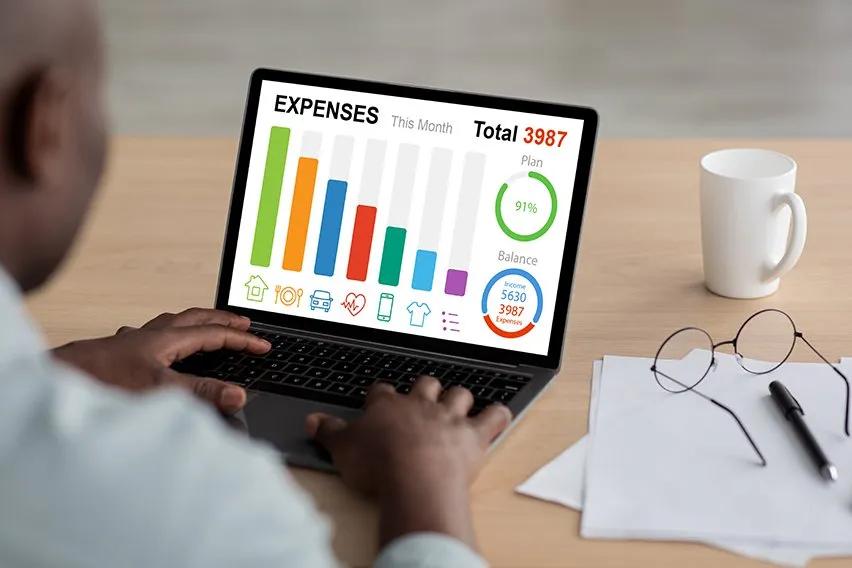
Automate small business cash flow management with Google Sheets
Easily manage income and expenses through automated Google Sheets
As Vietnamese SMEs are increasingly concerned about internal financial efficiency, DPS.MEDIA regularly advises businesses to use Google Sheets as a powerful tool for automatically recording income and expenses. With the support of formulas such as QUERY, ARRAYFORMULA, or IMPORTRANGE, profit and loss statistics are no longer a monthly burden.
We have implemented this solution for a fashion shop in Hanoi: instead of manually entering each line of data, the shop owner only needs to enter transaction information into a simple table, and the entire financial report is automatically updated in real time.
Automation features help business owners save time
By setting up hourly or daily triggers with Google App Script, you can make your spreadsheet respond automatically:
- Send profit/loss report emails every week
- Update monthly cash flow charts
- Filter income/expense items that exceed the budget
A typical cash flow analysis table set up by DPS.MEDIA for clients may look like this:
| Time | Income | Cost | Profit/Loss |
|---|---|---|---|
| January | 120,000,000₫ | 80,000,000₫ | +40,000,000₫ |
| February | 105,000,000₫ | 95,000,000₫ | +10,000,000₫ |
| March | 98,000,000₫ | 102,000,000₫ | -4,000,000₫ |
Case study: Optimize cash flow with a zero-cost solution
A business selling children's toys in Ho Chi Minh City has saved more than 20 hours of reporting each month thanks to the Google Sheets system we designed. The system includes:
- Automatically categorized recording sheet by account and category
- Visual dashboard tracking net profit by each product
- Cash flow alerts in red using color, helping business owners react quickly
This is not only a smart way to reduce dependence on expensive accounting software but also a step towards proactive financial strategy – something most small businesses in Vietnam often overlook.
Build a standardized and scalable income and expense recording system
A simple, flexible system framework that follows basic accounting standards
Google Sheets can become an extremely effective income and expense management tool if structured properly from the start. At DPS.MEDIA, we often apply a “Modular” design – each type of transaction (income, fixed costs, variable costs, investment, etc.) is a separate tab, and the central data is aggregated through a “Dashboard” sheet.
- Easy data control thanks to standardized naming of categories and spending accounts.
- High scalability when integrating timelines, quarterly reports, or marketing campaign reports.
- Multi-user synchronization when allowing multiple departments to record data simultaneously without causing table conflicts.
Automate calculations and analysis with integrated formulas
We often take advantage of functions like QUERY,ARRAYFORMULA and IMPORTRANGE to create profit and loss analysis logic by day, week, and month. As a result, small and medium-sized businesses do not need to invest in expensive accounting software and can still grasp the financial picture.
| Item | April | May | Difference |
|---|---|---|---|
| Revenue | 75,000,000 | 92,000,000 | +17,000,000 |
| Cost | 48,000,000 | 59,000,000 | +11,000,000 |
| Profit | 27,000,000 | 33,000,000 | +6,000,000 |
Case study thực tế: start-up F&B tối ưu quản lý dòng tiền chỉ bằng Sheets
One of our clients – a craft coffee shop chain with 3 branches – used to use separate Excel files to record income and expenses for each location. After implementing a recording system with Google Sheets and creating a centralized dashboard, they clearly discovered that the central branch was losing money – mainly because inventory materials were not properly valued.
Since automating alerts when costs exceed thresholds (for example: weekly ingredient costs exceed 15 million), average sales have increased by 20% in 3 months just by reducing waste and redirecting the menu based on profit margins. According to a McKinsey report (2022), businesses that apply BI (Business Intelligence) in daily operations can improve cash flow by up to 28%. Google Sheets – if built properly – can absolutely become a mini BI tool for Vietnamese SMEs.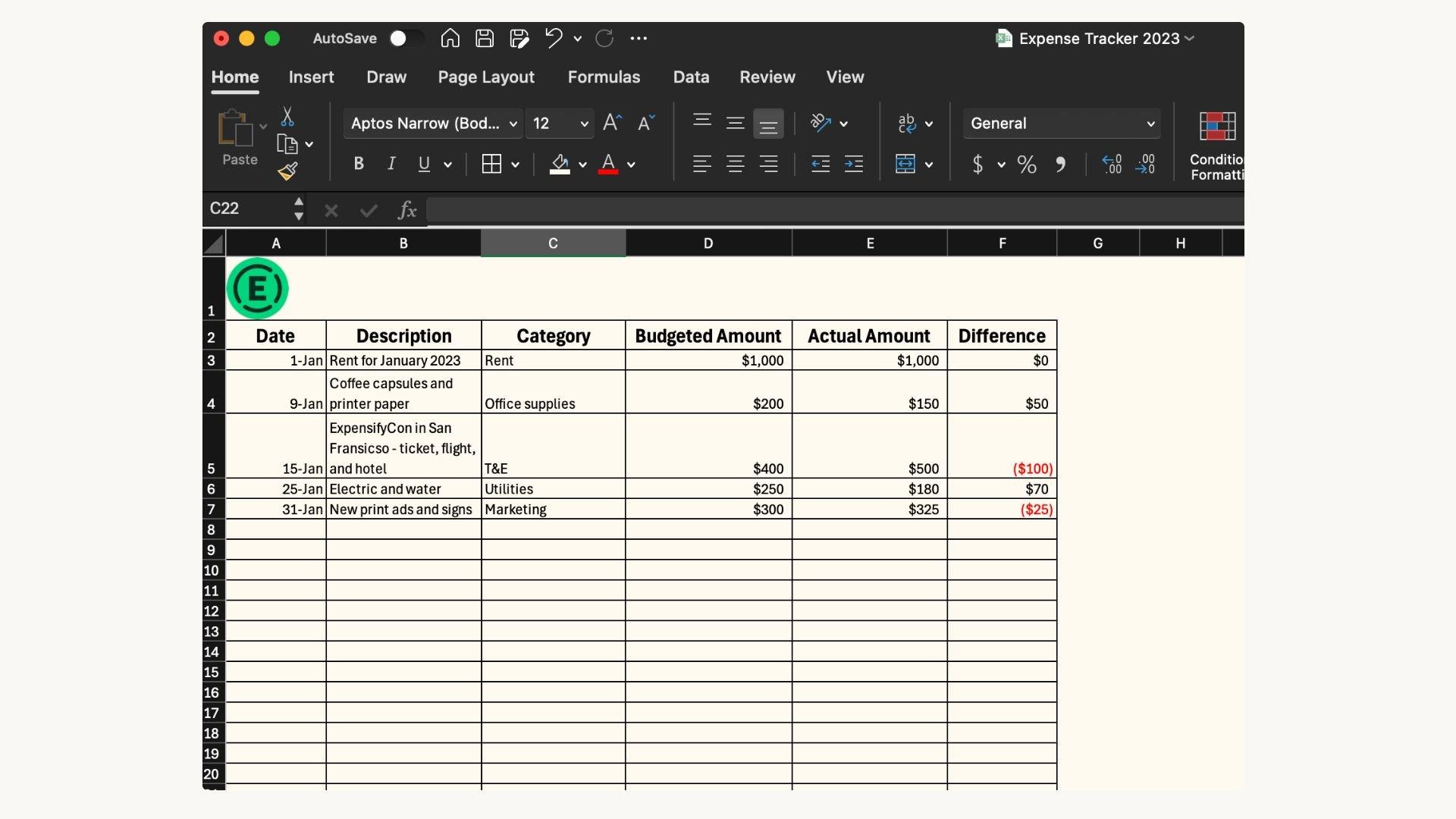
Leverage Google Sheets functions and charts to smartly track profits and losses
Biến công thức thành công cụ “tài chính cá nhân”
At DPS.MEDIA, we have noticed that many small businesses and individual business owners are still using manual methods to track income and expenses, leading to incorrect analysis and emotional decision-making. Google Sheets – if used correctly – can become a reliable “financial advisor” with the support of smart functions such as =SUMIFS,=ARRAYFORMULA,=QUERY or =IFERROR.
For example,a detailed daily income and expense tracking table with categorization will help create dynamic charts with just a few simple formulas. Below is a sample table applying the standard WordPress format to track monthly profit/loss:
| Monthly | Total income | Total expenses | Profit/Loss |
|---|---|---|---|
| April | 28,500,000 VND | 19,200,000 VND | +9,300,000 VND |
| May | 30,000,000 VND | 32,000,000 VND | -2,000,000 VND |
Visual automation with dynamic charts
Not stopping at dry numbers, column or line charts in Google Sheets allow you to visualize financial trends over time – this is a vital point for SMEs to flexibly adjust marketing budgets or operating expenses.
According to research from Harvard Business Review, visual data helps increase memory retention and decision-making up to 70%. A recent case study from a DPS.MEDIA client in the retail sector showed: When they started attaching dynamic charts to track advertising costs versus weekly revenue, they were able to cut 12% of wasted marketing budget and increase ROI in the next quarter.
We often recommend combo charts Combo Chart with key KPI metrics, for example:
- Weekly revenue – blue line
- Marketing expenses – orange column
- Net profit – green line
It is this transparency that drives SME CEOs not only to “survive” but also to grow sustainably and strategically.

Connect multi-platform data to enhance financial management efficiency
Collect financial data from multiple sources on Google Sheets
At DPS.MEDIA, we have implemented a series of projects helping Vietnamese SMEs integrate revenue and expense data from multiple channels into a single spreadsheet system on Google Sheets.
Nhờ tận dụng Google App Script và công cụ Zapier, bảng Google Sheets không đơn thuần là nơi nhập dữ liệu thủ công nữa mà trở thành một trung tâm tài chính “sống”, tự động thu thập dữ liệu từ:
- Sales software such as kiotviet, Sapo
- Payment applications such as Momo, ZaloPay
- Advertising platforms such as Facebook Ads, Google Ads
This helps eliminate recording errors while ensuring consistency in reporting.
Instant profit and loss analysis and real-time decision making
What many small business owners have yet to fully utilize is the combination of Sheets and dynamic charts. You can use QUERY or PIVOT TABLE in Google Sheets to automate cash flow analysis by day, campaign, or revenue/expense source, thereby:
- Display real-time profit/loss for each marketing campaign
- Compare sales performance between branches
- Automatically alert for negative balance when spending exceeds the budget
Illustrative model of real-world business application
A recent case study at DPS.MEDIA: an online fashion shop in Ho Chi Minh City applied the model of integrating Google Sheets with Facebook Ads Manager and the order management system. Below is the automatically generated daily report:
| Date | advertising costs | Revenue | Profit |
|---|---|---|---|
| 05/06/2024 | 1,200,000₫ | 4,500,000₫ | +3,300,000₫ |
| 06/06/2024 | 1,500,000₫ | 3,000,000₫ | +1,500,000₫ |
Shop owners can easily monitor the effectiveness of each campaign by day without needing complicated management software.
Theo nghiên cứu của Harvard Business Review, doanh nghiệp SMEs có khả năng ra quyết định nhanh hơn 34% khi sử dụng dashboard tài chính tích hợp dữ liệu theo thời gian thực. Điều này càng củng cố quan điểm của DPS.MEDIA rằng: “Google sheets không còn chỉ là bảng tính – mà là bảng điều khiển tài chính linh hoạt cho các doanh nghiệp thông minh”.
Common mistakes when recording finances on Google Sheets and how to fix them
Setting up non-standard spreadsheets causes inaccurate statistics
A common mistake of many small and medium enterprises when starting to use Google Sheets is not building a suitable table structure. Income and expense data are often recorded separately, lack formatting, or are inconsistent between columns – this causes calculation functions such as =SUMIF() or =QUERY() to return incorrect results.
Để khắc phục,đội ngũ chuyên gia từ DPS.MEDIA khuyến nghị nên chuẩn hoá cấu trúc bảng theo mô hình kế toán căn bản. Ví dụ cụ thể từ một case study chúng tôi từng triển khai cho một công ty khởi nghiệp ngành F&B như sau:
| Date | Item | Transaction type | Amount (VND) | Note |
|---|---|---|---|---|
| 01/06/2024 | Import materials | Expense | 2,000,000 | Purchase materials from supplier A |
| 02/06/2024 | Retail | Income | 3,200,000 | Revenue from store 1 |
Clearly defining information fields makes it easy to categorize data, thereby creating charts or dashboards to analyze profit and loss in a visual and well-founded manner.
Không sử dụng công thức & data Validation để tự động hóa
Many SMEs are still manually entering data 100%, ignoring the application of formulas and limited data ranges. This leads to typos, number formatting errors, and even damages the entire financial dashboard.
From internal implementation experience at DPS.MEDIA, we found that combining Dropdown Lists, Data Validation and dynamic formulas such as =ARRAYFORMULA() will help automate the process, reduce errors, and save up to 40% of data processing time according to a Harvard Business Review (2021) report.
- Transaction type dropdown: giúp người dùng không gõ nhầm “thu/chi”.
- Limit numeric data: Đảm bảo chỉ nhập số dương cho cột “Số tiền”.
- Use the general formula: Easily expand the table without manual adjustments.
With just a few initial setup steps, businesses can build a smart – and accurate – record-keeping system entirely on the free Google platform.
Lack of access control leads to overlapping data
A rarely noticed but highly impactful mistake is sharing editing rights to the table indiscriminately. As a result, multiple people working at once can cause data to be overwritten or carelessly edited, leading to inaccurate financial reports.
DPS.MEDIA often advises SME clients to set up role-based access rights: only 1-2 people should be allowed to edit the table structure, while others should only have data entry or report viewing permissions.
Plugins like “Sheetgo” or “Coupler.io” are also useful solutions to import data from sub-tables while preserving the main table structure. This is a low-cost initial step but brings long-term benefits to the business financial ecosystem.
Analyze income and expense data to optimize business spending strategies
Understand cash flow with dynamic Google Sheets models
Small and medium enterprises (SMEs) often have the habit of tracking income and expenses via notebooks or cumbersome accounting software. However, using Google Sheets to automate cash flow recording and analysis can help optimize financial decisions flexibly. With tools like Filters, Charts, and functions such as =QUERY, =SUMIFS, businesses can easily create their own “mini ERP” system, operating in real-time and completely free.
For example, at DPS.MEDIA, we once implemented a detailed income and expense management Google Sheets template for a medical equipment distribution company. In just 2 weeks, the client collected over 92% more accurate data compared to the previous manual entry phase and discovered unnecessary expenses accounted for up to 18% of the monthly marketing budget.
Identify inefficient spending streams with specific data
Data analysis does not stop at aggregation, but also extends to creating comparison tables between plan and actual results. With a clear database, businesses can identify low-cost, high-efficiency expenses, thereby reallocating marketing or operational budgets more appropriately.
| Category | Estimate (VND) | Actual expenditure (VND) | Difference value | Recommended action |
|---|---|---|---|---|
| Facebook advertising. | 15,000,000 | 20,500,000 | +5,500,000 | Reduce budget, try A/B testing |
| Email Marketing | 8,000,000 | 5,500,000 | -2,500,000 | Increase sending frequency |
| Freelance personnel costs | 10,000,000 | 9,800,000 | -200,000 | Keep unchanged |
Apply analytics to make strategic marketing decisions
According to a 2020 Harvard Business Review study, 64% of SMEs“ strategic financial decisions are ”born” from random data or intuition. At DPS.MEDIA, we believe that: “Transparent finance is the most reliable marketing data.”
When income and expenditure data are automatically compiled using Google Sheets, businesses can:
- Prioritize budget for channels with high ROAS
- Immediately eliminate items that are “evenly spent but not profitable”
- Clearly understand how each campaign affects end-of-period profit
Với một sheet đơn giản nhưng được cập nhật hàng ngày, bạn có thể xây dựng bảng dashboard tài chính – marketing giao thoa, làm sáng tỏ “bức tranh” hiệu quả kinh doanh thay vì chỉ nhìn vào doanh thu đơn thuần.
Suggest the most optimal Google Sheets templates for Vietnamese SMEs
Automated income and expense recording template — The core of financial transparency
Vietnamese SMEs often face difficulties in cash flow management — a vital issue that directly affects survival and development. According to research from Harvard Business Review (2023), over 60% of small businesses fail due to ineffective cash flow control. The automated Google Sheets income and expenditure template built by DPS.MEDIA is based on the actual financial behavior of SMEs in Vietnam, with a system of formulas that automatically calculate profit and loss, separate fixed and variable costs, and generate quick reports every weekend with just one click.
This is not just a spreadsheet, but a digital ecosystem for minimalist financial management, suitable for both online shop owners and small distributors:
- Simple interface – easy to use: Can be used even on mobile phones, integrates Google Forms to make data entry from employees or departments smoother.
- Automatic calculation in real time: Uses QUERY, ARRAYFORMULA combined with Data Validation to ensure standardized data entry.
- Highly customizable for each business model: Easily adjust income/expense categories, add custom KPIs such as profit margin by product line.
Case Study: Homedecor Mộc Nhiên – 231% growth after 45 days of implementation
Cuối quý II/2024, đội ngũ DPS.MEDIA hợp tác cùng doanh nghiệp handmade nội thất “Mộc Nhiên” triển khai bộ Google Sheets quản lý thu – chi bán hàng online, đồng thời tích hợp với Facebook Ads tracking. Nhờ tự động hóa quy trình, doanh nghiệp này phát hiện ra nhóm sản phẩm “tranh canvas” đang có ROAS thấp dưới 1.4 nhưng vẫn tốn 35% ngân sách chạy quảng cáo. Việc điều chỉnh chỉ sau 10 ngày giúp tối ưu nhân sự và nguồn lực,doanh thu tăng 23% cuối tháng.
| Financial indicators | Before using the template | After 6 weeks of application |
|---|---|---|
| Monthly gross profit | 19,200,000₫ | 24,600,000₫ |
| Number of expense lines without description | 58% | 4% |
| Weekend report processing time | 4 hours | 20 minutes |
Benefits beyond traditional accounting
This recommended template does not replace professional accounting, but is a streamlined bridge between field data and management strategy. Theo PGS.TS Bình Trọng Thắng (Trường ĐH Kinh tế TP HCM), “các mô hình tài chính phản ứng nhanh với số liệu sống — như qua Google Sheets — đang thúc đẩy smes việt Nam hình thành tư duy kiểm soát tài chính số theo thời gian thực, giúp tiết kiệm ít nhất 12% chi phí lập báo cáo và ra quyết định sớm hơn 1,5 lần.”
What I want to convey
Applying Google Sheets to record income and expenses and automatically calculate profit and loss not only helps businesses save time but also enhances financial management efficiency in a transparent and flexible way. With simple setups like automatic calculation functions, intuitive charts, and detailed categorization, any SME can quickly grasp their financial situation without needing complicated accounting software.
At DPS.MEDIA, we recognize that optimizing internal processes with digital tools like Google Sheets is a necessary stepping stone for the sustainable development strategy of small and medium-sized businesses. When financial management becomes easier, business owners can focus their resources on more effective digital marketing activities, such as running Google Ads campaigns or building a strong content ecosystem.
We encourage you to start with the simplest steps – create your own income and expense form on Google Sheets today, gradually adjust it to your actual needs, and observe the positive changes in how you run your business. If you are interested in connecting financial data with business operations, explore tools like Google Data Studio or automate with Google Apps Script.
DPS.MEDIA is always ready to accompany the SME business community in Vietnam on the journey of comprehensive digital transformation. Share your experiences or questions in the comments section below – we look forward to hearing your perspectives and growing together.