


Solopreneur tools are becoming an important foundation for one-person businesses to maintain growth without a large team. In the context of rising personnel costs and stronger competitive pressure, building a smart automation system helps business owners save time and optimize revenue.
According to We Are Social 2026, Vietnam has 72.7 million users social networks and over 78 million internet users. This makes online business activities more competitive every day. At the same time, according to Directive 10/CT-TTg in 2026, the Government continues to promote digital transformation for small and medium enterprises to improve operational efficiency.
This article will help you build a suitable toolkit to manage work, marketing, sales, and finance for the one-person business model. You will also know how to leverage AI for small businesses without investing a huge budget.
Why do solopreneur tools need to be built systematically?

Many small business owners start by using individual, fragmented tools. They store customers in Excel, write content using many different apps, and manage tasks via messages. After a few months, data becomes fragmented and processes become difficult to control.
The difference for successful solopreneurs lies in building a synchronized operating system. This system helps all data link together, reduces manual operations, and increases scalability.
Solopreneurs are changing the way business is done
According to the Digital Vietnam 2026 report by We Are Social, the number of social media users in Vietnam increased 9.8% in just one year. This creates a great opportunity for micro-businesses to reach customers without a huge media budget.
AI for small businesses is also becoming more popular. Platforms like ChatGPT, Gemini, or Claude help business owners write content, come up with advertising ideas, and respond to customers faster than before.
According to the experience of DPS. MEDIA, many Vietnamese SMEs speed up operations significantly after normalizing workflows with AI and basic automation. The most important thing is not using many tools, but choosing the right tools to solve the right bottlenecks.
- Automation helps reduce time spent on repetitive daily tasks.
- AI supports faster content production for social media.
- Cloud helps access data from anywhere.
- Simple CRM helps not to miss potential customers.
- KPI Dashboard helps in faster decision making.
- Email automation maintains continuous customer care.
For example, Mr. Hoang runs a roasted coffee brand in District 3. Previously, he used three different platforms to manage orders. After moving everything to Notion combined with Google Workspace, operational processing time decreased by nearly 40%.
Another case is Ms. Linh who sells online English courses in Hanoi. Initially, she bought more than 12 different softwares but could not connect the data. After restructuring the system, software costs decreased by 18 million VND per year and the customer retention rate increased by 22%.
Bottlenecks when operating a one-person business
The biggest bottleneck for a solopreneur is time limit. One person who sells, does marketing, takes care of customers, and handles finances will easily become overwhelmed.
In addition, data is often scattered. When customers ask for purchase history or old quotes, many business owners lose dozens of minutes searching for information.
| Bottleneck | Consequence | Suitable tool | Priority level |
|---|---|---|---|
| Manual task management | Late deadline | Notion | High |
| Not storing leads centrally | Losing customers | HubSpot CRM | High |
| Manual customer care | Decreased return rate | Email automation | Average |
| No KPI measurement | Difficult to grow | Looker Studio | High |
A practical rule is if you repeat the same action more than three times a day, consider automating it. This is the threshold that helps solopreneurs save significant time.
Tool stack mindset instead of using fragmented tools
“Tool stack” means all software must connect with each other into an ecosystem. For example, a registration form will automatically push data into the CRM, then email automation sends automatic care.
Many Vietnamese solopreneurs are moving to a no-code model to reduce technical dependence. Platforms like Zapier or Make allow connecting many applications without programming.
A minimum stack should have task management, CRM, email, data storage, and a KPI dashboard. This is a strong enough foundation for most one-person businesses with fewer than 10 new customers per day.
Solopreneur tools for work and customer management
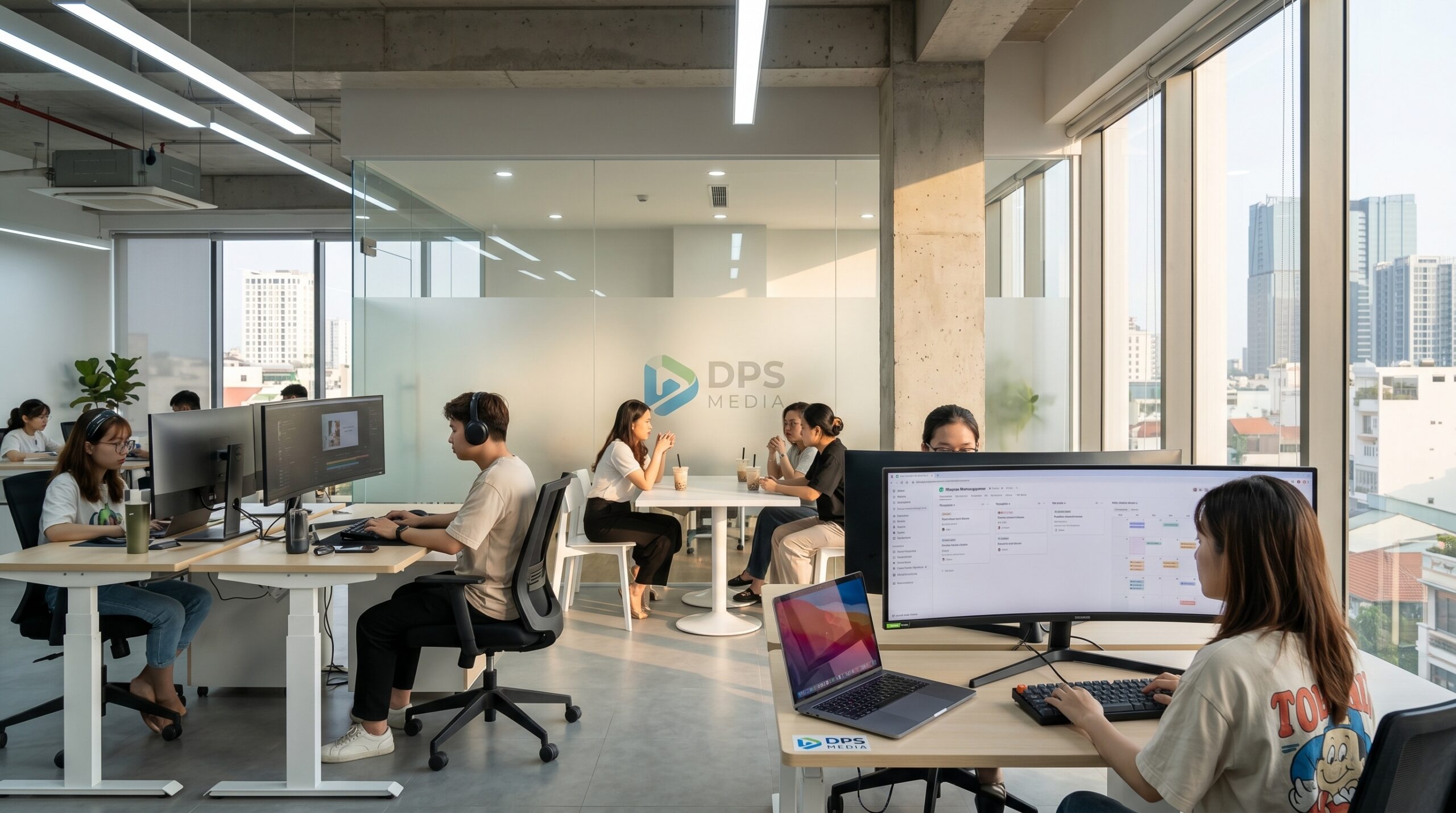
Work management is the foundation of the entire operating system. Without a clear structure, solopreneurs can easily fall into a state of reactive instead of proactive work.
Notion and ClickUp for operational management
Notion is suitable for solopreneurs who need to manage SOPs, content plans, and customer data in one place. Meanwhile, ClickUp is stronger in managing tasks by deadline and workflow.
A common benchmark is if a business has more than 20 repetitive tasks per week, you should switch from manual notes to a specialized management platform. This helps reduce missed tasks and increases the ability to track progress.
An effective tip is to create templates for repetitive tasks. For example, each Facebook ad campaign has a fixed checklist including content, landing page, and tracking.
- Create weekly work dashboards.
- Categorize tasks by priority.
- Set automatic deadlines.
- Use SOP templates for repetitive processes.
- Connect Google Calendar for reminders.
- Store all documents in the same system.
Ms. Mai, who operates a yoga studio in Thu Duc, moved from Excel to ClickUp. After three months, the livestream delay rate decreased from 30% to 5%.
A freelancer agency in Da Nang used to store all SOPs on fragmented Google Docs. When collaborating with more contributors, they spent a lot of time onboarding. After normalizing on Notion, training time was reduced by nearly half.
Simple CRM for small businesses
Many solopreneurs think CRM is only for large enterprises. In fact, CRM is very necessary for one-person businesses because it helps avoid losing customers.
If you have more than 15 new leads per month, CRM has started to become necessary. A basic system must be able to store interaction history, lead status, and follow-up reminders.
HubSpot CRM or Zoho CRM are popular choices for Vietnamese SMEs. These platforms have free versions that are sufficient for the early stages.
| Tool | Strengths | Appropriate | Starting cost |
|---|---|---|---|
| HubSpot CRM | Easy to use | New Solopreneur | Free |
| Zoho CRM | Many automations | SME growth | Low |
| Pipedrive | Visual pipeline | B2B Sales | Average |
| Bitrix24 | Many features | Small team | Average |
DPS. MEDIA recommends that small businesses should start with a simple CRM before implementing a complex system. The important thing is to build the habit of updating data every day.
Communication and collaboration tools
Google Workspace remains a popular choice for one-person businesses due to its stability and strong synchronization capabilities. Besides email, this ecosystem also supports storage and online meetings.
If working with freelancers or partners, Slack helps reduce information loss through personal Zalo. Meanwhile, Loom supports recording quick instructional videos for contributors.
An effective principle is that all important information must be on the shared system instead of personal messages. This helps avoid data loss when expanding the team.
Automating marketing and sales with AI for small businesses
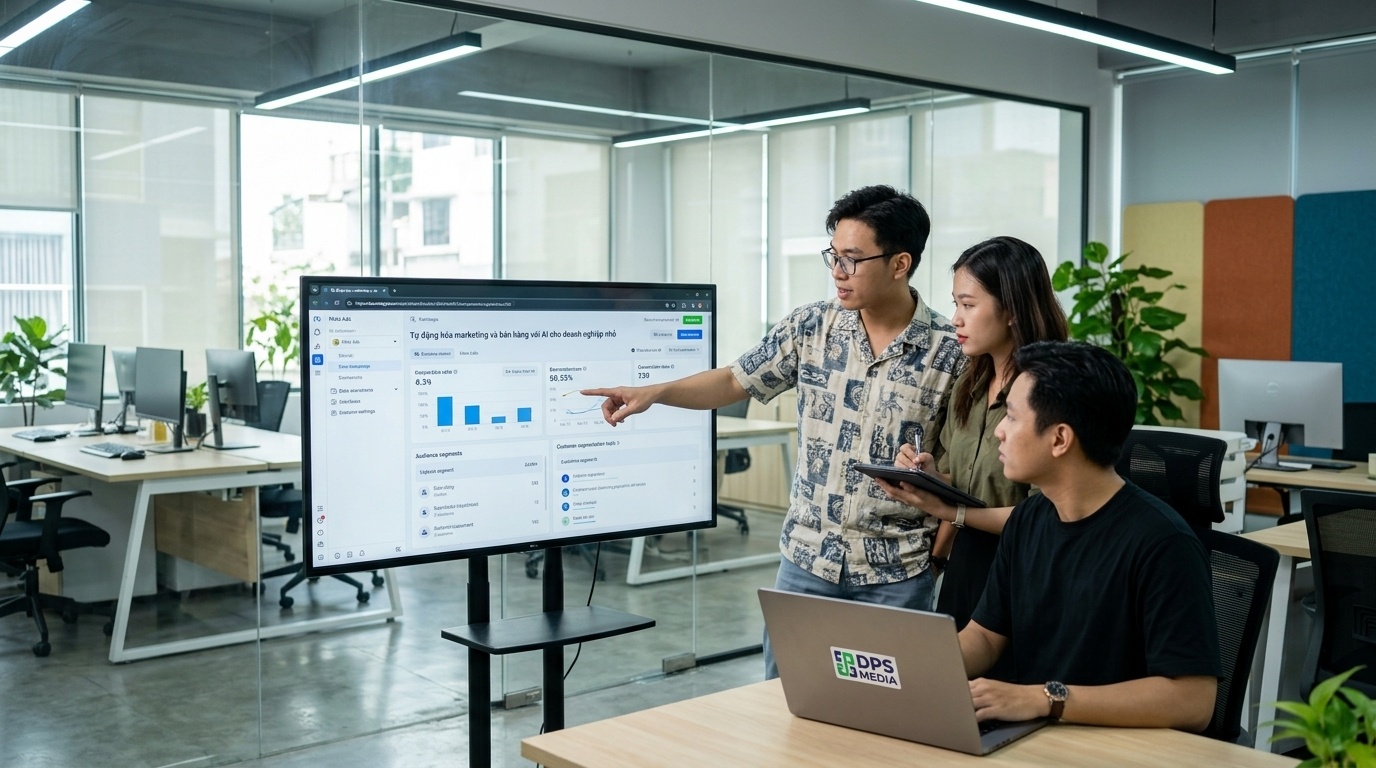
Marketing is the area that consumes the most time for a solopreneur. This is also where AI creates the most distinct difference.
AI for content writing and social media management
AI tools like ChatGPT, Jasper, or Copy.ai help create outlines, captions, and emails many times faster. However, AI is only effective when there are clear brand guidelines.
A practical benchmark is that AI can reduce 50–70% of basic content production time. However, the final content still needs human editing to ensure correct customer insights.
A useful tip is to build your own prompt library for each type of content. For example, a prompt for TikTok will be different from a sales email.
- Schedule monthly content using AI.
- Create multiple caption versions faster.
- Analyze customer insights.
- Automatically generate SEO blog outlines.
- Optimize ad headlines.
- Support keyword research.
A handmade cosmetics shop in Binh Thanh used to spend three days writing content every week. After using AI combined with a standardized content calendar, the time was reduced to six hours.
Conversely, a phone accessory brand once depended entirely on AI without checking the content. The result was many articles with the wrong brand tone, causing the conversion rate to drop 19% in the first two months.
Email automation and chatbot
Email automation helps maintain customer care without manual operations every day. This is an important foundation for increasing the repurchase rate.
If a business has more than 100 old customers, you should implement a basic automated email sequence. This sequence includes welcome, care, and repurchase reminder emails.
AI chatbots are now powerful enough to handle basic questions about prices, products, and appointments. This helps solopreneurs save many hours of repetitive answering.
According to the experience of DPS. MEDIA, email automation is most effective when combined with CRM and customer behavior tracking. This helps personalize content without increasing staff.
AI for ad data analysis
AI for small businesses does not just stop at content. Advertising platforms now integrate machine learning to optimize distribution and conversion.
If advertising costs increase continuously but revenue does not improve, that is a sign for a more detailed KPI tracking dashboard. Looker Studio or Triple Whale can help visualize data.
| Indicators | Threshold to monitor | Tool | Targets |
|---|---|---|---|
| CPL | Increase over 20% | Meta Ads | Reduce lead cost |
| ROAS | Below 2 | Google Ads | Increase profit |
| CTR | Below 1% | Looker Studio | Optimize creative |
| Retention | : Risk of hidden losses and decline. | Email tool | Increase returning customers |
An online fashion shop in Go Vap used to run ads based on intuition. After connecting the KPI dashboard, they discovered that 60% of the budget was spent on groups of customers who did not convert. After optimization, ROAS increased from 1.7 to 3.4.
Financial and data management toolkit for solopreneurs
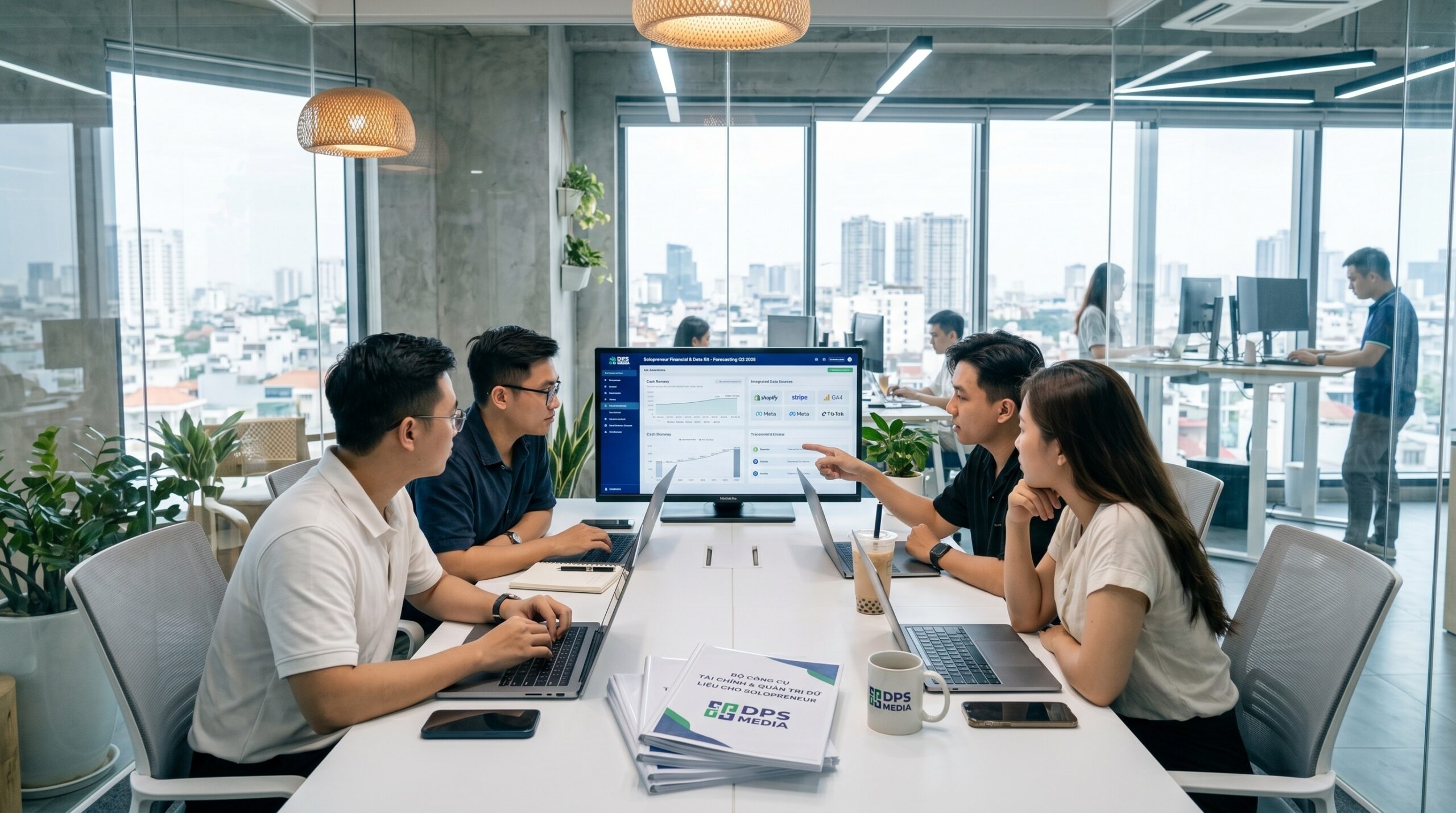
Finance and data are the foundations that help one-person businesses operate sustainably. Many solopreneurs grow well but still face cash flow crises due to the lack of a control system.
Cash flow management tools
Cash flow management needs to be prioritized right from the early stages. A simple tool like Money Lover or standardized Google Sheets is enough to make a big difference.
If a business does not track weekly cash flow, the risk of lacking operating capital will increase sharply. This is a common mistake of many Vietnamese SMEs.
A useful rule is to always maintain an operating fund at least equal to three months of fixed costs. This helps the business avoid pressure when revenue fluctuates.
- Record expenses daily.
- Separate personal and business accounts.
- Track revenue by source.
- Set monthly marketing budgets.
- Check weekly cash flow.
- Forecast quarterly fixed costs.
A design freelancer in District 7 once used a personal account together with a business account. After separating the financial system, he discovered that software costs accounted for nearly 28% of revenue.
A healthy food store in Hanoi once expanded too quickly without tracking cash flow. They lacked operating capital after four months and had to close a branch. After financial restructuring, the business returned to the break-even point in six months.
Data storage and security
Customer data is the most important asset of a one-person business. However, many solopreneurs still store files on personal laptops without backup.
Google Drive and Dropbox are two popular choices for small SMEs. If business data is important, two-layer authentication and clear access permissions should be turned on.
An important principle is to backup data at least every week. This helps reduce the risk of losing files or being infected with malware.
KPI tracking dashboard
A KPI dashboard helps solopreneurs see the whole picture of the business instead of just focusing on revenue. An effective dashboard needs to display revenue, leads, conversion rates, and profits.
If you have to open more than three platforms to see business performance, that is a sign to build a centralized dashboard. Looker Studio is currently a popular choice because it is free and easy to connect data.
Another important KPI is the processing time for repetitive tasks. This is an index to help evaluate automation efficiency.
How to build a toolkit suitable for your budget
Many solopreneurs fail not because of a lack of tools, but because they buy too much software right from the beginning.
Choose tools according to the development stage
Businesses with monthly revenue under 50 million should prioritize free or low-cost tools. The goal at this time is to optimize basic processes.
When revenue exceeds 100 million per month, the business can invest more in advanced automation and dashboards. This is the time when the system starts to create a big impact on profits.
A practical rule is to only upgrade software when current tools no longer meet operational processes.
| Stage | First | Suggested budget | Main tools |
|---|---|---|---|
| Starting out | Task + CRM | Under 2 million | Notion |
| Growth | Automation | 3-5 million | Zapier |
| Expand | KPI Dashboard | 5-10 million | Looker Studio |
| Scale-up | AI workflow | 10 million+ | HubSpot |
Common mistakes when buying too much software
Many solopreneurs are attracted by a series of new tools. They buy software following trends without having clear workflows.
A warning sign is when software costs exceed 10% of revenue but performance does not increase correspondingly. This is the time to review the entire tool stack.
DPS. MEDIA recommends that Vietnamese SMEs should audit processes before buying more new tools. In many cases, just optimizing current workflows is enough to increase operational efficiency.
A media freelancer in HCMC once spent more than 7 million VND per month for 14 different softwares. After optimizing the tool stack, he only kept five core platforms but still increased productivity by 35%.
30-day implementation checklist
Implementing automation needs to be divided into small stages to avoid overload. Solopreneurs should not change the entire workflow at once.
- Week 1: Standardize task management and work schedule.
- Week 2: Set up CRM and store leads centrally.
- Week 3: Connect basic email automation.
- Week 4: Build a KPI dashboard to track efficiency.
- Evaluate process after 30 days of implementation.
- Remove tools that do not create actual value.
An effective way is to spend a fixed day each week to review all workflows. This helps quickly detect redundant steps.
AI trends for small businesses in 2026
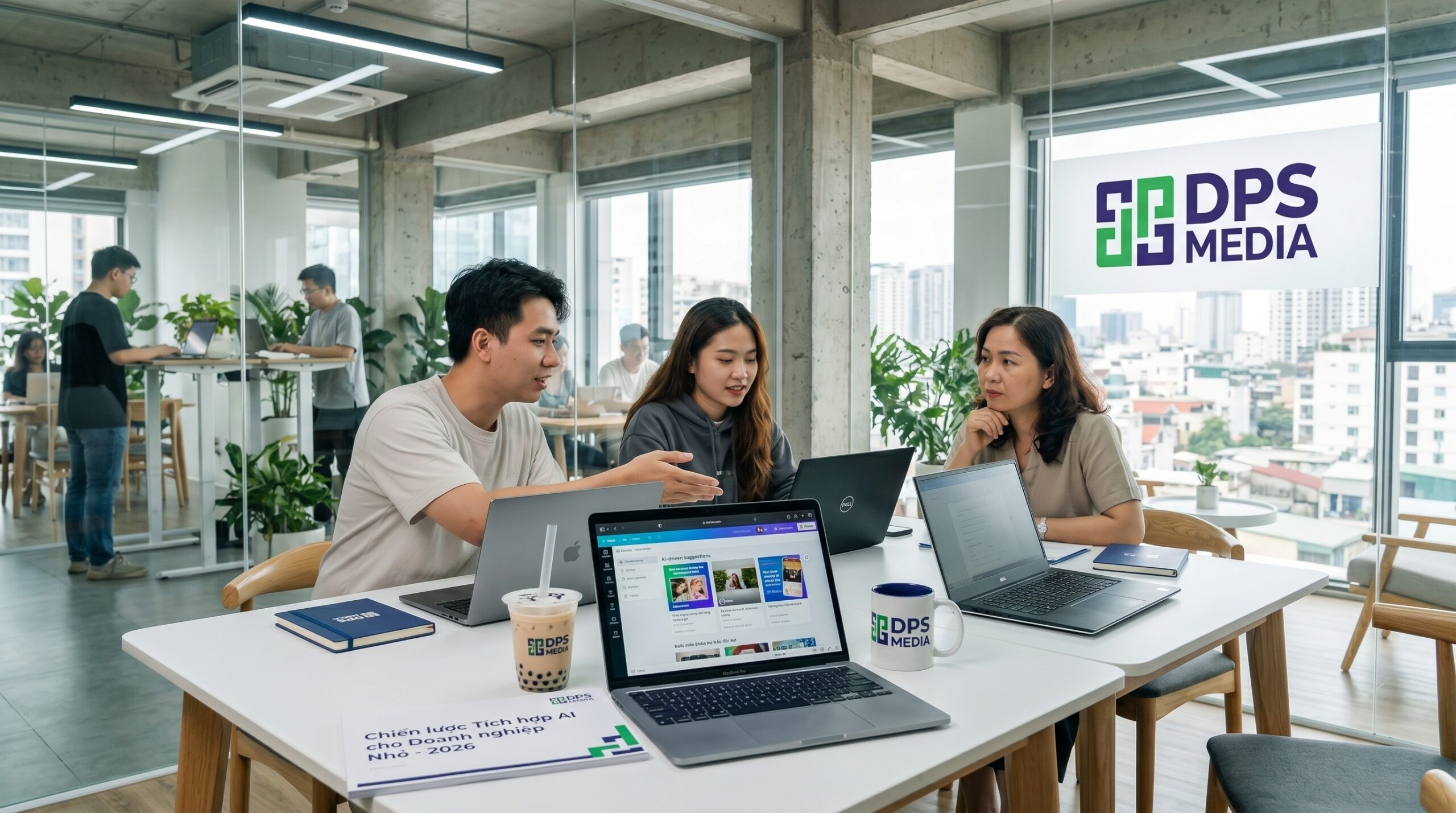
AI is moving from a supporting role to an operational role. This will change the way solopreneurs build businesses in the next few years.
AI agent and automated workflow
AI agents have the ability to perform many consecutive steps without manual operations. For example, AI can receive leads, send emails, and update CRM automatically.
This trend is particularly suitable for small businesses because it helps reduce personnel dependence. According to many recent technology reports, AI agents are becoming an investment priority for global SMEs.
A notable benchmark is that businesses should prioritize highly repetitive workflows before implementing comprehensive AI agents.
No-code tools help solopreneurs speed up
No-code helps business owners deploy landing pages, automation, and dashboards without hiring separate developers.
Webflow, Bubble, and Softr are being used by many SMEs to build internal systems faster. This is especially useful for the one-person business model.
If a project needs to be implemented in under 30 days, no-code is often more effective than developing separate software from scratch.
When to hire an agency for support
Not everything should be automated internally. When a business starts expanding its advertising budget or needs in-depth SEO, an agency will help speed up efficiency.
A common sign is when the business owner spends more than 50% of their time on marketing but revenue does not increase correspondingly. This is the time when external expertise is needed to support.
In the expansion phase, combining lean internal operations with a specialized agency will help SMEs grow more sustainably.
Solopreneur tools is not just software. It is the foundation that helps one-person businesses operate more efficiently, reduce pressure, and increase scalability.
- Build a synchronized tool stack instead of using fragmented ones.
- Prioritize CRM and task management first.
- Marketing automation helps save a lot of time.
- AI is most effective when there is a clear workflow.
- KPI dashboards help in faster decision making.
- No-code helps SMEs deploy quickly at low cost.
- Audit tools periodically to avoid wasting budget.
In the context of AI for small businesses developing very fast, Vietnamese solopreneurs have more growth opportunities than before. The most important thing is to choose the right system suitable for the current stage instead of following too many trends.
If your business needs a more methodical digital growth strategy, DPS. MEDIA can support building a marketing, automation, and operating system suitable for Vietnamese SMEs in each development stage.