



Marketing Orientation 2026
Market Research and Strategic Marketing Orientation for Thien Nam Elevator Joint Stock Company Period 2026-2030
The macroeconomic context and the construction industry landscape in Vietnam as of March 2026 are witnessing profound structural shifts.
This is a pivotal stage, where the intersection of rapid urbanization, the activation of mega transport infrastructure projects, and the delayed recovery of the real estate market is creating unprecedented momentum for the elevator industry.
While the opportunities are immense, they come with significant risks and challenges from the fierce competitive pressure of multinational corporations, the penetration of low-cost goods, and the pressure to transition to green technology and automation ecosystems.
This in-depth research report provides a comprehensive volume of analysis, deconstructing every angle of the Vietnam elevator market in 2026, detailing the internal competitive position of Thien Nam Elevator Joint Stock Company, and thereby creating a sharp strategic marketing roadmap to optimize conversion rates, increase customer lifetime value, and establish a dominant position in the coming decade.
Macroeconomic Picture and Real Estate & Infrastructure Market Drivers in 2026
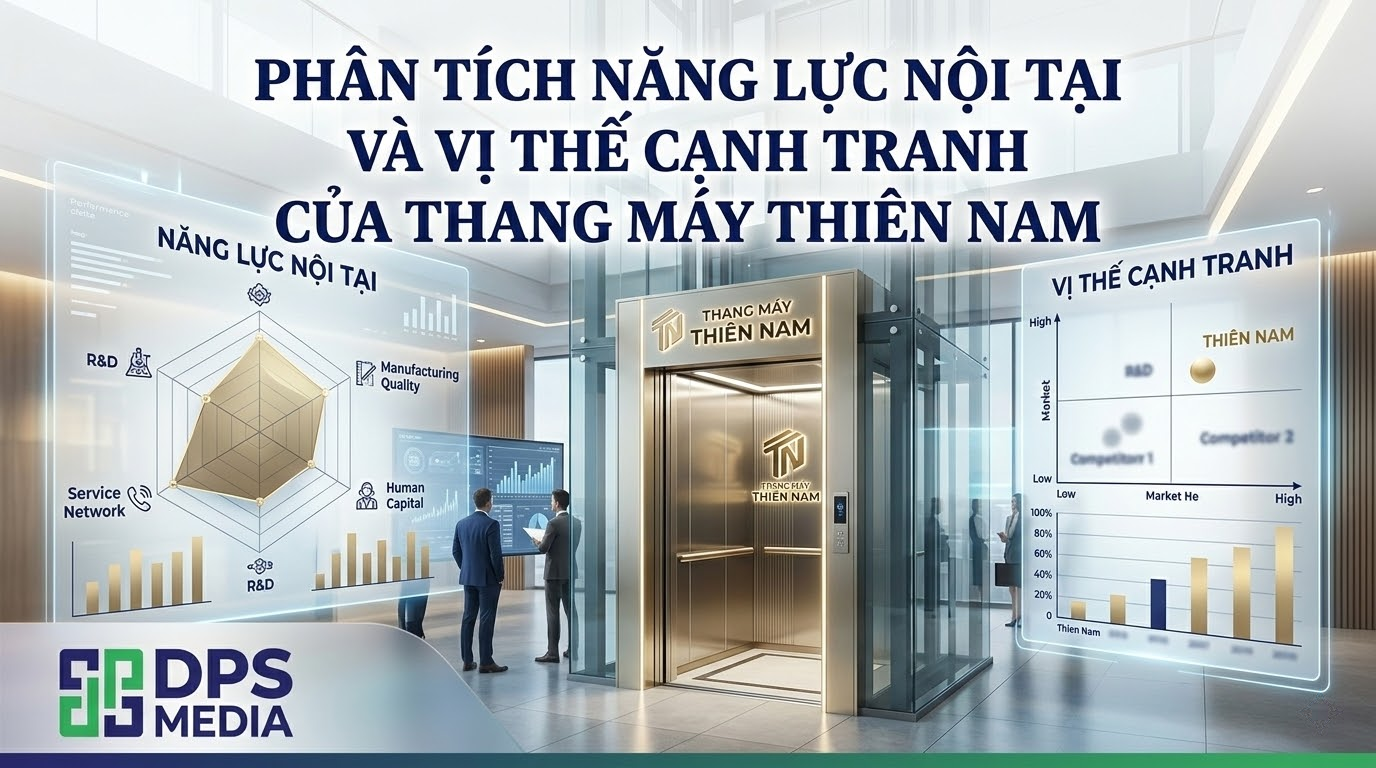
The elevator industry is a derivative industry, with a business cycle closely linked to the heartbeat of the construction, real estate, and urban infrastructure sectors.
Therefore, decoding the macro variables of 2026 in detail is a prerequisite and mandatory condition for planning a sustainable development strategy.
The Recovery Cycle of the Real Estate Market and the Supply-Demand Paradox
2026 is positioned by experts as the year the Vietnamese real estate market officially enters a new growth cycle after a long period of purification, restructuring, and legal framework completion.
Total primary supply across the market is expected to reach a record high in many years, approaching 200,000 products.
This explosion is triggered mainly by efforts to resolve legal bottlenecks for more than 1,000 backlogged projects from previous years, setting the stage for the volume of new products hitting the market in the 2025-2026 period to increase 2 to 3 times compared to the crisis period.
In the Southern region alone, led by Ho Chi Minh City and satellite provinces, it is expected that about 50,000 real estate products of various types will be offered for sale this year.
The Ministry of Construction also forecasts that the 2026 market will evolve toward a “vibrant yet cautious” trend, minimizing speculation and heading toward sustainable growth thanks to the new legal foundation.
However, behind the abundance in quantity of the real estate “shopping cart” lies a profound paradox in product structure, creating a very serious supply-demand mismatch.
Detailed analysis data shows the market is falling into a state of surfeit in high-end and luxury segments, while the supply of mid-range and affordable apartments for actual housing needs is almost non-existent.
Typically in a central market like Hanoi, this disparity is clearly exposed by the recording of only about 646 mid-range apartments, a very modest figure compared to 19,380 high-end units and 12,274 luxury units.
The picture in Ho Chi Minh City shows a similar imbalance with a mere 1,000 mid-range units, in stark contrast to 4,700 high-end units and 2,000 luxury units, almost completely eliminating housing accessibility for the general labor class.
Over 60% of the total volume of new real estate products comes from large-scale mega-cities, reflecting a clear trend of developers in evolving integrated multi-utility complexes instead of implementing small, individual projects as before.
For suburban areas, the apartment segment continues to face oversupply, while traditional types such as land plots and townhouses are projected to maintain a quiet state.
This structural differentiation poses a tough strategic puzzle for elevator providers.
Approaching high-end urban mega-projects requires superior competitiveness in technology, smart features, and brand power—a playground where foreign multinational corporations currently hold absolute dominance.
Meanwhile, the market for townhouses, private villas, and small-scale projects requires flexible solutions, high personalization, space saving, and lifecycle cost optimization.
The Era of Urban Transport Infrastructure and Momentum from Metro Lines
In addition to the commercial and residential real estate sectors, 2026 is also considered a pivotal year for the implementation of a series of urban transport infrastructure mega-projects, especially the urban railway system (Metro) in Ho Chi Minh City.
The city government expects to simultaneously deploy 10 metro lines in the period from now until 2030, with a total investment capital requirement of up to 345,000 billion VND.
As the locality has currently only balanced about 125,000 billion VND (equivalent to 40%), the city has officially requested the Central Government for additional budget support of about 220,000 billion VND to ensure that implementation progress is not interrupted.
This strategic transport network includes accelerating the commencement schedule of Metro Line 2 (Ben Thanh – Thu Thiem section, 5.58 km long with 6 underground stations, total preliminary investment of 33,000 billion VND) in April 2026, followed by the Thu Thiem – Long Thanh line in June 2026.
The ultimate goal of these transport axes is to create a vital arterial link, providing seamless connectivity between the city's economic center and the soon-to-be-operational Long Thanh International Airport.
Previously, Metro Line 2 (the Ben Thanh – Tham Luong section, spanning 11.3 km with a total investment of over 55,179 billion VND) also commenced construction in January 2026.
This massive public transport infrastructure opens up a promising market segment for the elevator and escalator industry.
A series of deep underground stations, elevated stations, Transit-Oriented Development (TOD) areas, and pedestrian overpasses all require a large number of elevator and escalator systems with high operating capacity, weather resistance, excellent mechanical durability, and compliance with the strictest public safety standards.
This move was realized at the beginning of the year when, on January 5, 2026, the Ho Chi Minh City Management Authority for Urban Railways officially signaled the start of construction and installation of elevators at pedestrian bridges along Metro Line 1 (Ben Thanh – Suoi Tien).
This is undeniable proof that the public investment project segment (B2G – Business to Government) will be an extremely important and stable revenue pillar, requiring domestic enterprises to prepare thoroughly regarding capability profiles, supply capacity, and technical standards starting now.
The Green Building Wave and Stringent Energy Efficiency Requirements
Another decisive macroeconomic factor shaping the elevator market in the coming decade is the global energy crisis and sustainable development commitments.
According to forecasts from the Power Company, entering the 2026 dry season, the national power system—especially in major economic hubs—will face enormous pressure due to load spikes during noon and evening peak hours.
This situation forces the electricity sector to apply load management measures, encouraging agencies, public lighting management units, and particularly building management enterprises to optimize their energy consumption processes.
In public areas and apartment complexes, electricity consumption from air conditioning, lighting, and especially elevator systems always accounts for a large proportion of total operating costs.
In the context of escalating energy costs, the trend of “Green Building” development is no longer a formal choice to enhance media profiles but is gradually becoming a mandatory standard for real estate developers.
High-energy-consuming devices like elevators are being placed under intense scrutiny regarding efficiency.
Next-generation elevators must prove their ability to save electricity through the use of new-generation VVVF inverter technology, automatic cut-off LED lighting systems, and especially Regenerative Drive systems that convert kinetic energy during braking into electricity to be fed back into the building's grid.
Notably, the Vietnamese real estate market is witnessing rapid progress in this field.
Data recently released by the U.S. Green Building Council (USGBC) and Green Business Certification Inc. (GBCI) shows that Vietnam has for the first time entered the Top 10 countries and territories (outside the U.S.) with the largest total LEED-certified floor area globally.
Specifically, Vietnam recorded 2.6 million square meters of LEED-certified floor area across 100 projects, ranking 8th in the world, surpassing developed markets like Sweden and the UAE.
The explosive growth of international standards like LEED or domestic standards like LOTUS, combined with Government Decree No. 30/2026/ND-CP on economical energy use, requires commercial elevator product lines to integrate green technology to contribute directly to the building's environmental certification score.
Failure to meet this requirement will result in elevator brands being immediately excluded from the bidding lists of more than 60% of new projects on the market.
Scale and Characteristics of the Vietnam Elevator Market 2026

The Vietnamese elevator and escalator market is one of the most dynamic in the region, maintaining stable growth thanks to rapid urbanization and a continuous wave of high-rise construction.
Market Size Valuation and Segmentation
According to in-depth industry analysis reports, the Vietnam elevator market size reached a valuation of approximately $440 million in 2024 and is on a strong acceleration path.
Growth forecast models indicate that the market capacity will reach $446.42 million by 2026 and continue to maintain a Compound Annual Growth Rate (CAGR) of 7.4%, reaching the $790.27 million mark by 2034.
Key urban areas such as Ho Chi Minh City and Hanoi remain the two engines driving the entire market thanks to high population density and bustling commercial activities.
The market is clearly fragmented based on various criteria, creating market niches with distinct consumer characteristics:
| Classification Criteria | Segment Highlights | Weight/Level of Influence | Consumption Characteristics |
| By Type | Passenger elevators | Account for > 46.2% market share | Primarily serving residential buildings and commercial centers. Requires aesthetics, smooth operation, and high speed. |
| By Application | Residential and Commercial | Commercial sector accounts for ~23.98% market share | The residential sector accounts for the majority due to the wave of apartment and townhouse construction. The commercial sector requires smart destination management technology. |
| By Building Height | Low-end segment (Buildings under 25 floors) | Accounts for up to 80% of total market demand | This is the main battlefield for domestic enterprises, where cost factors and design flexibility play a decisive role. |
The market scale is not only expanding in terms of value but also changing profoundly in terms of quality requirements.
Understanding that 80% of demand lies in buildings of 25 floors or fewer is vital data for strategic planners.
It shows that it is not necessary to engage in an unequal battle for skyscraper mega-projects (the domain of multinational corporations); instead, the real cash flow and stable revenue lie in the mid-range segment, mid-rise apartments, private hotels, and residential homes.
Competitive Structure: Friction between Multinational Foreign Blocs and Domestic Blocs
The competitive landscape of the Vietnamese elevator market is moderately concentrated, serving as a fierce arena between global giants with vast resources and flexible domestic manufacturing and assembly enterprises.
The Big 4 – Global Corporations: The four largest brands in the world, including Schindler (Switzerland), Otis (USA), KONE (Finland), and Mitsubishi Electric (Japan), hold a very significant market share.
This group maintains absolute dominance in the Grade A skyscraper segment, 5-star hotels, and projects requiring extremely complex technical solutions.
Their competitive weapons are advanced technology platforms (such as the Otis Electric 7000 series with integrated IoT connectivity), global service networks, and an unshakable reputation for safety.
Among these, Mitsubishi (especially products imported as complete units from the factory in Thailand) is extremely popular in the Vietnamese market.
This brand has successfully positioned its image as durable, reliable, elegantly designed, and perfectly suited to the “buy for the long haul” consumer mindset of Vietnamese people.
Other brands like Schindler are also constantly consolidating their position, not only through imports but also by entering deep strategic partnership agreements with domestic manufacturers (exemplified by the handshake with Thang Long Elevator) to leverage local production capacity and expand distribution networks into lower segments.
Domestic Enterprises and Supply Chain Challenges: In contrast to foreign dominance at the top of the pyramid, in the segment of buildings under 25 floors (which accounts for 80% of total demand), Vietnamese enterprises are completely mastering the game, holding more than 50% market share.
Among these, Thien Nam Elevator Joint Stock Company and Thai Binh are identified as the two leading forces, together controlling about 30% of the market share in this lucrative segment.
However, the intra-group competitive picture is extremely complex and full of risks.
The market currently records the existence of about 50 small and medium-sized elevator trading companies.
The common characteristic of this group is operating under a purely commercial model, outsourcing from other Vietnamese manufacturing companies or importing individual components from China for assembly, rather than owning production and testing facilities directly.
This fragmentation leads to an inevitable consequence: a state of intense price wars at all costs, cutting materials to reduce costs, and enormous risks regarding after-sales service quality and operational safety.
Entering 2026, domestic enterprises like Thien Nam also face a major macroeconomic challenge regarding the supply chain.
The threat from low-priced imports (especially from China, which is currently in a state of oversupply) weighs heavily on the mechanical manufacturing market.
Although the domestic market is about to welcome the giant VinMetal metallurgy project (worth 80,000 billion VND in Ha Tinh) specializing in providing high-strength steel and special alloys, closing the value chain, increasing the localization rate, and optimizing production costs remain life-and-death problems for domestic elevator companies to maintain market share against foreign and low-priced competitors.
Analysis of Internal Capabilities and Competitive Position of Thien Nam Elevator
To design a marketing strategy that is not just on paper but capable of execution and high efficiency, an honest and objective assessment of the business's internal capacity is an indispensable step.
Thien Nam Elevator (TNE) is not just a long-standing name but truly a symbol of Vietnam's domestic mechanical manufacturing industry.
Deep Heritage, Manufacturing Infrastructure, and Quality Management
Established in the 1990s (specifically 1994), Thien Nam has undergone more than three decades of accumulated experience, overcoming many ups and downs of the economy to develop sustainably.
The firmest support and the largest economic moat of this brand is its large-scale mechanical production infrastructure system.
In April 2014, the company marked a major turning point by inaugurating its 2nd factory (phase one) at Viet Hoa Industrial Park, Duc Hoa 3, Long An province, pushing the total system's production capacity to 1,000 elevators per year.
Owning two factories with international standard processes, certified by the ISO 9001 quality management system continuously since 2006 (and periodically inspected and updated by leading reputable organizations such as TUV and BSI), provides Thien Nam with an absolute advantage.
As a result, the company is completely proactive regarding material supply, strictly controlling the quality of each mechanical component and optimizing production costs.
This capability creates a core difference, completely separating Thien Nam from the group of 50+ “buy-and-sell” trading companies that only focus on short-term profits in the market.
This is an extremely sharp sales point when communicating with B2B investors, who are always looking for guarantees of origin and long-term supply capacity.
Comprehensive Product Ecosystem and Customization Capabilities
Thien Nam's product ecosystem is intentionally designed to comprehensively cover most of the diverse needs of the Vietnamese construction market:
Home Elevators: Designed with a minimalist, sophisticated style to solve the core problem of Vietnamese urban space.
Products have flexible payloads from 200kg to 450kg, and are particularly superior when using single-phase residential electricity, requiring no deep PIT construction and no machine room.
This is the solution born for 3-5 story townhouses, villas, or renovated residential projects with extremely limited space.
Passenger and Commercial Center Elevators: Provides a wide variety of models with load capacities from 450kg to 2000kg, designed to suit large-scale projects, high-end apartments, and office buildings requiring high aesthetics, fast travel speeds, and durable operation with high traffic volumes.
Specialized Elevators & Ancillary Materials: Includes specifically designed hospital elevators with wide cabins and extremely smooth operation to meet strict standards for transporting patients by stretchers and medical equipment; ultra-large capacity freight elevators serving partner factories and industrial zones; and the ability to supply and distribute ancillary materials for the industry.
After-Sales Service System and Technological Stepping Stones
In the elevator industry, revenue from initial equipment sales is just the tip of the iceberg; the massive, stable, and long-term profit source lies in maintenance and servicing contracts.
Thien Nam has positioned itself as a turnkey solution provider: from production and installation to life-cycle maintenance.
The company's warranty and maintenance system is set up to be ready 24/7 via a dedicated Hotline: 1900 2034.
A wide physical presence with a network of over 23 branches and representative offices across the country helps Thien Nam minimize travel and response times during incidents, a huge plus for investors in provinces outside Hanoi and Ho Chi Minh City.
In terms of market feedback, Thien Nam's repair and maintenance services are frequently listed among the most reputable units, highly reviewed by customers for professionalism and reasonable competitive costs.
A strategic highlight in Thien Nam's service capacity is the pioneering application of technology.
The company has successfully implemented an automatic error notification system via SMS, helping the central technical team and investors monitor elevator operations in real-time and have remote incident handling plans even before customers complain.
This is an excellent technological stepping stone for Thien Nam to move to a higher level: IoT-based predictive maintenance systems in the 2026 period.
The core value system that Thien Nam consistently pursues is encapsulated in 4 fundamental criteria: Quality – Durability – Good Price – Dedicated Service, with an ambitious vision to become the leading Vietnamese elevator brand reaching out to Southeast Asia.
The recognition from the market and experts for Thien Nam is clearly evidenced through a series of prestigious national awards such as the Vietnam Gold Star Award, Strong Brand, and Vietnam Brand Gold Cup.
Decoding Technology Trends and Shifting Customer Behavior

The 2026 market will witness not only a change in quantity but also a profound revolution in quality.
The application of technology combined with changes in demographic structure is completely reshaping the basic expectations of end-users and investors.
The IoT & AI Revolution and the Era of Predictive Maintenance
The construction industry in general and the Mechanical, Electrical, and Plumbing (MEP) sector in particular are undergoing a very strong digital transformation process.
Research data indicates that the IoT market size in the construction sector in Vietnam reached a valuation of $48.8 million in 2024 and is forecast to soar to $119.76 million by 2033 (equivalent to a CAGR of 10.49%).
The main driver behind this boom comes from telecommunications operators (such as Viettel) deploying widespread 5G infrastructure, combined with smart city initiatives launched by the government in Ho Chi Minh City, Hanoi, and Da Nang.
In that context, the most prominent and revolutionary technology trend in the elevator industry heading toward 2026 is the convergence of the Internet of Things (IoT) and Artificial Intelligence (AI) for Predictive Maintenance.
Traditional maintenance models based on fixed schedules (monthly periodic maintenance) or reacting only when equipment has failed (reactive maintenance) are becoming obsolete, expensive, and unsafe.
Next-generation smart elevator systems are equipped with a series of advanced sensors to monitor hoisting cable vibration, cabin speed, door system synchronization, and motor surface temperature in real-time.
When the data analysis platform records even the smallest deviations from the standard, the AI system will automatically analyze patterns and issue warnings to the technical team about which part is likely to fail before an actual incident occurs.
This strategic approach minimizes emergency calls, improves system reliability, and extends the physical life of the equipment.
Elevator Remote Operation and Maintenance Platforms utilizing cloud computing technology are reshaping global service standards.
The global market for these platforms was valued at $1,593 million in 2024, expected to reach $1,728 million in 2025, and grow explosively to $3,258 million by 2034 (CAGR 10.8%).
Adopting this smart platform helps organizations and building management units transition from a reactive maintenance model to a predictive one, thereby reducing overall maintenance costs by 15% to 20%.
In addition, other technology trends such as touchless interfaces, mobile app integration, cabin designs using transparent/polycarbonate materials, and smart rescue systems are all becoming default standards.
Particularly, the market is receiving an extra push from the Vietnamese Government as the Ministry of Construction aims to upgrade and modernize 1,000 old elevators nationwide with an investment budget of up to $500 million, creating an extremely lucrative niche market for smart modernization solution providers.
B2C Market Drivers: Aging Population and “Tube House” Architectural Specifics”
For the individual customer segment (B2C), the demand for home elevator installation is entering a boom phase based on two fundamental factors: demographic changes and the specific characteristics of Vietnamese urban architecture.
Regarding demographics, rapid population aging combined with increased awareness of quality of life is turning the elevator into an essential health-protecting utility rather than a luxury item for flaunting wealth.
Having elderly people climb 5-6 floors not only consumes energy but also poses extremely dangerous direct accident risks such as slips, falls, and musculoskeletal injuries.
Home elevators completely resolve this issue, reducing travel time between floors to under 1 minute (compared to 3-5 minutes of climbing stairs), while integrating a series of superior safety features such as child safety locks, automatic rescue systems during power outages, emergency two-way communication, and fire alarms.
Elevator installation today is communicated as an act of “filial piety,” expressing the deep concern of the younger generation for the safety of grandparents and parents.
Regarding architectural space, the scarcity of land funds and expensive real estate prices in megacities like Hanoi and Ho Chi Minh City have given birth to the characteristic ultra-thin “tube house” architectural model.
These structures often have very small areas, only about 40 to 50 square meters, with narrow facades from 2.5m to 3m, but are built up to 5 to 7 floors to maximize living space.
This specific architecture creates an extremely difficult puzzle for traditional imported elevator lines.
B2C customers demand home elevator solutions with extremely high customization and “tailor-made” capabilities: the hoistway size must be very compact, not requiring a deep PIT that affects the old house foundation, no need to build an additional machine room on the rooftop, and smooth operation using a residential 1-phase power network.
In terms of aesthetics and lifestyle, the prominent trend of 2026 leans towards personalized designs, especially home glass elevators (observation elevators) that help small, narrow house spaces become open and airy, combined with eco-friendly materials and noise-eliminating operation systems (No-Sound Mobility).
Sales Funnel Structure and B2B Customer Psychology
For corporate customers, project management boards, and developers (B2B), the decision-making process for purchasing elevator systems is much more complex than for individuals, requiring multi-dimensional, rational evaluation of contractor reputation, technical safety standards, and especially long-term operating costs.
A B2B developer, when selecting an elevator contractor, usually puts experience and capacity profile on the scale first.
A supplier with decades of operation (like Thien Nam) is the clearest evidence of strong financial capacity and the commitment to accompany the project throughout the equipment's 15-20 year lifecycle, avoiding the “abandoning the child at the market” situation once the project has only been in operation for a few years.
The second criterion is the scale and professional level of the technical personnel team, especially the local maintenance branch network, a factor that directly decides the troubleshooting speed.
The third criterion is proven capacity; developers always request to visit and evaluate actual projects the contractor has executed to directly experience the smoothness, evaluate quality, and appraise after-sales policies.
Finally, the origin of equipment and components (especially the localization rate for joint-venture elevator lines) is the decisive factor for the initial bidding price and subsequent replacement material costs.
In terms of marketing and sales strategic management, the B2B sales cycle in the industrial construction industry goes through many stages with large drop-off points.
Global standard Conversion Rate analysis data for 2025-2026 indicates a fierce picture: the average conversion rate of B2B campaigns on digital platforms only fluctuates around 2.9%.
The journey from an anonymous website visitor to a revenue-generating customer must pass through a multi-layered filtering system with strict Key Performance Indicators (KPIs):
Conversion from Visitor (Traffic) to Lead: Average rate around 2.3%.
At this step, customers become aware of the need and leave contact information for consultation.
From Lead to Marketing Qualified Lead (MQL): Conversion rate reaches about 25% to 35%.
Customers show deeper interest by downloading technical documents or viewing quotes.
From MQL to Sales Qualified Lead (SQL): Conversion rate narrows to only 13% to 26%.
The direct sales team confirms the customer has a budget and decision-making authority.
From SQL to Opportunity: Conversion rate from 30% to 62%.
Both parties conduct site surveys, submit bid documents, and negotiate contract terms.
From Opportunity to Closed Won: The final closing rate fluctuates from 15% to 30%.
The aggregate efficiency of the above rates proves a harsh reality: to successfully sign a B2B contract, an elevator business must reach thousands of potential customers and invest a massive amount of time in the lead nurturing process.
Furthermore, Customer Relationship Management (CRM) thinking in the B2B industry places absolute emphasis on Customer Lifetime Value (CLV) instead of quick initial profits.
In the elevator sector, an initial supply and installation contract is actually just the starting point of the relationship; the huge, stable profit margins that truly sustain the business lie in maintenance, service, and component replacement contracts lasting 10 to 20 years thereafter.
According to modern management standards, the ideal ratio between Customer Lifetime Value and Customer Acquisition Cost (LTV:CAC Ratio) should be maintained at a minimum of 3:1 to ensure a profitable and sustainable business model.
Strategic Marketing Orientation for Thien Nam Elevator Period 2026-2030
Based on a comprehensive comparison of Thien Nam Elevator's core competencies with deep analysis of the macro context, competitive structure, technology trends, and customer psychology, the report proposes a comprehensive strategic marketing orientation system.
This roadmap is structured around 4 core pillars: Brand Repositioning, B2G/B2B Market Offensive, B2C Emotional Depth Exploitation, and Revolutionizing the Transparent Maintenance Service platform.
1. Brand Repositioning Strategy: “30-Year Journey – Vietnamese Intellect, Global Standards”
Thien Nam is facing a ripe opportunity to commercialize its long heritage.
With over 30 years of persistent formation and development (since the 1990s), the brand carries an inspiring story about the resilience of the Vietnamese mechanical manufacturing industry, accompanied by deep understanding ranging from soil and climate to the living habits of locals.
Brand Positioning: Thien Nam should absolutely not fall into the trap of racing for “Ultimate Luxury” or “High-End Class” positioning to directly confront Big 4 foreign brands like Schindler, Otis, or Mitsubishi.
Instead, the strategic positioning axis needs to be sharpened around the concept: “Pragmatic Durability – Flexible Solutions – Smart Technology.”.
The Core Message across all campaigns from 2026 needs to highlight the message: Thien Nam is the only domestic manufacturer possessing large-capacity factory infrastructure, operating under international inspection processes, fully understanding Vietnamese architectural characteristics, and committed to bringing smart elevator solutions with the most optimal Total Cost of Ownership in the market.
Maintaining a coherent message about “Lifetime Cost” (including low initial purchase price, low power consumption, cheap maintenance costs, and readily available localized replacement parts) will be the ultimate weapon to convince developers who are under extreme financial pressure in the context of a polarized real estate market.
2. B2B Marketing Strategy: Capturing Public Investment Infrastructure and Mid-range Projects
As market data clearly indicates, the segment of buildings under 25 floors accounts for up to 80% of total demand, and Thien Nam already has a solid market share (sharing 30% with Thai Binh).
The vital goal for the 2026-2030 period is to solidify the stronghold in this segment, fighting against the price dumping of 50+ floating trading companies, while simultaneously expanding strongly and calculatedly into the massive public investment project sector.
Focus 1: Bidding Taskforce for Transportation Infrastructure Projects (Metro, Pedestrian Bridges) The system of 10 Metro lines in Ho Chi Minh City and auxiliary structures with hundreds of trillions of VND in capital investment is an open-pit gold mine.
Thien Nam needs to immediately establish a “Special Project Taskforce” with the sole mission of closely following the progress of public infrastructure bid packages.
Bid profiles need to be internationally standardized but place absolute emphasis on high localization rates.
Due to the nature of public investment projects often prioritizing the use of domestically produced materials and goods according to current regulations, Thien Nam has an absolute advantage when showcasing a system of 2 factories reaching ISO 9001 standards.
Furthermore, there must be a commitment to a 24/7 maintenance network and the ability to supply replacement materials instantly within 2 hours without suffering through long waits for imported components like foreign brands.
Focus 2: Integrating Green Building Standards (LEED, LOTUS) into Sales Profiles To catch the eye of developers pursuing LEED certification (over 100 ongoing projects), the B2B Sales Kit must be fully digitized and upgraded.
The business needs to proactively hire independent organizations to audit and publish reports on the energy efficiency of Thien Nam passenger elevator lines.
Dry technical parameters such as power consumption of the inverter system, Regenerative Drive technology, Sleep mode, and LED systems need to be converted into specific “Credit Scores.”.
The B2B communication message at this time will be: Thien Nam does not just sell elevators; we provide solutions that directly add points to help your building reach LEED/LOTUS certification fastest.
Focus 3: Optimizing the Conversion Funnel and Sales KPI Management (B2B Sales Funnel) To solve the problem of an average conversion rate of only 2.9%, the internal management system needs to apply strict and scientific Key Performance Indicators (KPIs) for the B2B sales team.
Instead of the old management style of only looking at end-of-quarter revenue figures, the Board of Directors needs to measure and optimize each step of the funnel:
Measure in detail the Number of New Contracts signed each quarter and the Projected Total Value of new contracts.
Strictly manage the number of high-quality leads (MQL and SQL) running in the funnel to have a picture for forecasting future revenue.
Shorten the Average time for conversion from a potential customer to a signed contract.
Deploy a professional CRM system to establish automated Lead Nurturing campaigns: regularly send specialized documents (Whitepapers), research reports on “Safe vertical transportation solutions for apartments” to the email inboxes of developers, architects, and construction contractors.
3. B2C Marketing Strategy: Evoking Emotions and Dominating Multi-channel Touchpoints
While B2B customers buy with reason and Excel spreadsheets, individual customers buy home elevators based on a complex interplay between safety needs (rational) and aesthetics, pride (emotional).
Optimizing Emotionally Oriented Product Communication: In 2026, Thien Nam needs to step up communication for the “New Generation Home Elevator” product line with observation glass cage designs.
This is the trend dominating the market, helping to overcome the cramped, low-light disadvantages of 40-50m2 tube houses.
The core communication message needs to hit hard on “Filial Piety” and “Family Responsibility.”.
The campaign needs to paint a contrasting picture: the hardship and danger of parents trying to climb each narrow step of a staircase, compared to the relaxation and absolute safety when stepping into a Thien Nam elevator cabin.
Turn a mechanical product into a priceless health gift for the family.
Developing an Omnichannel Marketing Ecosystem:
Dominating Video Platforms (Youtube & Tiktok): Statistics show that video marketing has absolute persuasive power in complex B2C shopping behavior.
Topics like “2026 Home Glass Elevator Trends,” “Small Elevator Models for Renovated Houses” are attracting tens to hundreds of thousands of organic interests on Youtube.
Thien Nam's marketing team needs to continuously produce series of actual Video Review content at the very homes of customers who have installed them.
Videos need close-up shots of the quick construction process, no foundation breaking (no deep PIT), quiet operating sound, and direct interviews of the satisfaction felt by the elderly in the family.
At the same time, maintain a sponsorship budget for broadcasting on mainstream TV channels (such as the Consumer 24/7 program on VTC6) to consolidate public prestige, a factor that small competitors cannot achieve.
Physical Experience at Specialized Exhibitions: Major architecture and construction exhibitions like Vietbuild HCMC (organized on a large scale with over 2,500 booths at Sky Expo in June 2026) are a decisive physical touchpoint.
Individual customers preparing to build a house always have the habit of coming in person to “see with their eyes, touch with their hands.”.
Thien Nam's booth cannot just display static catalogues; it needs to be designed as an interactive experience model with an actual glass elevator cabin running up and down right at the booth, or applying virtual reality (VR) technology so customers can visualize where the elevator will be in their house design drawings.
Solving “Pain Points” on Social Media: Use the Facebook Fanpage not just for sales advertising but turn it into a Q&A center.
Organize live technical consultation Livestreams with Thien Nam's chief engineers, frankly answering pragmatic questions like: “Which solution for a townhouse renovation with weak foundations?”, “Exactly how many electricity units does a home elevator consume per month?”, “How much does periodic maintenance cost?”.
4. Revolutionizing Maintenance Services: Transparency and AI/IoT Integration
The maintenance service business segment is the goose that lays the golden eggs, creating periodic cash flow (Recurring Revenue) to support the business through every crisis.
Thien Nam currently has an excellent foundation with an automated SMS system and 23+ branches, but to create an unbridgeable gap in the coming decade, the business needs a revolution in transparency.
Completely Resolving “Professional Tricks” and Building Absolute Trust: A painful reality in the elevator maintenance industry today is that technicians frequently abuse “professional tricks.”.
Although some small tips help work faster, most behaviors such as skipping load cable inspection steps, listening to sounds instead of measuring parameters, or faking inspection results to shorten work time all pose extremely horrific life safety risks.
In the context of social media development, just one elevator fall incident due to sloppy maintenance will ruin the brand's 30-year reputation.
To eliminate this problem, Thien Nam needs to digitize and transparentize the entire service delivery process.
Build and launch the “TNE Care App” mobile application specifically for customers.
Through this app, homeowners or building management boards can track the technician's location via GPS and directly view the checklist of mandatory items to be inspected for the day.
Technicians are forced to take photos of the actual status of each critical component and upload them to the system for AI authentication before ending the work shift.
A star rating function after each maintenance shift will be directly linked to the technician's salary and bonuses.
Internal management needs to apply specialized KPI sets for the service segment, such as measuring “Overall Equipment Effectiveness” (OEE) and maximizing the First Time Fix Rate.
Commercializing Smart “Predictive Maintenance” Service Packages: Inheriting the existing SMS system, Thien Nam needs to upgrade the service to a new standard, on par with multinational corporations.
Launch the TNE-Smart Predict premium service package to the market.
This service package will proceed to install additional low-cost but high-sensitivity IoT (Internet of Things) micro-sensors onto the motor, load cables, and guide rails.
Vibration and temperature data are transmitted continuously to a central server.
Artificial Intelligence (AI) will analyze this data stream and compare it with millions of past failure patterns to provide accurate forecasts of when components will degrade in function.
At that point, the customer service department will proactively contact the developer to replace components during off-peak hours (e.g., 2 AM), ensuring the elevator's downtime is almost zero.
This Unique Selling Point (USP) will crush low-price competitors and win full maintenance contracts for high-end commercial projects.
“Safety Upgrade” Customer Conversion Campaign: To take advantage of the $500 million Government budget allocated for the program to renovate and upgrade 1,000 old elevators, Thien Nam needs to launch a wide-scale campaign named “Free Safety Appraisal.”.
The technical team will approach apartment complexes and office buildings built more than 15 years ago in major cities to provide completely free safety and energy consumption evaluation services.
Based on the transparent equipment status report, Thien Nam will offer solution packages from low to high: upgrading and replacing new electrical cabinet/inverter systems to help save 30% electricity, modernizing cabin interiors, or a package to replace the entire new elevator system with flexible installment policies.
This is a massive lead generation funnel with a very promising conversion rate, maximizing lifecycle value from old customers in the market.
Conclusion
The picture of the Vietnamese elevator market for the 2026-2030 period is opening a new chapter with volume scale continuing to swell towards the $800 million threshold, but simultaneously the law of elimination is also becoming extremely harsh.
The deep polarization of real estate segments, the rise of massive Metro transportation infrastructure projects, along with new strict standards for green energy efficiency and predictive maintenance technology, require businesses participating in the market to undergo a comprehensive transformation.
The concept of an elevator is no longer merely a mechanical hoist system transporting people vertically; it has evolved into a smart technological entity, an inseparable link in the building's energy management ecosystem and an essential health care utility in every family.
Thien Nam Elevator Joint Stock Company, carrying a legacy of over 30 years of persistent development, holds an absolute advantage in terms of international-standard manufacturing factory scale, combined with a profound understanding of the most micro-level characteristics of Vietnamese architecture and climate, fully possessing the necessary DNA to create a spectacular breakthrough.
To realize this, the strategic marketing direction in this transformative phase does not allow for the maintenance of fragmented, intuitive traditional marketing methods and blind price-cutting races.
Instead, Thien Nam must operate a unified and sophisticated strategic machine: Repositioning the brand around pragmatic values and technology instead of flashy luxury; organizing a disciplined general offensive into public investment projects, urban infrastructure, and green building certifications on the B2B front; thoroughly exploiting the most delicate emotional touchpoints, emphasizing aesthetics and filial piety for the B2C home elevator segment through a digital video content ecosystem; and crucially, implementing a comprehensive transparency revolution in the maintenance service sector through the power of IoT data and mobile applications.
By executing this strategic system synchronously, with discipline and decisiveness, and strictly managing each conversion metric in the sales funnel, Thien Nam Elevator will not only build an impregnable defensive barrier against the wave of cheap imports or the expansion of multinational corporations.
Beyond that, the company will firmly consolidate its throne among domestic enterprises, maximize the life cycle value per customer, and proudly take steady steps on the journey to realize the vision of reaching coverage across the entire Southeast Asian region in the coming decade.
References:
- Real Estate Market 2026: Still the “Familiar Paradox”
- Forecast of segments that will dominate the Southern real estate market in 2026
- Ministry of Construction: 2026 real estate market forecast to be “vibrant in caution”
- HCMC proposes Central Government add 220,000 billion VND for metro development
- HCMC finalizes the commencement date for 2 metro sections connecting to Long Thanh Airport
- HCMC: Thu Thiem – Long Thanh Airport metro line expected to start construction next June
- HCMC: Commencing installation of elevators at pedestrian overpasses of Metro Line 1
- Proactively propagating electricity saving, ensuring power supply for the 2026 dry season
- Developing green buildings to save energy – VNEEP
- Vietnam officially in the Top 10 global LEED green building markets
- Green buildings and the goal of economical and efficient energy use – VNEEP
- Vietnam Elevator Market Outlook to 2030 – Ken Research
- Vietnam Elevator Market Growth and Trends | Insights & Forecast 2025-2035
- Vietnam Elevator and Escalator Market Size & Forecast 2032 – Credence Research
- Elevators & Escalators Market Size and Trends, 2025-2032 – Coherent Market Insights
- Comparing Mitsubishi Elevators and Schindler Elevators – 6 Key Factors – Titan Elevator
- Mitsubishi is a preferred elevator brand
- Domestic enterprises face escalating competition on home turf in 2026 – VnBusiness
- Buy Thien Nam Elevator products at good prices
- Thien Nam Elevator Joint Stock Company, introduction of activities – YouTube
- Development trends of society and the elevator industry today – Cibes Lift
- thien nam elevator jsc
- [Consumer 24/7] Thien Nam Elevator – YouTube
- Top 10 reputable elevator repair and maintenance companies in Hanoi – topAZ Review
- IoT Market in Vietnam Construction Industry to 2033 – IMARC Group
- Vietnam Elevator Escalator Market | 2019 – 2030 – Ken Research
- Smart Elevator Automation System Market Trends and Strategic Roadmap
- How IoT and Predictive Maintenance Are Shaping the Future of Elevator Modernization
- Most Talked-About Home Elevator Technology Trends – (2026)
- Elevator Remote Operation Maintenance Platform Market Outlook 2026-2034
- Positive impact of elevators on the lifestyle and health of Vietnamese families – Tien Phong
- Trends for beautiful 350kg glass home elevators | space-saving 2026 – YouTube
- Essential criteria when choosing a joint-venture home elevator
- B2B Sales Conversion Rate by Industry 2025 (New Data) – SERPsculpt
- Understanding your sales funnel conversion rates – HiBob
- What are B2B and B2C? Business differences – Zoho Blog
- Sales Funnel Conversion Rates Analysis 2025: Automation, Metrics, and Optimization with Sparkco
- KPIs Meaning + 27 Examples of Key Performance Indicators – OnStrategy
- VIETBUILD HO CHI MINH 2026 – PHASE 1
- Event Tag: Vietbuild Exhibition | Event Hunting – Sansukien.com
- Professional tricks in elevator maintenance – Advantage or risk?
- Detailed KPI template for maintenance staff for effective management – Testcenter.vn
- Top 4 most modern elevator brands today
- Top 8 largest elevator companies in the world
- Elevator system maintenance service 2024-2026 - Invitation to bid – DauThau.info
- B2B Conversion Rates By Industry – 2026 – First Page Sage