

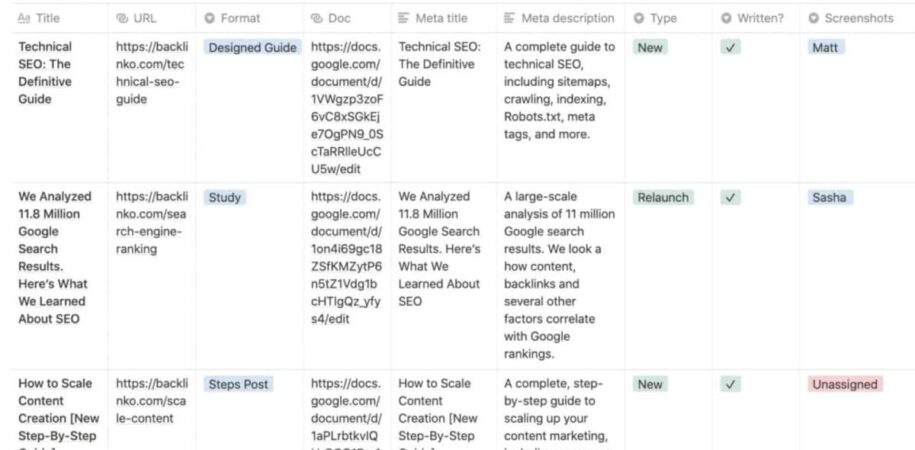

Are you struggling not knowing where to start building content when your company doesn't have a marketing department yet? With just a reasonable content script in the first month, you can completely make your first impression with potential customers — without needing a dedicated personnel team.
At DPS.MEDIA, we have accompanied more than 500 Vietnamese SME businesses in the stage of “having nothing in hand” – no personnel, no big budget, no digital marketing experience.. The results show: businesses with a clear content script from the first month will double their conversion rate after 90 days of implementation.
Why do you need a first-month content script? Because content is not just a post — it's how you guide customers to trust you, even when you just appeared. Without direction from the start, every article, every image you create can carry a fragmented message, causing customers to get lost — and you lose both time and opportunity.
Just grasp the three core pillars in the first month: (1) Identify customer persona, (2) Shape brand voice, (3) Plan content according to specific goals — you already have a solid foundation to build a professional brand, even if your team has only one person.
The truth is: producing content is not hard, the hard part is not knowing what to write, when, and for what purpose. A content script acts as a “roadmap” to help you use your limited time most effectively. It helps you know which week to build awareness, which week to increase engagement, and which week to close sales.
You don't need to wait for a complete marketing team to get started. Start with a sharp script – because every day you don't appear on digital platforms is a day you are forgotten in the minds of customers.
Understand the nature of the business to determine appropriate content objectives
Knowing where the business is helps you know where to go
At DPS.MEDIA, we realize that one of the most common mistakes of new businesses is creating content without understanding the essence of your business. You cannot develop effective content if you have not clearly defined these three root factors: who you are, who you serve, and what you want to achieve.
To determine suitable content goals in the first month — especially when there is no dedicated specialist — the business needs to answer the following three basic but crucial questions:
- what is the core solution of the business? (E.g.: What makes your product or service different?)
- Who is your current target customer segment? (Avoid being vague, specify age, profession, online behavior)
- What is the ideal customer journey from content to conversion?
Một case study thực tế từ khách hàng của chúng tôi – một startup cung cấp phần mềm quản lý bán hàng – đã minh chứng điều này. Do thiếu định vị rõ ràng, doanh nghiệp ban đầu tạo nội dung rất dàn trải: nói về đa nền tảng, AI, tỷ lệ xử lý đơn,… nhưng không tập trung vào nỗi đau cốt lõi của khách hàng SME – thiếu thời gian quản lý báo cáo bán hàng. Sau khi chúng tôi cùng doanh nghiệp làm lại business persona map and core values, in just 2 weeks, the content script was restructured along the following axes:
| Content Axis | Content Goal | Reason for Choosing Axis |
|---|---|---|
| Explaining retail industry pain-points | Đồng cảm & Tăng tiếp cận | Establish emotional connection with SMEs |
| 1-minute video: App usage tutorial | Reduce technical barriers | SME cần thấy sự đơn giản & hiệu quả nhanh |
| real customer testimonial | Increase trust – a key factor for new SMEs | Stimulate sharing behavior within the community |
Cite research from Harvard Business Review (2022), over 64% of small businesses fail in content because they do not stick to the “business narrative” – the story of the business’s existence. Therefore, invest time to seriously think in a concise way: What problem was your business created to solve, and for whom?

Identify customer personas and user journeys to choose core messages
Segment customers by behavior and decision-making context
At DPS.MEDIA, we do not create content based solely on intuition. Instead, we recommend that SMEs start by drawing a “customer persona map” and a “User Journey” model – two scientific tools that help guide what to write, for whom, and at what time. According to research from Harvard Business Review, content that matches reader intent can increase conversion rates by up to 73%.
The key is to segment customers into groups based on:
- Hidden insights: motivations, beliefs, or unspoken pains.
- Stage in the journey: Awareness – Interest – Consideration – Decision – Loyalty.
- Access context: timing, device used, platform being accessed.
| Stage | Content needs | Real-life example |
|---|---|---|
| awareness | Answer general questions, define the problem | Blog post: “Why is your spa attracting fewer customers?” |
| Interest | Show effective solutions | Infographic: “03 ways to retain old customers with a small budget” |
| Consideration | Comparison, evidence, review | Case study: “Increase 30% orders for a hair salon in Go Vap in 4 weeks” |
| Make decisions | Call to action, offer, commitment | Post: “chỉ hôm nay – Tư vấn miễn phí kèm check toàn kênh” |
Determine core messages based on specific user needs
A common mistake among Vietnamese SMEs is using a “one-size-fits-all” message – leading to bland, unconvincing content. DPS.MEDIA applies the “Wire Core Message” technique – distilling the deepest customer needs and positioning the business’s unique competitive value.
For example: For a business that just opened a bubble tea shop in District 10, the Gen Z customer insight is “wanting to find a chill space to take photos on weekends.” The first month’s content message should not be “delicious tea, cheap price” but should focus on emotions like “A weekend hangout spot, just 5 minutes‘ walk from you.’.
We recommend only implementing each month 01 core message, repeated in various formats to increase memorability: from blog posts, short videos, Facebook images to automated messages. This consistency helps customers easily recognize the brand – the first step in the conversion chain.

Plan the first month's content with a flexible and reusable structure
Build a flexible content framework using modules
At DPS.MEDIA, we recommend businesses without dedicated content staff choose a modular structure to develop content for the first month. Instead of creating each post from scratch, divide the content into 4-5 main topics revolving around the product, customers, and the brand’s reason for existence.
Một nội dung gốc có thể được “bẻ nhỏ” để tái sử dụng nhiều lần dưới các hình thức khác nhau:
- Experience sharing post → turned into email series, social carousels, or short videos
- Customer testimonials → reuse as a quote on the landing page or for advertising
- Answer frequently asked questions → use for FAQ, chatbot script or detailed blog post
This strategy is based on the REPS model (Relatable – Educational – Promotional – Story-driven) often cited in Harvard Business Review's brand content research (2022), aiming to optimize resources and accelerate production.
Suggest a sample content calendar with a 3:1:1 ratio
For businesses without a content creation team, DPS.MEDIA suggests a 3:1:1 production ratio – focusing on educational information and interweaving soft communication with promotional content. Below is a sample content plan for the first month:
| Week | Content types | Suggested ideas | Format |
|---|---|---|---|
| Week 1 | Education | Why should customers care about issue A? | Blog + Social post |
| Week 2 | Brand news | Product founding story | Short video + Email |
| Week 3 | Case study | Customer experience after 7 days | Article + Quote image |
| Week 4 | soft promotion | Product introduction offer | Introduction on social + facebook group |
This division not only helps ensure a steady production pace but also allows businesses to repeat the structure in subsequent months without fear of monotony – a tactic successfully applied by a home cleaning service startup in Ho Chi Minh City that we implemented: they used only 5 main content groups, rotating flexibly for over 6 months but the engagement rate still increased by 231% after each cycle.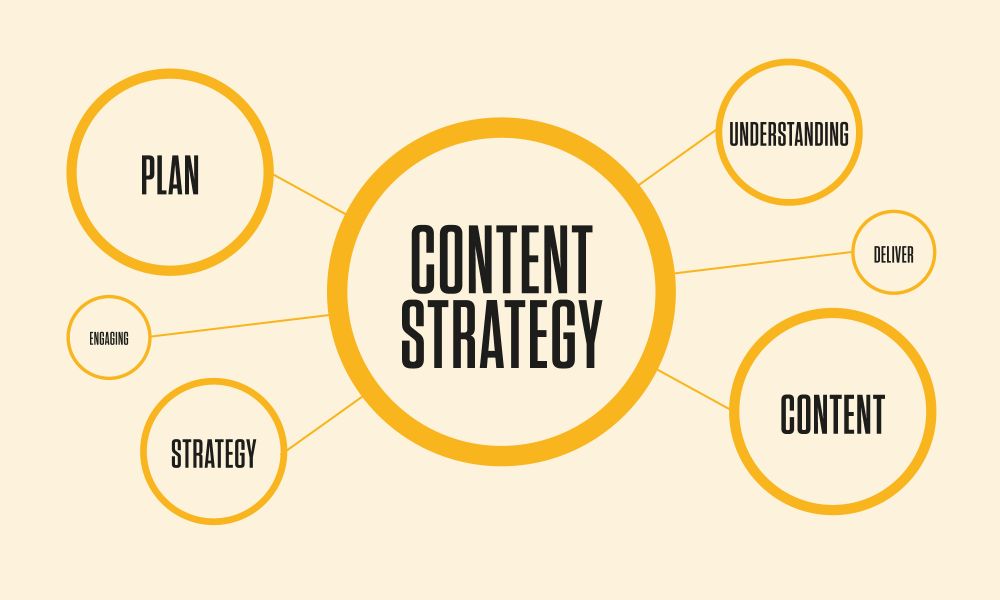
Leverage available resources and free tools to produce content efficiently
Optimize internal resources without staff using automation tools
At DPS.MEDIA, we often work with SME businesses that have only 1-2 people in charge of marketing. In cases where the business has no staff at all, leveraging free tools and untapped internal resources will be the springboard for you to start producing content for the first month. free tools and untapped internal resources will be the leverage for you to start producing content for the first month.
Below are some tools and ideas that effectively support the initial stage:
- ChatGPT, Notion AI, Google Gemini: These are powerful “virtual” assistants that help outline content, suggest headlines, and complete article scripts.
- Canva or Adobe Express: Create brand images, quote content, carousel posts with just a few drag-and-drop actions.
- Google Sheet + Add-on Form publisher: Create forms to collect customer insights and export data into social proof content.
- AI Voice tools (Play.ht, Eleven Labs): Create professional voice-over videos for TikTok/Reels without actual recording.
Turn the operations team into a source of content inspiration
Available resources do not necessarily have to be content staff. With projects at DPS.MEDIA, we often “temporarily borrow” the knowledge and experience of the sales department, customer support, or even the board of directors—the people who understand customers best—to create content that is much richer in insight than hiring freelancers unfamiliar with the industry.
Example case study: an auto repair business in District 7 that collaborated with DPS.MEDIA created its first 4 videos simply by using a mobile phone to record technicians working in real situations, adding explanations via text. In week 1, they reached 15,000 pure organic views thanks to highly authentic and relatable content.
Specify the content posting schedule with a template table
| Week | Content format | Resources used | Support tools |
|---|---|---|---|
| Week 1 | Video hậu trường, chia sẻ “nghề tay trái” | Technical staff | CapCut, Canva |
| Week 2 | infographic FAQ | Customer support data | Canva + Notion AI |
| Week 3 | Service model explanation article | Board of Directors | ChatGPT + Grammarly |
| Week 4 | Mini-clip sharing from customers | Feedback collection form | Google Sheet + Play.ht |

Set up a scientific posting schedule to help the business maintain a stable presence
A regular content posting schedule helps algorithms favor your brand
Research from HubSpot and Content Marketing Institute points out that businesses with a scientific posting schedule increase up to 67% organic traffic compared to brands with irregular posting. At DPS.MEDIA, we experimented with a “calendar-driven campaign” model for an SME client in the clean cosmetics sector — after just 4 weeks, social media reach doubled, and B2B collaboration demand also began to form.
Businesses without personnel can still maintain a steady content flow by using a pre-designed posting calendar based on industry insights — helping to optimize resources and avoid sporadic posting. The proposed structure usually includes:
- Monday: Share a brief piece of knowledge in the form of “Did you know?” with infographic.
- Wednesday: Short blog post (300-500 words) analyzing a small issue in the industry.
- Friday: Case study or real-life example from actual customers or the business community.
Scientific structure helps the business avoid “content disruption”
Standardizing the weekly posting schedule helps businesses avoid “radio silence” due to lack of ideas or no one in charge. We often apply the model 3H Content Framework from Google: Hero – Hub – Help, to ensure each week balances major content, community-sustaining content, and useful content. Below is a sample content calendar for the first month suitable for SMEs without a content team:
| Week | Time | Content type | Suggested topic |
|---|---|---|---|
| Week 1 | Monday | Help – useful tips | 5 mistakes when choosing a logistics service provider |
| Week 1 | Friday | Hub – community connection | Story of a mother and daughter starting an online market during the pandemic |
| Week 2 | Wednesday | Hero – nổi bật & tạo dấu ấn | Video pitch: Why we started from an old motorbike |
| Week 3 | Monday | Help | How to test a business idea with zero capital |
| Week 4 | Friday | Hub | What customers say after 1 month of product trial |
We recommend preparing at least 4 weeks of evergreen content in advance so you can launch even without an official person in charge. This is not only a temporary solution but also the way DPS.MEDIA helps businesses take control of their content strategy from the very first week.

Track performance metrics to refine content for the following months
Measure content performance to see what truly creates value
after implementing the content plan for the first month, tracking and evaluating performance indicators (KPIs) is mandatory to adjust the strategy to fit market needs and user behavior. DPS.MEDIA recommends SMEs start with basic but strategic metrics, such as:
- Engagement rate: measuring user engagement, thereby identifying which articles truly attract attention.
- Conversion Rate: showing the ability to lead users to specific actions such as registering, purchasing, or messaging for consultation.
- Average time on page: helps determine which content is truly engaging enough to retain readers.
Turn data into strategy: Learn from performance to refine content
The important thing is not just collecting data but turning data into decisions.Một doanh nghiệp nhỏ (KH: Brand A – ngành mỹ phẩm handmade) từng hợp tác với DPS.MEDIA đã trải qua tình huống thú vị: mặc dù các bài chia sẻ mẹo chăm sóc da chỉ chiếm 30% tổng bài viết, nhưng lại chiếm đến 65% tổng lượt chia sẻ và lưu bài. Đây chính là “dữ liệu ngầm” giúp Brand A chuyển hướng chiến lược, tăng cường chuyên mục “tips skincare” và xây dựng sơ đồ nội dung xoay quanh insight người dùng.
| Content | Interaction rate | Shares | Conversion |
|---|---|---|---|
| Skincare tips | 12,5% | 780 | +22% |
| Product review | 6,8% | 190 | -3% |
| Promotion | 10,2% | 340 | +15% |
No team needed, still able to make data-driven decisions
For SMEs without specialized personnel, DPS.MEDIA advises businesses to use free tools such as Meta Insights, Google Analytics, or ChatGPT log tracking để thu thập thông tin hành vi và hiệu quả nội dung với độ chính xác đủ cao. Sau đó, hãy lập bảng KPI nội dung đơn giản theo tuần hoặc tháng – không cần quá cầu kỳ nhưng phải nhất quán.Từ đó, doanh nghiệp hoàn toàn có thể categorize effective content, điều chỉnh tần suất xuất hiện và đổi mới kiểu định dạng (ảnh, short video, bài viết…) dựa trên chỉ số phản hồi thực tế.
Clearly, content is not only about creativity, but also about listening to data in a scientific way.

Build a habit of continuous evaluation and improvement in the content development process
Establish a feedback and optimization cycle based on real data
At DPS.MEDIA, we recommend that businesses should establish a multi-dimensional feedback system right from the first day of content creation, even if there is no internal staff yet. By leveraging free tools such as Google Analytics, Meta insights and Hotjar, businesses can track user behavior, thereby identifying strengths and bottlenecks in the content.
Instead of waiting until the end of the month to summarize, choose regular time intervals (e.g., weekly) to evaluate and record:
- Topics with high engagement
- Posts with high bounce rates on fanpage or website
- Conversion rate from content to desired action
Mô hình phản hồi nhanh theo kiểu “Build - Measure – Learn” của Eric Ries in the book The Lean Startup is also very useful for small businesses to flexibly improve even without a professional content creation team.
case study: A month of transformation thanks to proper content evaluation
A DPS.MEDIA client in the organic cosmetics field in Da Nang, even though there was only one founder managing all operations, quickly improved content effectiveness by the third week after applying a content evaluation form after each Facebook post campaign.
| Week | Featured content | Implemented change | Results |
|---|---|---|---|
| Week 1 | Product introduction post | No improvements | CTR only 0.71% |
| Week 2 | Real customer stories | Add real images and prominent CTA | CTR increased to 2.41% |
| Week 3 | Usage instruction video | Shorten video length, add subtitles | Watch time increased by 381% |
DPS.MEDIA always affirms: A good process is not enough. It is patience in measuring, evaluating, and quickly adapting that brings sustainable success to content strategy, especially in the first month when resources are still limited.
Your past journey
Building a content script for the first month when the business does not yet have specialized personnel is a challenge, but completely feasible if you clearly define your goals, understand your target audience, and have a specific strategic framework. With the step-by-step approach shared by DPS.MEDIA, SMEs can create content that is not only consistent, but also truly engaging and drives conversions.
We always believe that the power of digital marketing lies in flexibility and the ability to optimize existing resources. Even if you do not have your own content team yet, you can still effectively kickstart your content strategy if you know how to structure weekly content, reuse creative ideas, and leverage suitable support tools. DPS.MEDIA encourages you to start today — try outlining a content plan for 1 week based on your core product or service, then gradually expand it into a plan for the whole month. Once you are solid in the initial stage, you will easily move on to higher steps such as SEO optimization, video marketing, personal branding, etc.
If you feel you need more support in strategy planning, building industry-specific content guidelines, or simply want to review if your current roadmap is optimized, DPS.MEDIA is always ready to accompany you. See this not just as the first step in creating content, but as an opportunity to shape your brand voice.
Which specific step are you struggling with when starting to implement content? Share in the comments below or join the discussion with the community – maybe your question will inspire many others!