



In-depth Research Report: From “Growth” to “Efficiency” – Corporate Restructuring Strategy and Reshaping Vietnam's Economic Drivers in 2026
1. Macroeconomic Context 2026: The Growth Paradox and Restructuring Pressure
2026 marks a turning point for Vietnam's economy, opening the sprint phase of the 10-year Socio-Economic Development Strategy (2021-2030).
After the complex fluctuations of the post-pandemic economic cycle and prolonged global monetary tightening, Vietnam's macroeconomic picture emerges with colors interwoven between aspirations for breakthrough growth and the pressure to adapt to a harsher new economic reality.
In this context, the corporate governance philosophy is witnessing an unprecedented profound paradigm shift: from prioritizing scale expansion (growth) at all costs to optimizing operational efficiency, protecting cash flow, and improving profit margins (efficiency).
This shift is not random but is an inevitable consequence of the friction between macroeconomic forces, monetary policies, and changes in the behavior of global investors.
1.1. The Global Macro Picture and Expectation Gap in Vietnam
Vietnam enters 2026 with an ambitious and historic growth target.
The Government and the Central Committee of the Communist Party of Vietnam have oriented the national GDP growth target at 10% or higher, shaping 2026 as a year of breakthrough action to realize the era of “national reaching out,” aiming to become a high-income country by 2045.
Endogenous motivation for this goal is expected to come from public investment capital, with disbursement plans projected to jump 40% compared to 2025, reaching approximately $44 billion.
This massive capital flow is directed into key infrastructure super-projects with strategic connectivity such as Long Thanh International Airport, the North-South Expressway, and the Lao Cai – Hanoi – Hai Phong railway.
Although the domestic macro foundation recorded positive signals such as an abundant workforce with 68 million people of working age, labor productivity increasing by over 6.5% annually, and core inflation controlled at 3.74% in early 2026, there still exists a significant gap between domestic expectations and the assessments of international financial institutions.
The World Bank (WB) offers a baseline scenario for Vietnam's economic growth at 6.3% in 2026, emphasizing this as the highest in the East Asia-Pacific region.
However, the International Monetary Fund (IMF) gives a more cautious forecast at 5.6%, slightly down from the estimated 6.5% in 2025.
This slowdown, according to analysis by the IMF, Asian Development Bank (ADB), and the Economist Intelligence Unit (EIU), stems from unpredictable exogenous barriers: the negative impact of new US tariff policies on key exports, continued tightening of global financial conditions, increased geopolitical supply chain fragmentation, and world consumer demand not yet fully recovered.
UNCTAD's 2026 Global Trade Report also pointed out that while trade growth remains positive, the pace will slow significantly due to the reshaping of global trade flows and value chains.
The discrepancy between the 10% target oriented by politics and the realistic forecast around 6% creates enormous pressure on the private business sector.
Vietnamese enterprises must face the pressure to maintain growth momentum to meet shareholder expectations and leverage the drive from public investment, while simultaneously dealing with high capital costs, weak international demand, and looming geopolitical risks.
This macro paradox is the core catalyst, acting as a survival filter, forcing corporations to undergo comprehensive restructuring, abandoning the mindset of scale expansion through financial leverage to shift toward defensive strategies, protecting cash flow, and optimizing profit on each unit of asset.
1.2. Pressure from Capital Markets and the Credit Tightening Cycle
The strategic shift of enterprises stems not only from international trade risks but is also strongly governed by the structure of domestic and international capital markets.
In the 2025-2026 period, capital costs remain at a high level, leading to increasingly sharp credit differentiation.
A structural change in the Vietnamese banking system in 2026 is the State Bank considering the removal of the traditional credit growth limit mechanism (credit room).
While this move theoretically creates more room for growth, in reality, capital will only be directed to flow into credit institutions with strong capital buffers, good risk management, and strict compliance with Basel III standards.
As a result, these commercial banks also set stricter lending standards for the business community.
Financial institutions are changing their credit risk assessment methods.
Instead of relying mainly on collateral value (usually real estate) as in the previous period, banks now focus on appraising the actual cash flow generation capacity and the transparent transaction history of the business.
MSB is a typical example, introducing flexible financial solutions with limits up to $2 million for business households, but with the prerequisite that the appraisal process must prioritize assessing actual cash flow.
In the corporate bond market, although liquidity and confidence have shown signs of recovery thanks to mandatory credit rating regulations, risk differentiation is occurring with fierce intensity.
The supply of corporate bonds is expected to increase in 2026 as businesses seek to diversify financing channels when bank credit tightens.
However, issuers with high financial leverage, weak cash flow, and lack of information transparency will face massive capital mobilization barriers.
Institutional and individual investors now set stricter requirements on return rates, require shorter payback periods for investment projects, and demand a reliable operational optimization plan.
Recognizing this, executive boards at large corporations are forced to redesign balance sheets, placing liquidity and net profitability criteria at the top of the restructuring agenda.
1.3. FDI and Foreign Capital Flows: A Positive Bright Spot Requiring Adaptation
While domestic capital flows face many constraints, attracting Foreign Direct Investment (FDI) continues to be a solid pillar for the economy.
By the end of the third quarter of 2025, total FDI into Vietnam—including new projects, capital adjustments, and capital contributions for share purchases—exceeded $28.54 billion, marking a growth of 15.2% over the same period.
The processing and manufacturing industry continues to lead, followed by real estate, energy, and technology.
This trend reflects the strong confidence of international investors in macro stability, the strategic reform roadmap, and Vietnam's irreplaceable position in reshaping global value chains.
At the leading megacity, Ho Chi Minh City aims to attract $11 billion in FDI in 2026, with absolute priority for high-tech projects, smart logistics, and financial centers.
New momentum appeared right from the first months of 2026 when the city's total attracted FDI reached nearly $979.6 million in the first two months, an increase of 28.4% over the same period.
Most notable is the investment commitment of up to $2 billion from G42 Group (UAE) along with a consortium of investors to develop a system of hyperscale data centers in Vietnam.
The shift of FDI inflows from labor-intensive industries to capital-intensive and high-tech sectors poses an urgent requirement for domestic enterprises.
To participate in the supply chains of these multinational corporations, Vietnamese enterprises cannot maintain traditional inefficient production models but must restructure technology, meet ESG (Environmental, Social, and Governance) standards, and improve overall operational performance.
2. The Shift in Global Governance Paradigm and Its Impact on Vietnam

The combination of modest global economic growth (forecasted at only 2.4% in 2026 according to the EIU), persistent inflation, and escalating costs has triggered a major overhaul of management thinking on a global scale.
Chief Executive Officers (CEOs) and boards of directors are redefining the concept of “success.”.
Success in 2026 is no longer measured by the speed of market share acquisition or pure revenue growth, but is defined by the ability to maintain stable profit margins, supply chain resilience, and the ability to automate core processes.
2.1. From “Growth at All Costs” to “Margins and Cash Flow”
Throughout the decade prior to the pandemic, a record-low interest rate environment encouraged “cash-burning” business models.
Businesses were encouraged to scale at all costs, acquire competitors, and increase the number of customer touchpoints, even when these activities resulted in negative cash flow.
However, the era of cheap money has closed.
The year 2026 marks the rise of the “ruthless margin protection” strategy.
Every dollar of capital wasted due to operational inefficiency will have its negative impact amplified in the context of a cooling economy and underlying inflationary pressures maintaining a level above 3.7% in Vietnam.
Labor productivity is identified as the primary profit lever in this cycle.
Instead of mechanical mass layoffs, management prioritizes process redesign and extensive technology application.
According to experts from Deloitte and PwC, the winning organizations in the coming decade will not be those that automate the fastest, but those that know how to transform cash flow saved from efficiency into strategic reinvestments, creating new forms of value.
Optimizing cost structures, building modern technology platforms, and creating a high-trust culture not only help small and medium-sized private enterprises (SMBs) survive the transition period but also enhance business valuation.
The strategic recommendation for business owners of companies with good financial health is to optimize systems right in 2026 to prepare for exit options at the highest valuations between 2027 and 2030, before the market enters a potential downturn cycle.
2.2. Reshaping Core Key Performance Indicators (KPIs)
A direct consequence of the shift in leadership mindset is the recalibration of the entire Key Performance Indicator (KPI) system.
While in the previous period, the market honored businesses with rapid sales volume growth, by 2026, organizations link KPIs directly to capital efficiency, net profit, and flexible adaptability.
Continuing to use traditional KPIs designed for an outdated digital environment and consumer behavior will lead to a serious misalignment between surface performance and actual business effectiveness.
Customers in 2026 tend to consume more economically, prioritizing digital experiences and seeking real value instead of quantity.
Therefore, KPIs focusing on “activity” such as website hits or total number of leads are giving way to KPIs focusing on “impact” such as contribution to the revenue pipeline and decision-making speed.
In the field of B2B business development, the transformation of KPIs is extremely profound due to the nature of long sales cycles and complex decision-making processes.
Businesses no longer rely on emotional assumptions but switch to navigating strategy entirely by data.
Metrics such as the Book-To-Bill ratio (the ratio of new orders received to goods invoiced) and Pipeline Velocity become life-and-death measures.
These indicators not only ensure tight alignment between the marketing and sales departments but also serve as accurate cash flow forecasts, helping businesses accurately size their level of expansion.
Furthermore, revenue from expanding relationships with existing customers (Expansion Revenue) and contributions from the partner ecosystem (Partner Ecosystem Contribution) are valued significantly higher than continuously spending money to acquire new customers with low retention rates.
To clearly see the contrast in management philosophy, Table 1 below summarizes the shift in performance measures at large corporations in Vietnam and worldwide.
| Analysis Category | “Hot Growth” Phase (Before 2023) | “Efficiency Optimization” Phase (2025 – 2026) | Basis for Transformation and Strategic Drivers |
| Revenue Objectives | Top-line growth, gaining market share at all costs. | Profitable revenue growth, focusing on high-value customer lifecycles. | Inflationary pressure, rising logistics and personnel costs, and tightening consumer demand. |
| Financial Indicators | Sales Volume, Total Assets, Valuation based on GMV. | Free Cash Flow, Net Debt/EBITDA Ratio, Gross Margin. | Expensive cost of capital, shareholders demanding real cash yields and transparency. |
| Operational Indicators (Retail/FMCG) | Number of POS, wide geographic coverage. | Store-level EBITDA Break-even, productivity per square meter. | Shift from horizontal expansion to deep exploitation of user data. |
| Digital Transformation Indicators (B2B) | Web Traffic, quantity of raw leads generated. | Book-To-Bill ratio, AI-driven Revenue Impact, Pipeline Velocity. | B2B customers researching information via AI, complex closing cycles requiring high precision. |
| M&A Strategy | Acquisition to increase mechanical scale and eliminate competitors. | Acquisition to create synergy, diversify value chains, and increase resilience. | Focus on integrating technology platforms and optimizing non-core asset portfolios. |
Leading businesses today are increasing investment in automating the KPI tracking process.
Intelligent management platforms allow for the elimination of data lag, saving thousands of hours of manual reporting and minimizing errors, thereby freeing up time for managers to focus on strategic analysis instead of data collection.
2.3. Artificial Intelligence (AI) and the Shift in Competitive Advantage
One of the drivers shaping the efficiency landscape of 2026 is the explosion of Artificial Intelligence (AI).
The year 2026 is defined by experts from Harvard Business School (HBS) as a historical transition year, marking the turning point when AI moves from the local pilot phase to enterprise-wide production deployments.
Technology infrastructure, security mechanisms, and data governance legal frameworks have caught up with the capabilities of Large Language Models (LLMs), transforming technology from a support function (“IT”) into the strategic backbone for every decision, customer experience, and financial transaction.
The evolution of AI in 2026 is clearly demonstrated through the concept of “Agentic AI” – artificial intelligence systems capable of reasoning, action planning, and executing tasks autonomously, intervening deeply in core activities such as sales, human resources, finance, and supply chain management.
The adoption of Agentic AI brings about a leap in productivity.
Practical data indicates that early adopters of AI have the potential to achieve performance growth ranging from 20% to 40% compared to laggard competitors.
In terms of human resource management, this does not mean that AI will completely replace management.
The truth is much harsher: Managers who know how to apply AI will outcompete and replace managers who do not have these skills.
From an economic lens, the impact of AI on the cost structure of businesses is a revolutionary phenomenon.
According to in-depth analysis by BlackRock, labor costs currently account for about 55% of total operating costs in the corporate sector.
If AI applications and automation technology can help optimize and reduce this proportion by just 5% (from 55% down to 50%), and assuming that 75% of these savings belong to the business while 25% is paid to AI service providers, then the present value of this surplus cash flow is estimated to reach $1.2 trillion on a global scale.
This massive leverage explains why businesses are accepting heavy investments in software and technology infrastructure, despite the general economic environment facing many headwinds.
In Vietnam, business leaders are aiming to approach AI from an “AI-augmented” perspective rather than “AI-automated” (full automation).
In this model, AI serves as a sharp partner, helping to accelerate information search cycles, product prototyping, and market data analysis, while humans still hold supreme control over professional judgments and strategic decisions.
3. Creating Institutional Foundations: Legal Drivers Promoting Restructuring 2026
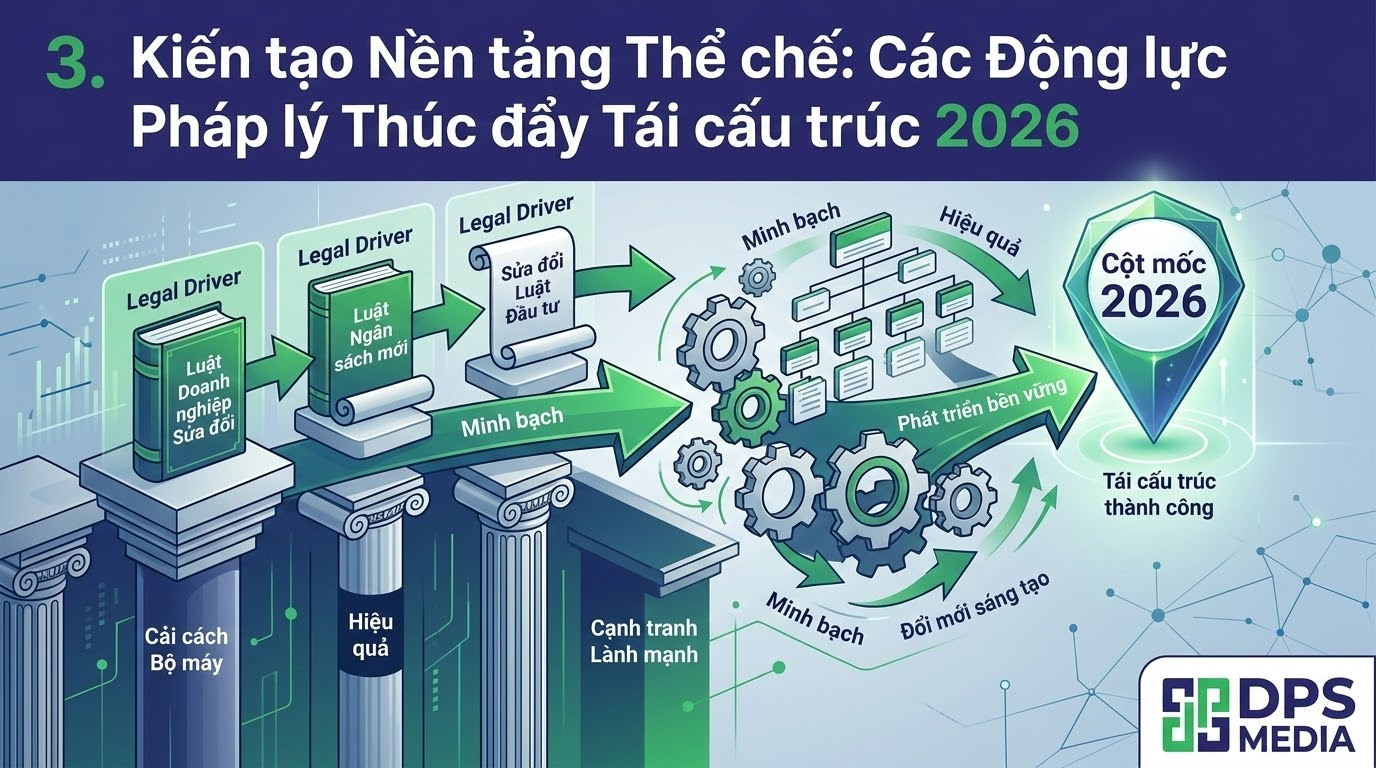
The strategic shift of businesses in 2026 is not just a defensive reaction to market pressure but is also catalyzed and directed by deep, unprecedented reforms in law, administrative institutions, and international integration in Vietnam.
Macro policies issued in the 2024-2025 period have truly begun to “soak” into the economy, creating a more transparent and disciplined legal corridor for restructuring activities.
3.1. Business Recovery and Bankruptcy Law 2025: Pivoting Risk Management Mindset
The most constructive legal milestone with a direct impact on financial restructuring activities in 2026 is the entry into force of the Recovery and Bankruptcy Law No. 142/2025/QH15 (RBL 2025), officially applied from March 1, 2026, completely replacing the Bankruptcy Law No. 51/2014/QH13.
The 2014 Bankruptcy Law has long been criticized by experts and the business community as a heavy, bureaucratic, slow legal framework that proved ineffective in resolving emergency situations of businesses falling into crisis.
The old law approached the issue of insolvency from the perspective of a market exit mechanism, with the default outcome being asset liquidation.
In contrast, RBL 2025 marks a philosophical shift: pivoting toward prioritizing business recovery and preserving enterprise value.
This mindset is compatible with the most advanced international practices, such as Chapter 11 of the US bankruptcy law system or Singapore's restructuring framework.
One of the most revolutionary initiatives of RBL 2025 is the introduction of the concept of “Imminent Insolvency.”.
Accordingly, a business is identified as facing this risk when there is evidence showing they are likely unable to pay debts that will become due within the next 6 months, or have overdue debts but the overdue period has not exceeded 6 months.
This concept is completely separate from the definition of an “insolvent company” – which is applied to cases of debt overdue for 6 months or more.
The recognition of “imminent insolvency” status allows businesses to actively intervene early, filing for recovery before assets are seriously eroded and partner trust is lost.
Notably, only the debtor itself (through the legal representative, Board of Directors, or Members' Council) has the right to initiate the recovery process based on this ground, clearly demonstrating the principle of debtor-led rehabilitation.
The vital protection mechanism accompanying this process is the Automatic Stay feature.
Immediately after the court accepts the application for recovery, this mechanism automatically takes effect, prohibiting creditors from performing actions such as freezing, seizing, or liquidating collateral assets.
This provides the business with a legally invaluable “breathing space,” helping them calmly reassess project feasibility, negotiate debt restructuring plans, and build a new business plan under court protection.
However, RBL 2025 also sets strict requirements and iron discipline for participating parties.
To speed up processing and reduce losses for creditors in cases where liquidation is mandatory, the new law has narrowed the deadline for creditors to file claims.
Instead of having 30 days as before, creditors now have only 15 days from the time bankruptcy proceedings are opened to protect their interests.
This sudden change requires credit institutions, banks, and commercial partners to comprehensively upgrade risk management systems and apply early warning technology to continuously monitor the financial health of partners, avoiding the risk of total loss due to procedural delays.
In addition, the law also introduces expedited procedures specifically for small and micro-sized enterprises or those with few creditors (under 20 creditors and total debt under 10 billion VND).
This mechanism helps shorten processing time by 50% and lowers the required voting ratio, thereby quickly releasing frozen social resources.
RBL 2025 also adds an important chapter on cross-border bankruptcy, establishing a basis for Vietnamese courts to recognize or refuse rulings from foreign courts, creating confidence for international investors when participating in the NPL (Non-Performing Loan) M&A market in Vietnam.
Along with the establishment of specialized Bankruptcy Courts expected in July 2025, this legal ecosystem is equipping Vietnam with sharp tools to resolve the most complex financial crisis cases.
Table 2 compares in detail the core changes between the old and new legal systems, clarifying the strategic impact on the behavior of market actors.
| Legal Factor | Bankruptcy Law 2014 (Old) | Recovery and Bankruptcy Law 2025 (New – Applied 2026) | Strategic Impact on Corporate Restructuring |
| Core Philosophy | Focused on liquidation and closing businesses (Market Exit). | Prioritizes recovery, preserving value according to international standards (Debtor-led rehabilitation). | Encourages businesses not to hide difficulties, but to bravely face them and seek early restructuring solutions. |
| Initiation Grounds | Based solely on actual insolvency status. | Addition of “Imminent Insolvency” grounds (debt due within 6 months). | Creating an early medical intervention mechanism to prevent asset degradation before it is too late. |
| Asset Protection | Lack of synchronization, often interrupted by individual debt foreclosure actions. | Applying an “Automatic Stay” immediately upon acceptance of the rehabilitation petition. | Providing “breathing space” to renegotiate debt, avoiding the stripping of collateral assets. |
| Debt Declaration Deadline | 30 days from the opening of procedures. | Shortened to 15 days. | Forcing creditors and banks to have automated risk monitoring systems, early warnings, and immediate responses. |
| Small Enterprises | Applying a single cumbersome, expensive process. | Abbreviated procedure mechanism (reducing time by 50%, debt <10 billion VND). | Reducing the burden of judicial costs, quickly resolving small cases to focus on major economic cases. |
3.2. Administrative Great Restructuring: Merging Provinces and the Birth of Megacities
Parallel to extensive judicial reforms, 2026 is also marked by the largest territorial administrative restructuring since 1975.
Based on Resolution No. 60-NQ/TW issued by the Party Central Committee in April 2025, Vietnam officially launched the process of merging and streamlining 63 provinces and centrally-run cities into just 34 provincial-level administrative units.
The most brilliant focus of this economic space planning campaign is the birth of Vietnam's first megacity through the merger of Ho Chi Minh City (HCMC) with two adjacent industrial provinces, Ba Ria – Vung Tau and Binh Duong.
Eliminating artificial geographical boundaries between these three growth poles creates a massive economic entity.
The new megacity is projected to contribute nearly 1/4 of the country's GDP (with an equivalent economic scale exceeding the $2.7 billion mark in the review document) and be responsible for generating 1/3 of total national budget revenue (estimated at 682 trillion VND, equivalent to $26 billion).
For the domestic and foreign business communities, this administrative “major surgery” brings an enormous "efficiency dividend.".
The elimination of overlapping bureaucratic layers and the unification of district and commune-level agencies help businesses significantly reduce transaction costs with the government.
Instead of having to apply for permits and run around multiple departments of different provinces for an extended logistics infrastructure project, investors now only need to work with a single management focal point.
This consolidation is not just formal but comes with clear quantitative reform targets.
The Government has set a goal to cut administrative processing time, compliance costs, and strict business requirements by at least 30% during the 2025-2026 period, specifically focusing on sensitive areas such as land management, foreign labor licensing, and tax declarations.
The streamlining of personnel is estimated to help cut 120,500 part-time commune-level staff nationwide by 2030, saving the state budget approximately 190.5 trillion VND (equivalent to $7.62 billion), a massive resource that can be redistributed to investment in education, healthcare, and smart transportation infrastructure.
New regulations taking effect from 2026, such as the mandatory use of centralized electronic labor contracts (Decree 337) or regulations on real estate identification codes, also contribute to market transparency and eliminate hidden costs for businesses.
4. Practical Analysis: Typical Restructuring Models in Vietnamese Enterprises

The theory of efficiency optimization is being vividly realized through the drastic, sometimes vital, restructuring moves of Vietnam's leading private corporations.
The common thread of these strategies is a decisive shift away from non-core business segments, proactive debt restructuring, and a high focus on improving operating cash flow.
4.1. Masan Group: Optimizing the Consumer-Retail Ecosystem and Iron Capital Discipline
Masan Group (HOSE: MSN) is an excellent and comprehensive testament to the shift from a “rapid expansion” strategy to “break-even optimization.”.
The 2025 business results report shows that Masan recorded revenue of over 81,600 billion VND and profit after tax of 6,764 billion VND, a 1.6-fold increase over the previous year and exceeding the base scenario by 139%.
This is a record profit level in the group's history.
The most notable point is that this profit level was achieved after excluding one-off gains, reflecting substantive, organic growth from core consumer business segments.
Masan's restructuring strategy in 2026 is shaped by three main pillars:
Capital Expenditure (Capex) Discipline: To cope with the high-interest-rate environment and liquidity risks, Masan has prioritized the optimization of Free Cash Flow (FCF).
The Group has implemented strict belt-tightening measures, heavily cutting fixed asset investment (Capex) by 39.4% in 2025.
This restraint helped the group's free cash flow soar to over 9,300 billion VND.
The Net Debt/EBITDA ratio—a vital measure of financial health—was brought down to a safe level of 2.74 times, and this continues to be a core KPI protected in 2026.
Transformation of Retail Measurement Model (WinCommerce): Masan's modern retail sector through the WinCommerce (WCM) chain with more than 4,200 WinMart/WinMart+/WiN stores has stopped chasing the race to open points of sale at any cost.
Growth momentum has been reshaped around improving performance per square meter.
The Group set strict KPIs: the ratio of stores reaching store-level EBITDA break-even.
The result was extremely impressive, with 90.3% of stores reaching this milestone.
The profit contribution from WCM along with Masan MEATLife and Phuc Long increased 2.6 times over the same period, proving that Masan's operating platform has passed the “money-burning” phase to enter a high-performance exploitation cycle.
Divesting from risky segments and restructuring distribution channels: To minimize the risk of global raw material price fluctuations and concentrate resources on the essential consumer segment, Masan decided to restructure its portfolio by divesting from H.C.
Starck, part of the high-tech materials segment (Masan High-Tech Materials).
The proceeds were redistributed into the traditional FMCG segment (Masan Consumer – MCH), where the group is deploying a “Direct Coverage” distribution model on a national scale.
This model helps Masan eliminate intermediaries, gain absolute control over the supply chain, user data, and display quality at the point of sale (POS), thereby driving revenue growth from non-traditional channels such as e-commerce (up 66.3%) and exports (up 27%).
4.2. Vingroup: Debt Restructuring, Actively Diversifying Capital Sources, and Asset Portfolio Flexibility
For Vingroup (HoSE: VIC)—Vietnam's largest private enterprise by asset scale—the 2026 restructuring puzzle is extremely complex.
The core task is how to both diversify capital sources and restructure a safe debt repayment schedule while ensuring the maintenance of massive resources to support the strategic “spearhead,” the electric vehicle manufacturer VinFast, in its quest to conquer the global market.
Vingroup's financial restructuring execution mechanisms include:
Multi-tier bond issuance and Share Swaps: Vingroup demonstrates superior flexibility in accessing capital flows in both domestic and international markets.
Domestically, the group approved a plan to offer 1,000 billion VND (equivalent to $37.9 million) in secured private placement bonds with a maximum term of 36 months to restructure existing debts.
More breakthroughs occurred in the international market, where Vingroup filed for the issuance of an exchangeable bond lot worth up to $325 million (including 1,625 bonds, par value $200,000/bond) expected to be listed on the Vienna Stock Exchange.
This 5-year bond lot carries an expected interest rate of 5.5%, with a special structure allowing bondholders the right to swap for shares of Vinpearl JSC (HoSE: VPL)—the group's leading resort tourism system, which has just had its margin trading restrictions removed on the HOSE.
Investment Portfolio Restructuring and Strategic Partners: Notably, Vingroup is undergoing major changes in shareholder structure.
SK Group (South Korea) has completed the divestment of its entire 6.05% stake in Vingroup, earning at least 1.3 trillion won (equivalent to $935.5 million). This move stems from SK Group's own broad investment portfolio restructuring strategy to focus liquidity on the semiconductor and EV battery segments. Vingroup itself has been extremely open to opportunistic divestments of mature or non-core assets. The transfer of the Novatech project, the sale of part of VinAI's business, or past deals reducing ownership in Vincom Retail (VRE) and One Mount have provided abundant circulating cash flow, strengthening the balance sheet. Strengthening Equity and Personal Resources: Understanding the risks of high financial leverage, Vingroup announced a plan to issue 3.85 billion new shares at a 1:1 ratio to double its charter capital to over 77 trillion VND ($2.93 billion).
Động thái này xuất phát từ chiến lược tái cấu trúc danh mục đầu tư diện rộng của chính SK Group nhằm tập trung thanh khoản cho mảng bán dẫn và pin xe điện.
Bản thân Vingroup cũng tỏ ra cực kỳ cởi mở trong việc thoái vốn mang tính cơ hội ở các tài sản đã trưởng thành hoặc không còn đóng vai trò lõi (non-core assets).
Việc chuyển nhượng dự án Novatech, bán một phần kinh doanh của VinAI, hay các thương vụ giảm tỷ lệ sở hữu tại Vincom Retail (VRE) và One Mount trong quá khứ đã mang lại dòng tiền lưu động dồi dào, củng cố bảng cân đối kế toán.
Tăng cường Vốn Chủ sở hữu và Nguồn lực cá nhân: Thấu hiểu những rủi ro của đòn bẩy tài chính cao, Vingroup đã công bố kế hoạch phát hành 3,85 tỷ cổ phiếu mới với tỷ lệ 1:1, nhằm nhân đôi vốn điều lệ lên mức hơn 77 nghìn tỷ VNĐ (2,93 tỷ USD).
This reinforcement helps expand the group's core financial capacity.
At the same time, the Chairman of Vingroup continues to demonstrate personal commitment through a sponsorship agreement of up to 50 trillion VND ($1.9 billion) for VinFast through 2026, of which 28 trillion VND was disbursed by the end of Q3 2025.
Green Shift (ESG) through VinEnergo: Another strategic highlight of Vingroup in building an ESG capital attraction profile is the launch of VinEnergo.
In early 2026, this company announced a plan to develop a massive renewable energy portfolio, increasing capacity from 10 GW to a target of 100 GW over the next 3 years, focusing on the European, North American, and Southeast Asian markets.
This is a strategic step that helps Vingroup gain broad access to green credit lines from international financial institutions, meeting the global Net Zero trend.
4.3. Novaland (NovaGroup): Balance Sheet Surgery through Debt-to-Equity Swaps
The Vietnamese real estate industry is the victim most heavily impacted by the credit tightening cycle and the collapse of confidence in the corporate bond market.
The strategy of Novaland (ticker: NVL)—the core nucleus of NovaGroup—is a classic case study of survival efforts, preventing chain collapse, and gradual recovery through extremely complex financial restructuring techniques.
Novaland's vital intervention solutions focus on two areas:
Debt-to-Equity Swap with foreign partners: Short-term liquidity pressure was significantly relieved through the conversion of bond debts into shares.
Novaland approved a plan to issue more than 184 million shares to swap part of an international convertible bond lot (worth $335 million).
This transaction helped eliminate 747 billion VND in debt obligations, with the participation of 4 foreign financial institutions (including BNP Paribas Financial Markets, Oclaner Asian Bond Fund, Oclaner Global Credit Opportunities, and Barclays Capital Securities).
The key point is that the conversion price was fixed at 36,000 VND/share, 2.7 times higher than NVL's market price on the stock exchange at the end of 2025.
The fact that creditors accepted this price reflects the result of intense negotiations to avoid an insolvency scenario, while showing long-term confidence in Novaland's actual land bank.
Internal Debt Offsetting and Post-M&A Ecosystem Creation: Parallel to international negotiations, Novaland issued an additional 163.65 million shares to swap 2,577 billion VND in debt with its two largest shareholders, NovaGroup and Diamond Properties (entities directly related to the family of Chairman Bui Thanh Nhon).
This series of transactions helped Novaland directly cut more than 3,300 billion VND in outstanding debt, cleaning up the balance sheet.
At the same time, it reinforced the ownership ratio of the founding shareholder group to 40.44%, approaching the veto power threshold, ensuring unity and management rights throughout the difficult process.
On a more macro scale, after a period of aggressive M&A expansion, NovaGroup is restructuring into a multi-sector economic corporation with three independent pillars: Novaland Group (Real Estate), Nova Service Group (Trade – Services), and Nova Consumer Group.
The central task in the 2025-2026 period is to integrate acquired businesses, harmonize personnel culture, and cross-sell to the homebuyer customer base to use high-end medical, educational, and resort services to maximize the profit lifecycle.
4.4. Mobile World (MWG): Aggressive Shift from Network Scale to Point-of-Sale Efficiency
Mobile World Investment Joint Stock Company (MWG) enters 2026 with an explosive profit plan: a target of 9,200 billion VND in profit after tax, corresponding to a 30% growth rate compared to the previous year.
The strategy to achieve such extraordinary results in the context of weak general purchasing power reflects a break with the “spatial expansion” mindset to move toward the era of “lean economic units.”.
Instead of trying to shoulder massive premises costs, MWG accepted the sacrifice of symbolic presence by closing a series of inefficient stores across the Mobile World and Dien May Xanh chains.
By concentrating the best product resources and personnel at high-profitability sales points, average revenue per store skyrocketed.
For the Bach Hoa Xanh chain, instead of geographical expansion into the North, the group concentrated on optimizing logistics costs and managing fresh food loss rates using demand forecasting technology (AI), helping this chain contribute sustainable positive cash flow to the system.
Most notable is the business model transformation of the Avakids mother and baby chain.
MWG set a target of 20% revenue growth but required a profit growth rate of up to 30% for this chain.
To solve this asymmetry puzzle, MWG shifted the focus of Avakids to the e-commerce space, with online revenue expected to account for more than 60% of the chain's total revenue, thereby permanently eliminating rental and physical personnel costs.
5. Restructuring Strategies Differentiated by Industry Groups
Each industrial group in Vietnam carries its own cost structure and economic cycle.
Therefore, the optimization problem in 2026 is solved through completely different methods.
The report evaluates this sharp differentiation through 5 key sectors:
5.1. Technology and Telecommunications: Data Infrastructure is the Heart of Innovation
For the technology industry, restructuring does not mean cutting but is a repositioning of the entire value chain.
The growth focus for 2026 has shifted from traditional software outsourcing (IT outsourcing) to building infrastructure for the era of Artificial Intelligence (AI) and digital transformation.
The formation of the Au Lac AI Alliance and the recognition of AI as a national strategic technology sparked an infrastructure arms race.
Leading telecommunications corporations like Viettel are redistributing massive investment capital into the development of hyperscale data centers.
G42 Group's commitment to invest $2 billion in HCMC further consolidates Vietnam's position as a regional data center hub.
In a context where data assets become a core resource, cybersecurity is elevated from a technical requirement to a mandatory risk management metric for the board of directors of every enterprise.
5.2. Processing, Manufacturing, and Industrial Park Real Estate: Adapting to Fragmented Supply Chains
The industrial manufacturing sector, which serves as the backbone of Vietnam's exports, is facing unprecedented supply chain restructuring pressure to cope with disruption risks and the danger of international tariff barriers that could reach up to 40%.
To minimize the risk of imported material shortages and control costs, chemical and basic material manufacturers (such as DGC) are stepping up strategies to increase the use of in-house raw materials to maintain stable profit margins.
In the field of Industrial Park (IP) Real Estate development, global macro uncertainty makes FDI tenants hesitant to commit large capital to 50-year long-term industrial land lease contracts.
Instead, there is a strong shift in demand toward compact Ready-Built Factories (RBF), which allow FDI enterprises to quickly install machinery and flexibly adjust production scales.
Facing rising land clearance costs and compensation prices under the 2024 Land Law, industrial park developers must accept new profit margin benchmarks of 30-35% for new projects, a significant drop from the over 50% seen in older projects.
A unique and systemic asset restructuring trend is the wave of “Rubber-to-IP converters”—the conversion of inefficient rubber plantation land into high-value industrial parks, led by state-owned giants such as Vietnam Rubber Group (GVR) or Phuoc Hoa (PHR).
5.3. Retail and Fast-Moving Consumer Goods (FMCG): Managing Margins on “Belt-Tightening” Customers”
The 2026 Vietnamese consumer market is shaped by the emergence of "value-seeking consumers," who have habits of tightening spending and cross-checking prices via digital platforms.
Although the Government continues to support the market with the Value Added Tax (VAT) reduction policy from 10% to 8% extending through the end of 2026 for certain essential goods, the competition for consumers“ ”wallets" remains incredibly fierce.
Retailers' restructuring strategies do not focus on destructive price-cutting competition, but rather concentrate efforts on applying AI in commerce to analyze personalized shopping behavior, accurately forecast inventory, and optimize logistics costs to protect distribution margins.
5.4. Commercial and Residential Real Estate: Filtering Speculation, Honoring Real Cash Flow
Lending interest rates anchoring at high levels (even exceeding double digits at times) is not an “end point” but serves as a perfect “stress test,” forcing the real estate market to undergo a purifying surgery.
As borrowing costs become expensive, the mentality of “flipping” investments or buying houses under the “buy first, figure it out later” model has been completely eliminated.
Homebuyers are now more stringent, prioritizing debt repayment capacity based on actual income and seeking products capable of generating operational cash flow (e.g., rental apartments).
The inevitable consequence for developers is that they are forced to restructure their product portfolios: resolutely eliminating or divesting from highly speculative projects in remote locations lacking infrastructure, and channeling scarce credit capital to finalize legal status and accelerate construction of projects serving end-users.
Real estate businesses with excessive leverage that depend on customer prepayments but fail to deploy projects will be quickly filtered out by the 2025 RBL, yielding land funds and market share to developers with healthy financial foundations.
5.5. Financial Services and Banking: Removing Quotas, Competing through Quality Governance Capacity
The banking industry plays the role of the bloodstream in the economic restructuring process, yet the industry itself is undergoing a fundamental transformation.
The State Bank's consideration of removing the traditional credit quota mechanism opens an era of free competition but also harbors many risks.
In a context where funding costs have risen and Net Interest Margins (NIM) are squeezed to their lowest levels since 2016-2017 due to competitive pressure, banks cannot pursue broad-based credit growth.
The 2026 credit strategy pivots toward focusing capital on “turnaround candidates”—enterprises undergoing substantive restructuring with convincing cost optimization plans and the ability to unlock bad debts as the economy warms up.
The competitive advantage of banks now lies not in physical branch networks but depends on robust capital buffers (Basel III), collateral processing capabilities, and the application of AI algorithms in real-time cash flow risk assessment.
Table 3 summarizes the differences in restructuring strategies across key sectors in 2026.
| Sector/Field | Core Restructuring Pressures (Pain Points) | Typical Restructuring Moves in 2026 | Basis/Expected Effectiveness |
| Technology & Telecommunications | Surge in demand for AI computing capacity; Data security. | Shifting investment capital into Hyperscale Data Centers; Prioritizing strategic-level cybersecurity. | Attracting billion-dollar FDI inflows (such as the G42 project); Mastering national AI infrastructure. |
| Manufacturing & Industrial Parks | Supply chain disruptions; Rising land compensation costs (Margins dropped to 30-35%). | Building Ready-Built Factories (RBF); Converting rubber land to IP (Rubber-to-IP); Localizing raw materials. | Reducing capital stagnation risks for FDI, increasing cost autonomy, and utilizing existing land funds. |
| Retail & FMCG | Declining purchasing power, customers prioritizing real value. | Optimizing supply chains with AI; Eliminating inefficient stores; Shifting to digital spaces. | Protecting profit margins, reducing inventory risks, and cutting physical premises costs. |
| Real estate | Real Estate. | High interest rates, frozen cash flow, loss of trust in bonds. | Debt-to-Equity swaps; Eliminating speculative projects, focusing on actual housing needs (End-users). |
| Bank | Cleaning up balance sheets, restoring liquidity, and meeting real demand. | Banking. | Narrowing NIM, fierce competition after removing credit "Rooms.". |
6. Human Resource Management and Operational Challenges in the Era of Optimization
Shifting risk assessment based on Actual Cash Flow instead of Collateral; Lending to “Turnaround candidates.”.
Improving asset quality, reducing bad debt risks, and protecting core profits.
6.1. Pressure on the Labor Market and the Reskilling Puzzle
Behind the glittering financial tables and press releases about technology applications, the 2026 restructuring picture hides intense undercurrents regarding human resources.
The revolution of shifting from “growth” to “efficiency” places organizations in a state of extreme tension, where the resilience of the Human Resources (HR) management system plays a decisive role in a business's success or failure.
The deep penetration of automation systems and AI into the workspace has permanently changed the definition of “labor competency.”.
Repetitive, manual, and time-consuming tasks are being mercilessly replaced by technology.
Research data for 2025-2026 shows that 44% of businesses cited Artificial Intelligence and 42% pointed to organizational restructuring requirements as the direct causes of layoff decisions.
However, a noteworthy fact is that nearly 60% of businesses admitted they intentionally used "AI adoption" as a smokescreen to cover the real reason of "budget constraints" and shareholder pressure, because the technology excuse seems more acceptable to the market.
Regardless of the actual cause, the consequence is that HR directors are facing immense pressure.
The role of HR has moved far beyond traditional administrative functions to become a strategic partner directly involved in designing the business's survival.
They must solve a contradictory puzzle: simultaneously reorganizing resources (which often means downsizing) while urgently investing millions of dollars in reskilling and upskilling key personnel who are retained.
6.2. Corporate Culture, Risk of Trust Breakdown, and the Rise of Shadow IT
The future workforce needs not only professional knowledge but must possess problem-solving skills and the ability to control and interact symbiotically with machine learning systems.
In Vietnam, with nearly one-third of the workforce (about 22 million people) being formally trained, the opportunity to transition them into high-tech service and manufacturing sectors is vast, but requires close coordination between the private education sector and corporate training systems.
The restructuring process, especially when accompanied by budget cuts and layoffs, always carries the risk of destroying trust and deeply damaging corporate culture.
Staff who remain (survivor syndrome) often fall into a state of burnout, anxiety, and decreased productivity.
Alarmingly, a workplace mental health report indicated that 25% of employees felt their direct managers completely lacked the necessary skills (such as empathy and transparent communication) to support subordinates“ mental well-being through crisis periods.
Therefore, middle management in 2026 must not only be technically proficient but must possess a high Emotional Intelligence (EQ) and excellent change management capabilities.
Simultaneously, the pressure on employees to "do more with less" leads to a serious information security risk: the rise of “Shadow IT.”.
Approximately 16% of the workforce is reported to be independently using generative AI tools (such as ChatGPT) combined with internal company data to complete work faster, but entirely outside the supervision and security framework of the IT department.
7. Mergers and Acquisitions (M&A): From Market Share Acquisition to Value Synergy
This behavior, though stemming from a need to increase efficiency, puts the business at risk of violating strict customer data privacy laws (such as Vietnam's Personal Data Protection Decree or GDPR).
Therefore, establishing clear technology governance frameworks and securely integrating digital tools into standard workflows is a prerequisite for ensuring a smooth transition.
The Mergers and Acquisitions (M&A) market in Vietnam and Southeast Asia during the 2025-2026 period is witnessing a shift in core dynamics.
In the past, M&A deals, typically such as ThaiBev spending $4.8 billion to acquire a 53.59% stake in Sabeco in 2017, were primarily driven by the desire to immediately seize a dominant market share (40% of the Vietnamese beer market) as a springboard into Southeast Asia.
However, the M&A philosophy of 2026 focuses absolutely on Synergy and Resilience instead of just measuring scale.
Acquiring businesses now evaluate targets through the lens of their ability to create added value post-merger.
Successful deals in this period are those that provide cross-selling opportunities, supplement advanced technology (such as acquiring AI startups), or complete a closed supply chain to optimize logistics costs.
8. Conclusion and Long-term Strategic Implications
This requires M&A advisory units to use complex valuation models such as Discounted Cash Flow (DCF) and in-depth real-world data comparisons to expose financial holes and prevent asset overvaluation risks.
For Vietnamese enterprises, the increasingly transparent legal environment thanks to the 2024 Land Law and the 2025 Recovery and Bankruptcy Law creates ideal conditions for multinational corporations to confidently "deploy capital" to acquire undervalued asset portfolios from local businesses facing liquidity difficulties, opening a cycle of active purification and asset rotation.
The landmark shift from a "Growth at all costs" mindset to an "Efficiency and Discipline" mindset is not merely a tactical response to overcome the 2026 downturn.
The profound nature of this change is a testament to the structural maturity of the Vietnamese economy, marking the transition from an economy based on breadth and cheap labor to one driven by technological depth, labor productivity, and added value.
Through the integration of analysis from the macro picture, legal moves, and practices from large corporations, profound strategic implications can be drawn to shape the direction for boards of directors in the second half of the decade:.
First, system optimization using technology and the reshaping of cost structures must be finalized right in 2026.
Business owners with clean financial foundations, well-functioning automated operation models, and no bad debt entanglements will hold the highest pricing power if they establish a partial or total divestment plan (exit strategy) in the 2027 to 2030 cycle, before a new economic downturn cycle might repeat.
Waiting for the market to fully recover to fix internal holes is a high-risk strategy.
Second, the introduction of the 2025 Corporate Recovery and Bankruptcy Law is not a "sentence" for weak businesses, but a tool-based "lifesaver" for visionary leaders.
Businesses need to discard the fear of losing face and boldly utilize the “Imminent Insolvency” mechanism and the “Automatic Stay” right to freeze creditor intervention, gaining the necessary legal space to rebuild cash flow in an orderly manner.
Conversely, for creditors and commercial banks, the claim filing deadline being compressed to just 15 days requires a revolution in post-loan risk monitoring processes.
The application of AI for early credit risk warnings is no longer a technology option for show, but a vital legal shield to protect shareholder assets.
Third, the human factor remains the variable determining the sustainability of any organizational overhaul.
Machines can calculate break-even points and optimize logistics routes, but only leadership based on empathy and transparency can maintain the loyalty of the core team during stressful periods of layoffs and belt-tightening.
Reskilling programs must be conducted in parallel with corporate psychological therapy measures to combat burnout, ensuring the organization does not break from within before technology takes effect.
Finally, this shift toward efficiency is blurring the physical boundaries between industries.
An industrial park developer must now be knowledgeable about green certificates (ESG) and renewable energy.
References:
- A retail giant must operate like a data analytics and e-commerce company.
- Understanding and proactively adapting comprehensively to the ‘from growth to efficiency’ paradigm is the key to shaping Vietnam's commercial empires, creating a solid foundation to realize the nation's era of rising up in the coming decade.
- Tapping into Vietnam’s High-Value Growth Ambition in 2026
- Vietnam’s 2026 Economic Outlook: Ready for the ‘New Era’? – ISEAS-Yusof Ishak Institute
- Proposed measures to achieve minimum GDP growth of 10%
- Business Trends for 2026 and Beyond | Vistage
- 2026 Global Human Capital Trends | Deloitte Insights
- Higher 2026 growth target puts pressure on credit framework – Vietnam Investment Review
- GSO – General Statistics Office of Vietnam
- Vietnam Economic Outlook – KPMG Vietnam – KPMG International
- 10 trends shaping global trade in 2026 | UN Trade and Development (UNCTAD)
- 2026 Retail Industry Global Outlook | Deloitte Insights
- Corporate bond market enters stage for sustainable growth – Vietnam News
- Sector Report – SSI
- AppFolio Revenue Mix Shifts Toward High Margin Services And Resident Monetization
- Record Profit in 2025, Masan Sets Profit Target… – Masangroup
- Investing In… 2026 – Vietnam | Global Practice Guides | Chambers and Partners
- Ho Chi Minh City: Aiming to attract $11 billion in FDI
- Industrial manufacturers to more than double automation of key processes by 2030 | PwC
- KPIs for Business Growth in 2026: The Implementation Guide – Spider Strategies
- How to Establish Web & Marketing KPIs that Fuel Growth in 2026 – Big Drop Inc
- Ultimate B2B KPIs Guide: Metrics for Growth 2026 – Pangea Global Services
- The 2026 KPIs That Will Define Biz Dev Success – Forbes
- Nova Group ready for a new era of development
- Eight Trends for 2026: Pricing, Passion, and the Risks Ahead | Working Knowledge
- 2026 trends for business | London Business School
- The Odds Are Changing: Investing in 2026 – BlackRock
- Vietnam’s New Law on Rehabilitation and Bankruptcy: Key Highlights
- Vietnam’s New Restructuring Paradigm: Prioritising Corporate Recovery Over Liquidation
- New law on rehabilitation and bankruptcy: bringing Vietnam’s bankruptcy regime closer to international practice | A&O Shearman – JD Supra
- Amending the Bankruptcy Law: Adding procedures and support mechanisms for business recovery
- Vietnam: New Rehabilitation and Bankruptcy Law introduces significant reforms | Insight
- Vietnam’s Provincial Merger to Drive Growth: Opportunities for …
- Retail Sector: Growth Prospects Amidst Consumption Recovery – Masan Group
- masan group jsc – Shinhan Securities
- Corporate Restructuring in Vietnam: Strategic Considerations for Businesses
- Why Masan Consumer Is Poised to Return to Growth in Q4/2025
- How Masan employs dealmaking to build its consumer-retail platform – Theinvestor
- Vingroup plans $38 mln bond issuance to restructure debt – Theinvestor
- Vingroup (VIC) – Vinhomes (VHM) – Vincom Retail (VRE) – Vietcap
- SK divests of Vingroup stake for $1 bn in restructuring move – KED Global
- VINENERGO ANNOUNCES GLOBAL STRATEGY, DEPLOYS FIRST 10 GW INTERNATIONAL RENEWABLE ENERGY PORTFOLIO – Vingroup Company
- Novaland accelerates restructuring, converting over 3,300 billion VND of debt into equity – Báo Mới
- Mobile World targets 9,200 billion VND in profit, earnings to increase 30% in 2026
- Mobile World targets 30% profit growth in 2026
- Manufacturing Industry Trends 2026 – Slalom
- Double-digit interest rates push Vietnam’s real estate market to restructuring cycle
- Employers plan to hire ‘aggressively’ in 2026 — but only for certain roles | HR Dive
- The Top 5 Human Resource Management Challenges for 2026 – Workday Blog
- Manufacturing Modernization: Four Trends to Watch in 2026 | Forvis Mazars US
- HR Trends 2026: Key Priorities and Challenges for Large Businesses – The Access Group
- Vietnam 2026 Outlook – A Defining Moment for Growth – KPMG agentic corporate services
- Cross-Border M&A Case Studies in Vietnam | RUSSIN & VECCHI
- Corporate restructuring trends in Vietnam | VCCI
- Vietnam – IMF DataMapper
- Vietnam 2026: A New Growth Cycle as Part of the Restructuring of Regional supply chains
- Key Performance Indicators (KPIs) That Drive Business Transformation – Brady Martz
- CORPORATE RESTRUCTURING: CASE STUDY IN VIETNAM. | Request PDF
- Corporate Restructuring: Case Study in Vietnam – Allied Business Academies
- Restructuring and bankruptcy outlook 2026 – PwC
- Untitled – VinaCapital
- 2026 Investment Outlook: Process Over Predictions | Johnson Financial Group
- 2026 market and economic outlook – Jeffrey Dobbelmann | Ameriprise Financial
- CECO Environmental (CECO) Lifts 2026 Revenue Guidance Amid Margin Pressure Is the Growth Mix Shifting?
- Foreign executives assess Vietnam business outlook for 2026
- Bankruptcy Law (Amended): Promoting a healthy business environment – Dự thảo Online
- Rehabilitation and Bankruptcy Law 2025 – Important new points and practical significance
- HCMC aims for smart megacity and Asian data center hub