



Viral campaign is the dream of every Startup entering the fierce market. In the context of limited budgets, creating a powerful media push that spreads widely can change the fate of the business overnight. However, not every unit has the capability to realize that dream.
According to the latest statistics, over 80% Startups fail in the first year because they cannot build sufficient brand recognition. Finding a media partner capable of executing viral campaign effectively is a matter of survival. Experts at DPS.MEDIA believe that creativity must go hand in hand with real data.
A viral campaign success is not just based on luck but the result of a precise process. From researching customer insights to selecting appropriate content distribution channels. This article will provide a comprehensive perspective to help you choose the right Agency for your business.
We will delve deep into analyzing the core factors and selection criteria for partners. The ultimate goal is to help your Startup own a viral campaign that delivers the highest actual conversion rates. Let's explore right below.
1. The Importance of Viral Campaigns for Startups

Maximize Marketing Cost Savings
A viral campaign effectively helps Startups save significantly on paid advertising budgets. Instead of burning money on Google Ads or Facebook Ads continuously, your content is voluntarily shared by users. This is word-of-mouth advertising in the digital age with nearly zero cost per additional reach.
When content touches the right emotions, customers become free brand ambassadors for you. The exponential spread effect helps the message go much farther than initially expected. This is especially important for Startups with limited capital.
Studies show that the cost to acquire a new customer through viral campaign is 50% lower than traditional advertising. Natural spread helps optimize CAC (Customer Acquisition Cost). This is an extremely powerful financial lever.
Quickly Build Brand Trust
Today's consumers tend to trust shares from friends more than brand ads. A viral campaign success will create a huge “Social Proof” effect. When thousands of people talk about a topic, your Startup suddenly becomes more reputable.
This trust is the foundation for converting viewers into loyal customers. A new brand launch is very hard to convince buyers without this strong presence. Viral marketing helps shorten the time to build trust from years to weeks.
Especially if viral campaign is humane or solves social issues, the brand will score perfectly. Startups don't just sell products but also values and vision. This creates sustainable connections with the community.
Breakthrough Traffic and Sales Growth
The ultimate goal of all marketing activities is sales and viral campaign serves this goal powerfully. Website or landing page traffic will surge in a short time when the campaign explodes. This is a golden opportunity to collect potential customer data (Leads).
If the sales system is well-prepared, the conversion rate from viral traffic is very impressive. Many Startups have seen revenue increase 10 times after just one TikTok video or trending Facebook post. The power of viral lies in creating instant demand.
However, Startups need to prepare solid technical infrastructure to receive this wave. There are not a few cases where websites crash due to excessive traffic from a viral campaign success. Thorough preparation is always the key factor.
Establish Market Position
For Startups, positioning the brand in customers' minds is extremely challenging. A viral campaign unique will help you “mark territory” spectacularly. You can outpace long-standing competitors with just one breakthrough creative idea.
The market always favors the new and interesting stories. Viral marketing helps Startups tell their story in the most engaging way. It helps you escape the shadow of industry “giants”.
At DPS.MEDIA, experts have seen many small brands rise to the top of the industry thanks to this strategy. The power of creativity is unlimited and it is a fair weapon for all business sizes.
| Criteria | Traditional Marketing | Viral Campaign |
|---|---|---|
| Reach Cost | High (pay per impression) | Low (natural spread) |
| Spread Speed | Slow, budget-dependent | Extremely fast, exponential |
| Credibility | Low (users are wary) | High (shared by friends) |
| Interaction capability | One-way (Brand -> Customer) | Multi-way (Customer -> Customer) |
2. Criteria for Selecting an Agency to Execute Viral Campaigns

Real-World Experience in the Industry
When searching for partners to implement viral campaign, experience is the top factor. You need to review the Agency's portfolio to see what similar projects they have done. An Agency specializing in B2B will struggle to create viral content for Gen Z fashion products.
Ask them to provide specific case studies with transparent data. Don't just look at pretty videos, look at shares, comments, and actual reach. Real-world experience helps the Agency anticipate media crisis risks.
With experience serving over 5,400 customers, DPS.MEDIA understands the challenges Startups face. Local market understanding is an unmissable advantage when choosing an executor. The Agency needs to “speak the same language” as your target customers.
Breakthrough Content Creativity
Content is the soul of every viral campaign. The Agency you choose must have a creative team with “out of the box” thinking (breaking conventions). They need to know how to catch trends quickly and adapt them to the brand message.
Creativity is not just in video scripts or design images. It also lies in choosing distribution channels, launch timing, and “seeding” discussions. A good idea implemented wrongly will also fail.
Challenge the Agency with a small hypothetical brief before signing the contract. How they solve the problem will show their thinking ability. Don't hesitate to demand novelty and boldness in proposals.
Strong Distribution Channel System (Booking)
For a viral campaign to explode, you need initial “sparks”. That's a system of large Fanpages, KOCs/KOLs (influencers), or community groups. Reputable Agencies often have good relationships and preferential booking prices with these networks.
If the Agency is only good at producing content but weak in distribution, your campaign will die young. The ability to push content to the tipping point is a survival skill. Ask carefully about their media partner list.
The combination of “quality content” and “standard booking” is an unbeatable formula. Ensure the Agency has a clear media plan, detailed by stages. Budget allocation for channels also needs to be transparent.
Clear and Transparent KPI Commitments
In the implementation contract viral campaign, KPIs need to be specifically defined. Not just views but also engagement, shares, and user sentiment. Avoid vague, general commitments.
A professional Agency will dare to commit to effectiveness based on your budget. However, they will also warn in advance about objective platform risks. Honesty in commitments is a sign of a reliable partner.
Startups need to avoid units that commit “falsely” by using view-boosting tools. These numbers bring no commercial value and can harm your Fanpage. Prioritize interaction quality over fake quantity.
List of questions to interview the Agency:
- Has the Agency ever implemented viral campaign that failed? Why?
- What is your process for handling media crises?
- Who is on the project execution team, and what is their experience?
- What tools do you use to measure campaign effectiveness?
- How is the projected budget allocated for production and distribution?
- How long is the commitment to achieve KPIs?
- What is the backup plan (Plan B) if the campaign doesn't achieve results?
3. The 5-Step Standard Process for Deploying Viral Campaigns

Step 1: Research Insights and Define Objectives
Every viral campaign must start with understanding the customer. You need to know what they care about, their pain points, and what type of content they usually share. This data is the solid foundation for creativity.
Campaign objectives also need to be clearly defined: Increase awareness or Increase sales? Each objective will have different approaches and measurements. Don't be greedy and take on too many goals in one campaign.
Use Social Listening tools to listen to discussions on social media. This helps you catch emerging “micro-trends”. The deeper the insight, the greater the chance to touch viewers' emotions.
Step 2: Create a Big Idea
This is the step that decides the success of viral campaign. The Big Idea needs to be simple, easy to understand but highly impressive. It must stimulate emotions: Fun, curiosity, anger, or touching.
Jonah Berger's “STEPPS” principle is the guideline for this stage. Content needs real value, publicity, and storytelling. Don't try to stuff too many ad messages into the Big Idea.
Brainstorm with the Agency to find the most unique angle. Sometimes the craziest ideas yield the highest results. Safety is the enemy of viral marketing.
Step 3: Produce Content (Content Production)
From the idea, the Agency will adapt it into specific content formats: Short videos, TVC, Music Video, or meme photo sets. Production quality needs to ensure professionalism while maintaining naturalness and closeness.
For platforms like TikTok or Reels, image quality doesn't need to be as “polished” as TV ads. What's important is the pacing and hook element in the first 3 seconds. Content must hold viewers until the last second.
During production viral campaign, Startups need to monitor closely to ensure no deviation from brand direction. However, respect the creative expertise of directors and editors.
Step 4: Distribute and Seed (Distribution)
No matter how good the content is, it's meaningless if no one sees it. This stage requires smooth coordination across channels: Facebook, TikTok, YouTube, and press PR. Choosing the “golden hour” for posting also decides the spread.
Seeding is the art of directing public opinion. Seeding accounts need to create lively debates in the comments. Social media algorithms always prioritize content with high interactions.
According to DPS.MEDIA research, combining big KOLs and Micro-Influencers networks creates the best synergy. KOLs create buzz, while Micro-Influencers build credibility and drive action.
Step 5: Measure and Optimize
Throughout the campaign run viral campaign, real-time monitoring of metrics is mandatory. If content doesn't perform as expected, adjust budget or change approach immediately.
At the end of the campaign, the Agency needs to provide a detailed effectiveness report. Startups need to sit down to draw key learnings for future campaigns. The data collected is valuable business assets.
| Period | Main Activity | Deciding Factors |
|---|---|---|
| Research | Analyze Insights, Competitors | Accurate Data |
| Creativity | Develop Big Idea, Script | Strong Emotions |
| Manufacturing | Filming, Editing, Design | Display Quality |
| Distribution | Book KOLs, Run Ads | Right Channel, Right Time |
4. Viral Campaign Types Suitable for SMEs in 2026

Short-form Video
The dominance of TikTok, Facebook Reels, and YouTube Shorts shows no signs of cooling down. This is the format viral campaign most accessible for Startups. Low production costs, high reach, and suitable for users' quick-scrolling habits.
Short video content needs to focus on entertainment or quick education (Edutainment). Challenges or transformations always attract large participation. Startups can create custom filters for user interaction.
Example: A household goods Startup can create a humorous “Life Hack” video series. Subtly integrating products won't feel forced. Short videos are the king of interactions in 2026.
Emotion-Based Marketing (Emotional Marketing)
Touching stories about family affection, overcoming struggles, or kindness always have strong spread power. This type of viral campaign helps build extremely sustainable “Brand Love”. It makes customers love the brand from the heart.
To succeed, the story must be authentic and not clichéd. Startups need to find the right emotional touchpoint aligned with their core values. Don't force tears if it's unrelated to the product.
Holidays, Tet, Mother's Day, Father's Day are golden times for this campaign type. A well-invested storytelling video can create media effects lasting months.
Meme Marketing
Memes are the common language of Gen Z and Alpha. Using Memes in viral campaign makes the brand youthful, humorous, and approachable. Meme Marketing costs are extremely low but spread effectiveness is very high.
However, the line between humor and “tasteless” is thin. Startups need an Agency with high cultural sensitivity to avoid clumsy handling. Memes need to catch the right trend and context.
Using Memes greatly boosts natural interaction metrics on Fanpages. It encourages users to tag friends in comments. This is the most effective way to increase organic reach today.
Brand Collaboration (Co-branding)
Startups can collaborate with another brand to create viral campaign shared. “Standing on the shoulders of giants” or partnering with another Startup with similar customer bases benefits both. The novelty in collaboration often attracts public curiosity.
Example: A coffee-selling Startup partners with a book-reading app Startup. The overlap of two customer groups will quickly expand market share. Marketing costs are also shared between parties.
This collaboration needs to be based on brand value similarity. There must be a clear contract on rights and responsibilities of each party in the campaign.
Notes when choosing campaign type:
- Clearly identify where the target audience is.
- Consider current financial and human resources.
- Evaluate risk level of each type.
- Consider suitability with company culture.
- Prioritize formats with high conversion potential.
5. Mistakes to Avoid When Hiring an Agency for Viral
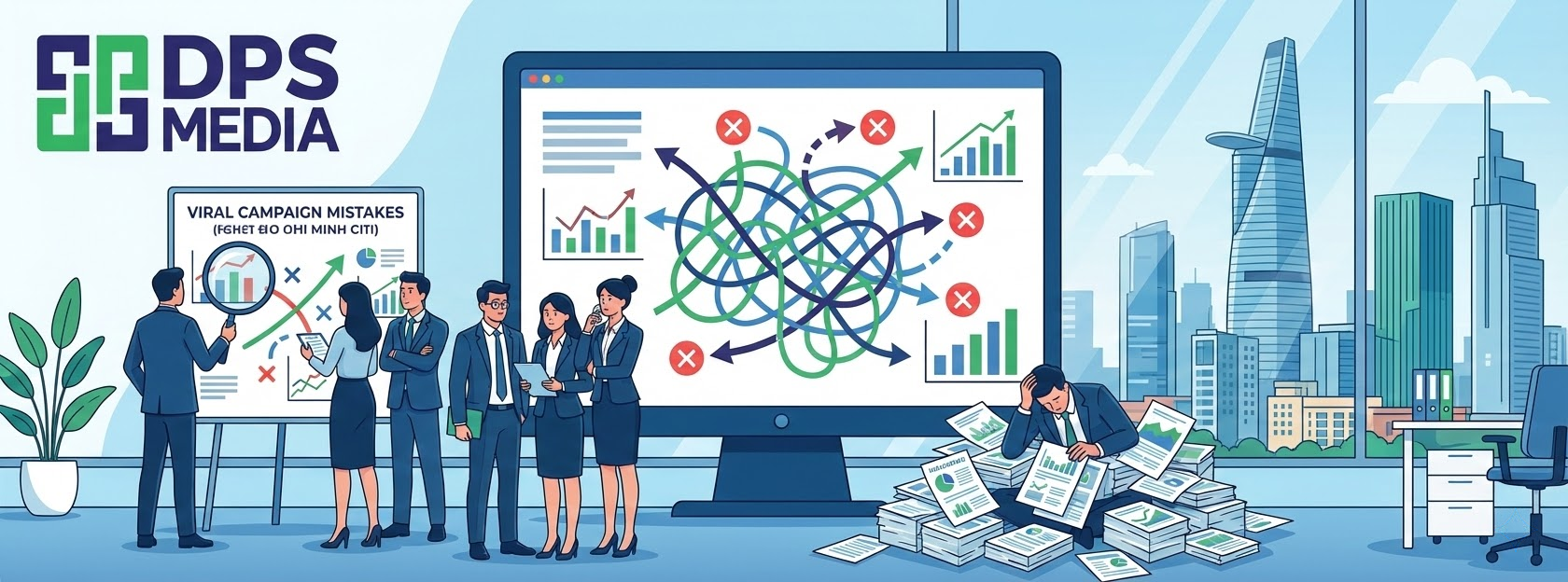
Completely Hand Over to the Agency
Many Startups have the mindset “since we've paid, the Agency must handle everything”. This is the most serious mistake when implementing viral campaign. No one understands your product and customers better than you. Lack of interaction leads to deviated media products.
Participate deeply in the ideation and content approval process. However, participate as a director, not interfering too deeply in technical expertise. Close coordination creates success.
You need to provide full materials, images, and USP (unique selling proposition) to the Agency. The more input information, the better the output. Treat the Agency as a partner, not a hired worker.
Blindly Chase Trends
Not every trend fits your brand. Forcing yourself into an viral campaign unrelated trend will make the brand ridiculous. Today's customers are very discerning; they will spot the “fake sincerity” in content immediately.
Select trends that align with core values. If no suitable trend, create a new one yourself. Don't turn your brand into a bland mix lacking identity.
DPS.MEDIA experts recommend that consistency is more important than fleeting fame. Don't trade brand reputation for a few minutes of glory on social media.
Neglect Customer Care
When viral campaign successful, messages and orders will pour in massively. If the Startup doesn't prepare operations and CSKH well, disaster will happen. Customers will turn to criticism due to slow responses or delivery errors.
From positive viral to media crisis is just a hair's breadth. Prepare chatbot scripts, increase page staff and logistics before hitting the run button. Customer experience is what keeps them.
Don't let customers come out of curiosity and leave disappointed. Turn that massive traffic into sustainable revenue.
No Risk Management Plan
Social media is a double-edged sword. A viral campaign can receive mixed reactions from public opinion. Without a crisis handling script, the Startup will be flustered and may make wrong statements.
Require the Agency to list potential risks (Risk Assessment) and handling plans (Q&A). This preparation helps you calmly face any media storm. Always maintain a humble attitude and listen.
| Common mistake | Potential Consequences | Remedies |
|---|---|---|
| Lack of Interaction with Agency | Misaligned Product | Weekly Periodic Meetings |
| Wrong Trend Following | Loss of Goodwill, Boycotted | Strict Content Review |
| Weak CSKH | Lost Customers, 1-Star Reviews | Prepare Staff, Tools |
| Lack of Risk Management | Crisis Spreads | Build Crisis Script |
Choosing the right Agency and understanding the operating mechanism of viral campaign is a solid foundation for Startups. The 2026 market demands agility, creativity, but also full strategy. Don't hesitate to invest in communications, as it's an investment in the business's future.
With support from Digital Marketing solutions, Startups can compete evenly with the big players. Remember that, according to 2025 statistics, businesses daring to invest in creative content all have superior growth rates. Properly applying behavioral psychology principles will help you win the race for customers' minds.
If you're looking for a reliable partner, DPS.MEDIA with its extensive experience is always ready to accompany. Start building your brand story today.
Conclusion

In summary, to implement a viral campaign successfully, Startups need thorough preparation from mindset to tools. Hiring an Agency is not just hiring someone to do it, but finding a strategic companion. Campaign success depends on the synergy between your product understanding and the Agency's execution ability.
Remember that viral marketing is a powerful tool, but it needs to be used wisely. Don't let fake numbers blind you; focus on real value and conversion rates. A solid brand foundation will help you go the long way.
Hope the above sharing has given you a clearer view on choosing the right partner. Wish your Startup soon has explosive campaigns and reaps brilliant successes in 2026.
Key points to remember:
- Define clear objectives before finding an Agency.
- Check the partner's real-world skills and Portfolio carefully.
- Always have transparent KPIs and tight legal contracts.
- Invest in creative content that hits the right Insights.
- Prepare infrastructure ready to receive large traffic.
- Never neglect media risk management.