



According to a survey by Ahrefs, 90% of top websites use dofollow backlinks to increase credibility.
At DPS.MEDIA, we see many SMEs fail when they do not clearly understand this difference.
Understanding dofollow and nofollow correctly helps businesses leverage quality traffic sources and avoid penalties from Google.
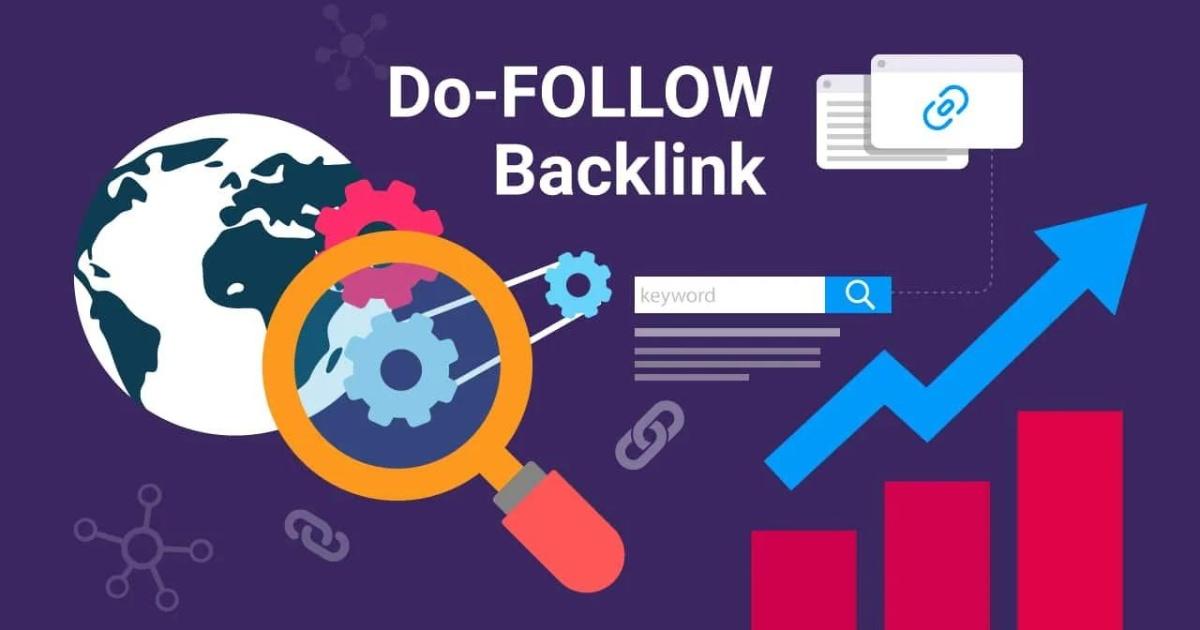
Explore the nature of dofollow and nofollow backlinks in SEO strategy
Backlink dofollow là gì & ảnh hưởng SEO ra sao?
Dofollow backlink is a type of link that allows search engines to follow and transfer SEO value from the source page to the destination page. This type of link can improve keyword rankings and website authority.
Some noteworthy facts:
– Theo Ahrefs (2023), 91% trang xếp top 3 Google có ít nhất 1 backlink dofollow chất lượng.
– Một chiến dịch SEO thành công thường duy trì tỉ lệ 70-80% dofollow links out of the total number of backlinks.
Real-life example: A fashion website in Ho Chi Minh City received a dofollow link from an article on VnExpress. In 2 months, organic traffic increased by over 48% (Google Analytics, 2023).
Tip: Ưu tiên nhận backlink dofollow từ trang có chỉ số DR > 40, cùng ngành.
Nofollow có thực sự “vô dụng” trong SEO?
Nofollow backlink không truyền “link juice” cho SEO, nhưng vẫn có giá trị nhất định:
– Giúp duy trì hồ sơ backlink tự nhiên (natural backlink profile)
– Tạo referral traffic thực tế từ các trang lớn (ví dụ: Facebook, Youtube, Reddit)
- Reduces the risk of being penalized by Google for buying links or manipulating links
However, if the number of nofollow backlinks exceeds 80%, you may have difficulty improving rankings.
Warning: Quá lạm dụng backlink nofollow khiến profile “bất thường” trong mắt bot tìm kiếm.
Checklist: Optimize a diverse backlink strategy
- ✓ Prioritize 70-80% dofollow backlinks
- ✓ Check links with tools like Ahrefs, Screaming Frog
- ✓ Ensure source diversity: news sites, blogs, forums, guest posts
- ✓ Keep the exact anchor text ratio below 25%
- ✓ Avoid building backlinks from unknown sources (PBN, spammy domains)
Quick comparison table: Dofollow vs Nofollow
| Criteria | Dofollow | Nofollow |
|---|---|---|
| Pass SEO value | Yes | No |
| Affects Google ranking | Strong | Low or indirect |
| Prioritized in SEO | ✓ | Only provides secondary support |
Brief conclusion
Both dofollow and nofollow play a role in the overall link building strategy. The important thing is reasonable allocation, quality control, and ensuring alignment with long-term SEO goals.
Takeaway: Không nên tuyệt đối hóa 1 loại backlink – sự linh hoạt và tự nhiên mới là yếu tố được Google đánh giá cao.
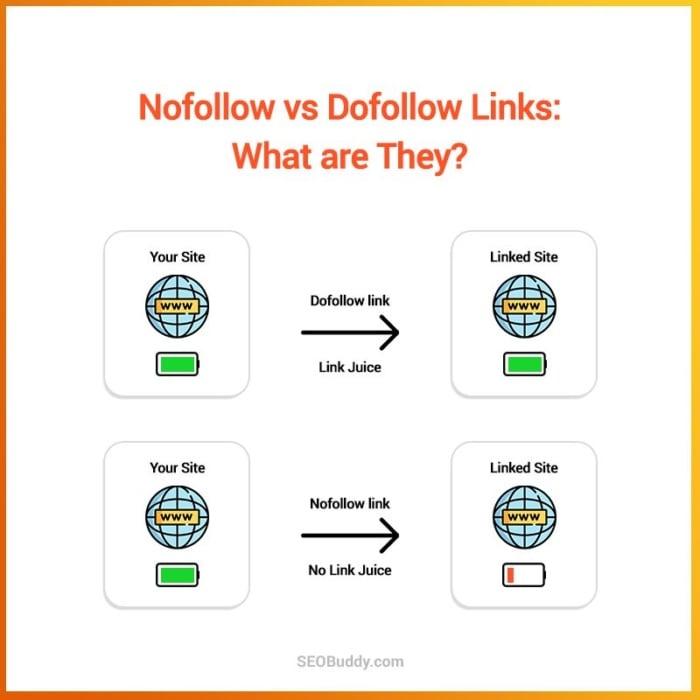
Impact of dofollow backlinks on website authority and ranking on Google
Dofollow backlinks help increase trust in the eyes of Google
Backlink dofollow đóng vai trò là “phiếu bầu tín nhiệm” từ các website khác, giúp thuật toán Google đánh giá website của bạn có giá trị và đáng tin cậy hơn.
– Theo Ahrefs (2023),91% website đứng top 10 trên Google có >50% backlink dofollow.
– backlink từ trang có DA (Domain Authority) >60 tác động mạnh hơn 3 lần so với link từ trang DA thấp (<30). In summary: It’s not just about quantity, but the quality and relevance of dofollow backlinks are the key factors.
Direct impact on ranking and indexing ability
Backlink dofollow giúp Googlebot “đi theo đường dẫn” và crawl nội dung mới nhanh hơn,đặc biệt với website mới ra mắt hoặc chưa có nhiều traffic.
✔️ Real-life example:
An anonymous blog in the education field increased organic traffic by 2,300% in just 4 months after receiving 25 high-quality dofollow backlinks from academic and news sites (source: Backlinko case study, 2022).
Small tip: Prioritize building links from news sites, industry forums, or highly reputable guest posts to increase dofollow effectiveness.
Checklist for building effective dofollow backlinks
- 🔗 Kiểm tra DA/DR của website đặt backlink (DA > 40 là lý tưởng)
- 🔎 Ensure the subject content is relevant to your site's topic
- 📝 Prioritize embedding links within the content rather than placing them in the footer/sidebar
- 🚨 Avoid forum/comment backlink spam as it is easily penalized by Google
Comparison table: backlinks with and without dofollow
| Criteria | Dofollow | Nofollow |
|---|---|---|
| Pass SEO value | Yes | No |
| Impact on ranking | Direct | Indirect (if any) |
| Risk of being flagged as spam by Google | Low if natural | High if abused |
Note the risks when building dofollow backlinks
– Tập trung quá nhiều vào backlink trả phí có thể khiến website bị sandbox.
- The Google Penguin Update in 2016 started penalizing unnatural backlinks.- Dofollow from deindexed websites or unrelated niche sites → counterproductive.
Takeaway
Dofollow backlink không chỉ cải thiện thứ hạng mà còn nâng tầm uy tín nếu triển khai đúng cách, đều đặn và bài bản. Tuy nhiên, “chất lượng hơn số lượng” luôn là nguyên tắc vàng trong SEO bền vững.
The unique role of nofollow backlinks in diversifying link profiles
Nofollow helps create a more natural backlink profile
A backlink profile consisting only of dofollow backlinks is easily considered unnatural by Google. Nofollow backlinks, although they do not directly pass SEO power, still:
– Tăng độ đa dạng tín hiệu liên kết
– Tái hiện liên kết “thật” như từ các trang báo, diễn đàn hoặc mạng xã hội
– Giảm rủi ro bị Google phạt vì thao túng liên kết
According to ahrefs research (2023), over 45% of links to top 10 search result websites are nofollow.
Nofollow backlinks still bring traffic and authority signals
Although they do not pass PageRank, nofollow backlinks still have significant value in:
– Tăng referral traffic từ các nguồn uy tín như Wikipedia, Reddit…
– Củng cố độ tin cậy từ người dùng thực
– Giúp thương hiệu được nhắc đến nhiều hơn trên nền tảng lớn
Real-life example: A tech startup in Ho Chi Minh City increased traffic by over 18% in 2 months just thanks to nofollow backlinks from TechCrunch and Quora.
Minimum checklist when building nofollow backlinks
- ✅ Identify nofollow sources with real traffic (e.g., Medium, LinkedIn)
- ✅ Insert links relevant to the topic, avoid anchor text spam
- ✅ Combine content sharing in communities to increase CTR
- ✅ Theo dõi hiệu suất bằng Google Search Console phần “Linked pages”
Table: Compare the roles of dofollow and nofollow backlinks
| Criteria | Dofollow | Nofollow |
|---|---|---|
| Pass PageRank | Yes | No |
| Potential traffic | Average | High or medium |
| Naturalness of link profile | Low if too many | Cao |
| Easily checked by algorithms | Cao | Low |
Brief takeaway
Nofollow backlinks do not directly pass SEO power, but play a vital role in creating a natural link profile, ensuring safety and helping to increase brand authority in the digital environment.
Common misconceptions when using dofollow and nofollow backlinks
Misunderstanding the role of nofollow backlinks
Many SEOs believe that nofollow links do not bring SEO value, so they often ignore them in link building strategies. However, Google has confirmed (Google Webmaster Central, 2020) that these backlinks still help improve traffic referral and the naturalness of the link profile.
- Nofollow links from major news sites → increase trust even if they don't pass PageRank
- Link diversification helps avoid over-optimization
Overusing dofollow links from all sources
Một số người nghĩ rằng càng nhiều backlink dofollow thì thứ hạng càng cao. Thực tế, backlink kém chất lượng – đặc biệt từ site spam – can lower the domain's quality score or even get penalized by the Penguin algorithm (Google, 2016).
- Ưu tiên backlink dofollow từ trang có DR > 60 (Ahrefs tiêu chuẩn)
- Avoid links in content that is mechanical or irrelevant to the topic
Not calculating anchor text ratio and link profile
using too many dofollow backlinks with anchors containing exact keywords can make the link profile suspicious to Google. According to Backlinko research (2022), top 10 pages usually have a maximum of 30% exact match anchors.
📌 Link profile optimization checklist:
- Maintain dofollow:nofollow backlink ratio ≈ 70:30
- Diversify anchor text: branded, generic, naked URL, LSI
- Regularly audit link profile (once/month)
Quick comparison table: dofollow vs nofollow backlinks
| Criteria | Dofollow | Nofollow |
|---|---|---|
| Pass PageRank | Yes | Not significant |
| Increase SEO ranking | Direct | Indirect |
| Risky impact if abused | Cao | Low |
Ví dụ thực tế & rủi ro thường gặp
A real estate client project once bought 800 dofollow backlinks from spam sites and comment blogs. Result: traffic decreased by 40% in 2 weeks, site was flagged in Search Console for unnatural links.
👉 Need to evaluate website quality and check spam score before building links.
Brief takeaway
Not all backlinks are valuable. For sustainable SEO, it's important to understand the function of each type of link and build an appropriate strategy, instead of chasing the number of dofollow backlinks..
Effective backlink building strategies based on the balance between dofollow and nofollow
Tại sao cần cân bằng dofollow & nofollow?
Backlink dofollow giúp truyền “link juice” và cải thiện trực tiếp thứ hạng SEO, trong khi nofollow lại hỗ trợ đa dạng hóa hồ sơ liên kết – điều Google ưu tiên trong việc đánh giá độ tự nhiên của website.
A 2023 study by SEMrush pointed out that:
– Các trang web top 3 Google thường có tỉ lệ nofollow/dofollow lý tưởng khoảng 25-40%.
– Website với 100% dofollow backlink dễ bị nghi ngờ thao túng thứ hạng.
Diverse sources for building backlinks
Below are the channels that should be combined to create balance:
- Blog comment: Mainly nofollow, but helps expand brand awareness.
- Guest post article: Thường là dofollow – nhưng nên chọn site liên quan về chủ đề.
- Báo chí – PR: May be nofollow, but has high domain authority and increases trust.
- Discussion forums (e.g. Tinhte, spiderum): Low SEO value, but good for backlink diversification.
Checklist: How to properly balance backlink ratios
| Backlink source | Type of backlink | Recommendation rate |
|---|---|---|
| In-depth guest post article | Dofollow | 40-50% |
| Blog comments / forum | Nofollow | 20-30% |
| Press PR / news | Nofollow or reserved | 10-20% |
| Social media (Facebook, LinkedIn) | Nofollow | 5-10% |
Real-life example: Travel industry website
An anonymous travel and resort website in Da Lat once experienced being sandboxed because 90% of its backlinks were from dofollow guest posts. After adding nofollow backlinks from PR articles on Thanh Nien newspaper and some controlled comments on TripAdvisor, the site returned to the top 10 after 3 weeks (Google Search Console, 2024).
Brief takeaway
Balancing dofollow and nofollow backlinks is not just a technical requirement but a long-term SEO strategy to ensure naturalness, sustainability, and effectiveness against Google's increasingly intelligent algorithms.
How to evaluate and optimize backlink quality according to the latest Google guidelines
Approaching backlink evaluation according to Google Search Central
Since the end of 2023, Google not only considers the number of backlinks but also focuses on the quality and context of the links. Backlinks from reputable sites, related content, and high E-E-A-T signals are rated more positively.
Some factors to evaluate backlink quality:
– Content relevance: backlinks should come from sites discussing similar topics
– Domain Authority (DA): should be 40 or more
– Link position: backlinks in main content are more effective than in the footer/sidebar
– Frequency from one domain: many links from one source can reduce trustworthiness
According to ahrefs data (2023), 66.5% of sites without any backlinks from trusted sources rank from page 2 onwards.
Tối ưu chiến lược off-page – Tập trung vào chất lượng, không số lượng
Google hiện ưu tiên “contextual link” – liên kết được đặt trong đoạn văn liên quan, với anchor text tự nhiên. Điều này khiến các chiến lược tạo liên kết kiểu spam (PBN, Exchange Link) không những kém hiệu quả mà còn tiềm ẩn rủi ro bị de-index.
TIP: Đặt liên kết từ bài viết khách (guest post) trên các site có traffic thật giúp cải thiện thứ hạng bền vững hơn so với các “site vệ tinh không có thật”.
Example: A client in the food industry, after shifting 70% of backlinks from forums to high-quality specialized articles over 3 months, increased organic traffic by 48% (Google Analytics, Q4/2023).
Backlink evaluation checklist (for SEOs)
- 🔍 Does it come from a site in the same field or strongly related?
- 📈 Domain có chỉ số DR (>30), traffic (>500 tháng) theo Ahrefs?
- 🖋️ Is the link placed in the main content, not in widgets/ads?
- 🧷 Is the anchor text natural, not repeating keywords?
- 🧹 Has the source page been penalized/de-indexed by Google?
Quick comparison: good backlinks vs poor backlinks
| Criteria | Good Backlink | Poor Backlink |
|---|---|---|
| Relevance | High, same industry or topic | Low, from a random site |
| anchor text | Natural, not keyword spam | Keyword dense, out of context |
| Link placement | Within the article content | Footer, sidebar, comment |
| Domain traffic | > 500 lượt/tháng | No traffic or spam |
Challenges to note when optimizing backlinks
– Việc “disavow” các backlink tiêu cực mất thời gian và không được Google bảo đảm 100% hiệu quả
– Khó kiểm soát liên kết từ scrapper site – các trang tự động sao chép nội dung
- SpamBrain algorithm is increasingly sensitive to artificial backlinks (Google, 2023)
TIP: Theo dõi Google Search Console để phát hiện các site gán liên kết bất thường – báo cáo qua Disavow Tool nếu cần.
Brief takeaway:
Tối ưu backlink không còn là chuyện “càng nhiều càng tốt”, mà là tập trung vào relevance, trustworthiness, and natural placement. Dofollow hay nofollow chỉ là một phần – điều quan trọng là liên kết đó có thực góp giá trị cho người dùng và nội dung hay không.
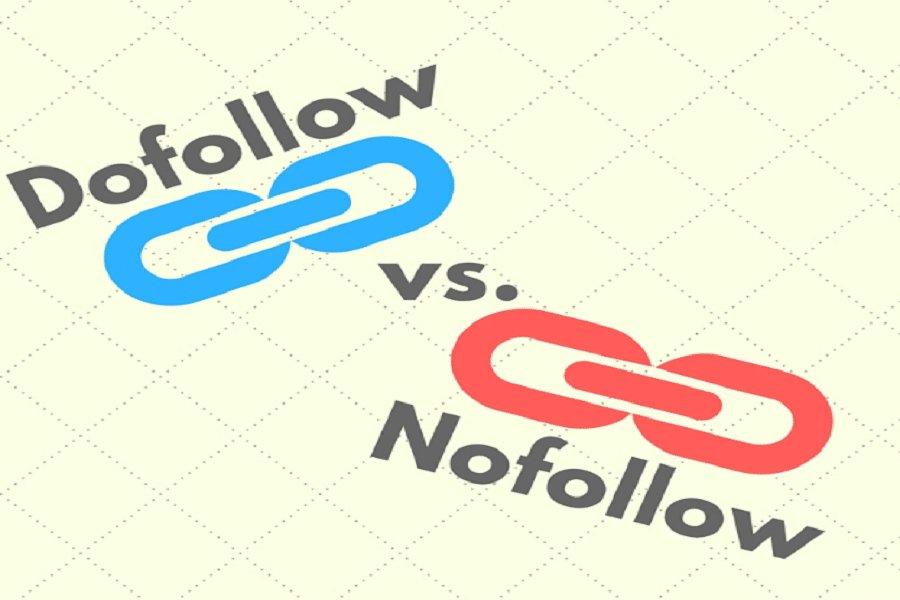
Expert advice from DPS.MEDIA to leverage dofollow and nofollow backlinks in SEO plans for SMEs
Prioritize quality over quantity of backlinks
A study by Ahrefs (2023) showed that 91% of websites receive no organic traffic because they have too many links from low-quality sites. Therefore:
– Tập trung vào backlink dofollow từ các trang có DR (Domain Rating) ≥ 50
– Ưu tiên liên kết từ các nguồn liên quan ngành (ví dụ: blog chuyên ngành, báo chí có uy tín)
– Tránh các trang spam hoặc các link trao đổi không theo ngữ cảnh
Reasonable allocation between dofollow and nofollow
Although dofollow backlinks are the main factor in boosting keyword rankings, nofollow helps increase the naturalness of your link profile and prevents Google from flagging manipulation. Recommended ratio by DPS.MEDIA:
– 70-80% dofollow
– 20-30% nofollow (từ các forum, bình luận blog, mạng xã hội…)
🔍 Real-world example: A local fashion business adjusted its backlink ratio to 75% dofollow, 25% nofollow and increased organic traffic by 42% within 3 months (internal data 2023).
Checklist for effective backlink implementation
- ✅ Identify target keyword groups
- ✅ List 10-15 high-quality websites to place backlinks
- ✅ Chỉ dùng anchor text chính xác < 10% để tránh over-optimization
- ✅ Create valuable content (surveys, raw data, guides) to increase chances of natural links
- ✅ Check backlinks every 2 weeks to remove bad links
Quick differentiation table: dofollow vs nofollow backlinks
| Criteria | Dofollow backlink | Nofollow backlink |
|---|---|---|
| SEO impact | Cao | Indirect/Minor |
| Recognized by Google | Yes | Not direct |
| Common specifics | guest post, article | Social network, comment |
Takeaway:
Kết hợp chiến lược backlink dofollow và nofollow một cách thông minh, SMEs có thể tối đa hiệu quả SEO mà vẫn giữ được tính tự nhiên – điều cốt lõi để phát triển bền vững trên Google.
Share from personal experience
Understanding the difference between dofollow and nofollow backlinks will help you build an effective and sustainable SEO strategy. When used correctly, both contribute to improving website rankings.
Check your link profile again. Balancing dofollow and nofollow will help optimize natural SEO performance.
You can learn more about quality backlink building strategies. Or explore the latest SEO trends this year.
DPS.MEDIA always accompanies Vietnamese businesses on their digital transformation journey. Please share your opinion in the comments section below!