

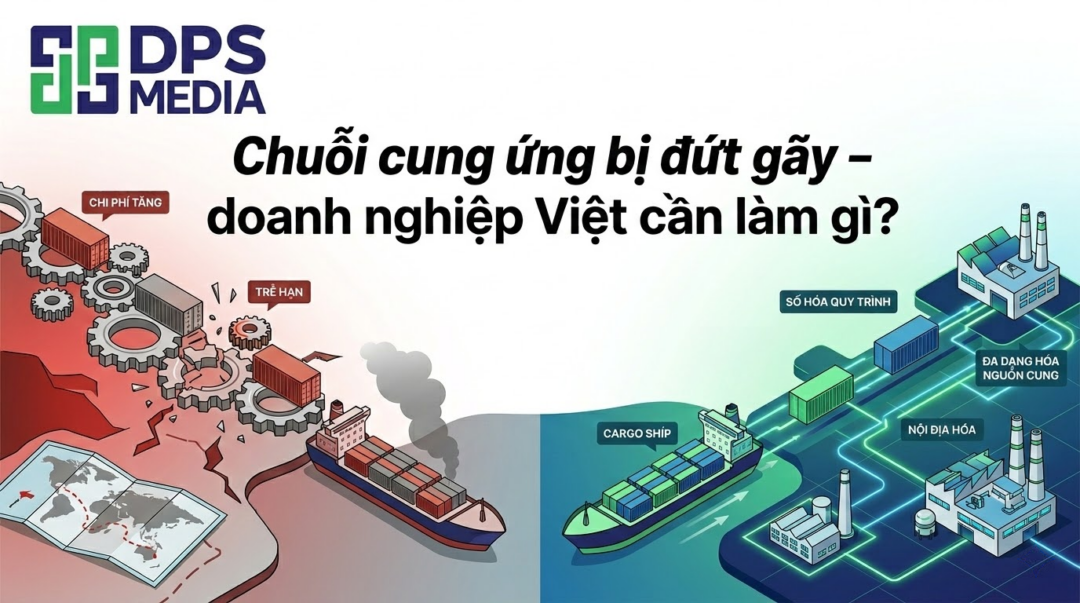

In-Depth Analysis Report: Strategies for Rebuilding and Enhancing the Supply Chain Resilience of Vietnamese Enterprises Against Global Shocks
Part 1: Introduction and Identifying the Patterns of Contemporary Supply Chain Shocks
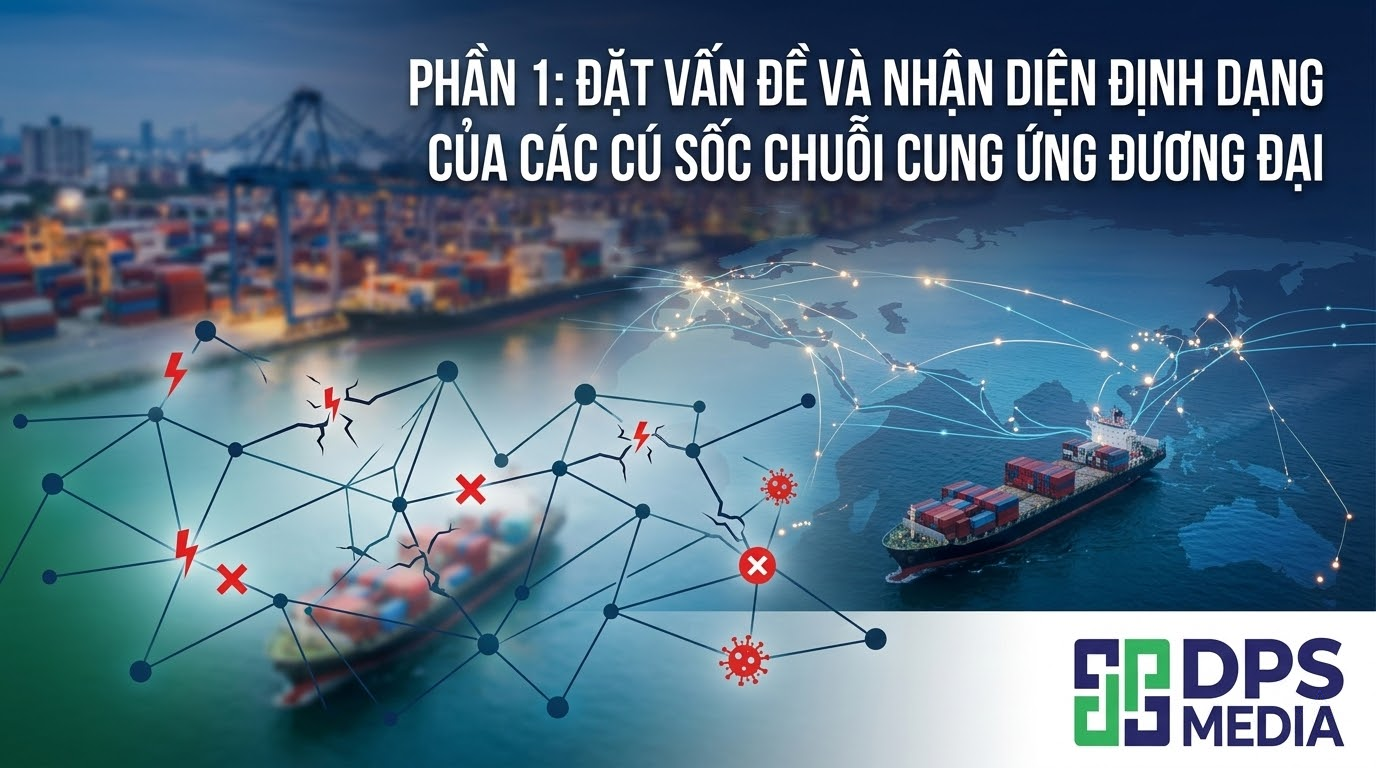
In today's globalized economic environment with multi-dimensional connectivity, the supply chain has moved beyond the simple definition of a physical goods movement route to become the vital circulatory system determining the survival of every economy.
The smooth operation of this system, which has been optimized for decades using the “Just-in-Time” philosophy to minimize inventory costs, is now facing a structural and systemic crisis cycle.
For an economy with extreme openness and deep dependence on both imported raw material flows and export markets like Vietnam, supply chain disruption is no longer a theoretical risk or rare “black swan” event, but has become a practical, periodic constant.
Operational realities over the past half-decade have exposed fatal weaknesses in the resilience of domestic enterprises, requiring a comprehensive reassessment of growth models and risk management methods.
Analyzing the nature of supply chain disruption for the Vietnamese economy requires a multi-faceted perspective, diving deep into each core form of risk.
The supply structures of domestic enterprises have been challenged by two distinct extremes of disruption: on one side, endogenous shocks paralyzing physical production capacity, and on the other, exogenous shocks severing international logistics lifelines.
The first extreme, most clearly revealed during the global pandemic, stemmed from the collapse of the internal production and labor supply ecosystem.
Mechanical defense measures, such as the “3-on-site” model (production, dining, and resting on-site) implemented in 2021 with the goal of creating industrial fortresses completely isolated from the pandemic to maintain supply chains and protect export orders, provided painful lessons about the limits of corporate management capacity.
The implementation process of this model pointed to a deep divergence in adaptability between regions and business scales.
In Northern industrial hubs like Bac Giang and Bac Ninh, this model achieved certain levels of success thanks to the extremely strict operational discipline of factory owners, combined with close and timely resource coordination support from local authorities.
However, the picture in key economic provinces in the South was completely opposite, where the “3-on-site” model witnessed a chain-reaction collapse.
The core cause lay not only in the speed of the pandemic's spread but also in the severe lack of social infrastructure and on-site medical capacity at most factories.
Many businesses, despite employing thousands of workers, could not arrange enough safe accommodation space, leading to closed environments becoming catalysts that rapidly multiplied F0 cases within a few days.
With internal medical capacity near zero and the local public health system in a state of severe overload, a series of factories belonging to key associations such as Textiles, Electronics, and Wood Processing had to close and stop operations completely.
The paralysis of this production sector not only caused immediate financial losses but also created a terrifying long-term risk: the permanent loss of strategic export market share to competing nations with more stable supply chains.
This proves that a sustainable supply chain cannot be maintained solely by physical barriers but must be built upon a flexible ecosystem closely integrated with human resource and health crisis management scenarios.
The second extreme, and also the most complex contemporary challenge, stems from the escalation of geopolitical conflicts distorting the global logistics structure.
The maritime crisis in the Red Sea, which erupted in early 2024 and persisted with far-reaching consequences, is a prime example of the fragility of transcontinental trade flows.
Hostilities in the Middle East quickly moved beyond political boundaries to transform into a massive shipping and marine insurance shock, particularly centered around the geostrategic bottleneck of the Strait of Hormuz—the vital corridor connecting the Persian Gulf with the Indian Ocean.
Facing increased security warnings and the risk of direct attacks, a series of giant container shipping corporations holding dominant global market shares, such as Maersk, Hapag-Lloyd, CMA CGM, and MSC, simultaneously had to establish emergency statuses.
The mandatory solution for these shipping lines was to suspend cargo acceptance at many Gulf ports, and more seriously, to abandon the traditional Red Sea – Bab el-Mandeb – Suez Canal maritime corridor to reroute voyages around the Cape of Good Hope at the southern tip of Africa.
This forced change in route caused a domino effect devastating the entire cost and time structure of Vietnam's import-export supply chain.
Transit times were extended by 7 to 14 days depending on the destination, severely reducing the actual operational turnover of the global fleet.
A direct derivative consequence was a terrible shortage of empty container equipment, especially reefer containers which have slow turnover and strict technical circulation requirements.
In a very short time, distorted supply-demand mechanisms pushed freight rates from Asian routes to Dubai up nearly twofold, accompanied by emergency war risk surcharges imposed at unreasonable levels, ranging from $1,500 to $4,000 per container unit.
The impact of this macro shock on Vietnam's spearhead economic sectors has been extremely fierce, especially for the agriculture, forestry, and fishery group.
Seafood, an industry bringing in tens of billions of dollars in export turnover annually, has very strict technical requirements regarding storage temperature ranges and sea transit time limits.
The prolonged voyage combined with shipping lines tightening reefer container acceptance not only eroded the entire profit margins of businesses due to exploding logistics costs but also placed high-value seafood shipments (such as salmon, shrimp, tuna) exported to Middle Eastern, European, and American markets at risk of quality degradation and total damage.
The resonance of these two risk extremes sets a strategic mandate: Vietnamese enterprises can no longer operate with a linear supply chain mindset based on cheap labor costs and stable freight rates.
Instead, a major overhaul of industrial structure, technology, and management is a prerequisite for survival.
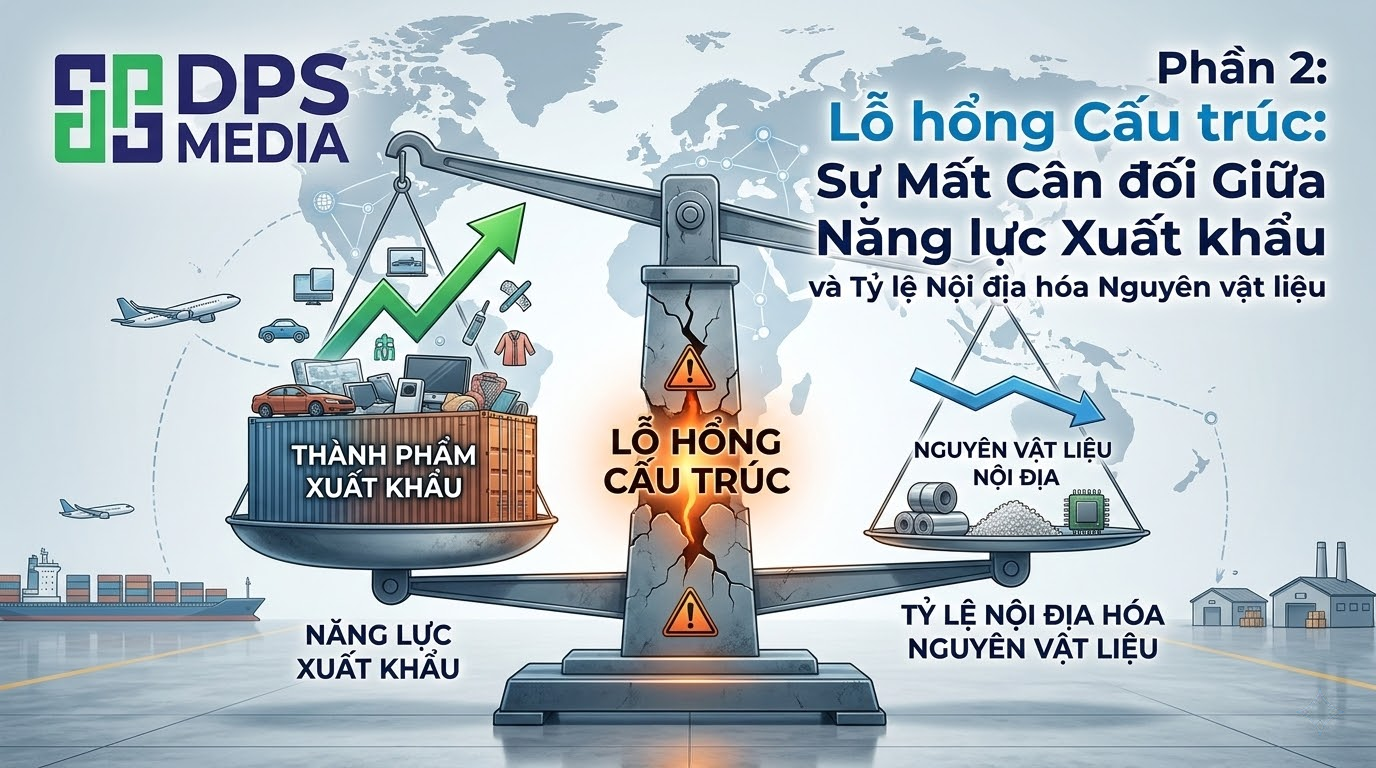
Part 2: Structural Vulnerabilities: The Imbalance Between Export Capacity and Localization Rate of Raw Materials
The defensive and recovery capability of any national supply chain against global fluctuations is always proportional to the level of autonomy over raw material inputs.
In Vietnam, a structural paradox exists: the meteoric growth of export turnover is not accompanied by a corresponding development of supporting industries.
This gap turns many of the nation's billion-dollar industries into fragile processing links at the bottom of the “Smiling Curve” in the global value chain, easily vulnerable to any tightening of supply from upstream trade partners.
An in-depth analysis of the textile and garment industry, one of the most important export pillars, will clarify this structural vulnerability.
The strategic report shows that by 2025, Vietnam's textile and garment exports are projected to reach a massive scale, estimated at approximately $41.6 billion, with a commercial presence spanning 138 markets worldwide.
In this market structure, the United States maintains its position as the largest importer, accounting for 41% to 42% of total turnover, with the remainder distributed among key markets including member countries of the Comprehensive and Progressive Agreement for Trans-Pacific Partnership (CPTPP), the European market (via EVFTA), Japan, South Korea, and China.
However, hidden behind these brilliant revenue figures is a life-or-death challenge: heavy dependence on imported raw materials.
Statistics indicate that the localization rate, or the ability to self-supply raw materials constituting products for the domestic textile industry, currently only struggles to reach 51% to 52%.
This shortage of nearly half of the input demand forces the country to spend a huge amount of foreign currency, estimated at about $17 billion in 2025 alone, to import finished fabrics for the sewing stage.
The inability to master fabric supply is not merely a matter of foreign currency drain; it also creates massive pressure that neutralizes the strategic competitive advantages the Government has worked hard to negotiate through new-generation Free Trade Agreements (FTAs).
Most important agreements like CPTPP or EVFTA apply very strict rules of origin, typically the “Yarn Forward” or “Fabric Forward” rules.
This means that for Vietnamese garment products to enjoy a 0% preferential tax rate when entering partner markets, the entire process from yarn spinning, weaving, dyeing/finishing to sewing must be performed in Vietnam or intra-bloc countries of the agreement.
Being forced to import fabric from non-bloc countries (such as China) for processing makes the majority of Vietnamese textile products fail to meet origin standards, thereby losing the tariff advantage over competitors.
Diving into the causes of this shortage, experts point to an institutional and perceptual bottleneck: the “pollution fear” perspective at some local governments.
The weaving and dyeing stage, which is the heart of fabric production, consumes large amounts of water and emits chemicals.
Although modern digital technology and environmental treatment equipment today are fully capable of professionally treating dyeing wastewater according to the world's strictest ecological standards, making it no longer an ecological obstacle, the defensive mentality of local authorities still creates huge barriers in planning land funds and licensing specialized industrial parks.
Without a change in management thinking to decisively solve the problem of fabric supply autonomy, the position of Vietnam's textile and garment industry will be continuously eroded on the international stage.
This structural vulnerability is even more severe for the electronics industry—a sector positioned as the country's high-tech spearhead.
According to the latest updated reports in 2025, the localization rate of Vietnam's electronics industry is standing at an alarming figure: only reaching 15%.
This exposes a harsh reality that 85% of the value constituting electronic products, including semiconductor circuits, motherboards, touch screens, and other sophisticated component clusters, must be imported directly from global supply chains.
Unlike textiles, disruption in the electronics industry is much more systemic and immediate.
Factories in Vietnam are mostly undertaking the final assembly stage (Assembly, Test, and Packaging).
When global chip shortages or air/sea transport disruptions occur, entire billion-dollar assembly lines in Vietnam are forced to stall simply because of the lack of a semiconductor component measuring a few nanometers.
The 15% localization rate is clear evidence that Vietnamese enterprises have not yet been able to absorb, master, and transfer core technologies.
To establish a clearer assessment matrix of this reality, the report summarizes structural data into the analysis table below:
Solving this gap requires intervention from a macro planning vision.
Centralizing raw material production through the formation of large-scale chain-linked industrial clusters, investing in synchronized centralized waste treatment infrastructure, and having selective foreign direct investment (FDI) attraction mechanisms accompanied by mandatory technology transfer terms are vital steps to establish a physical defense layer for the supply chain.
Part 3: Reshaping Logistics Infrastructure: From Bottlenecks to Competitive Drivers
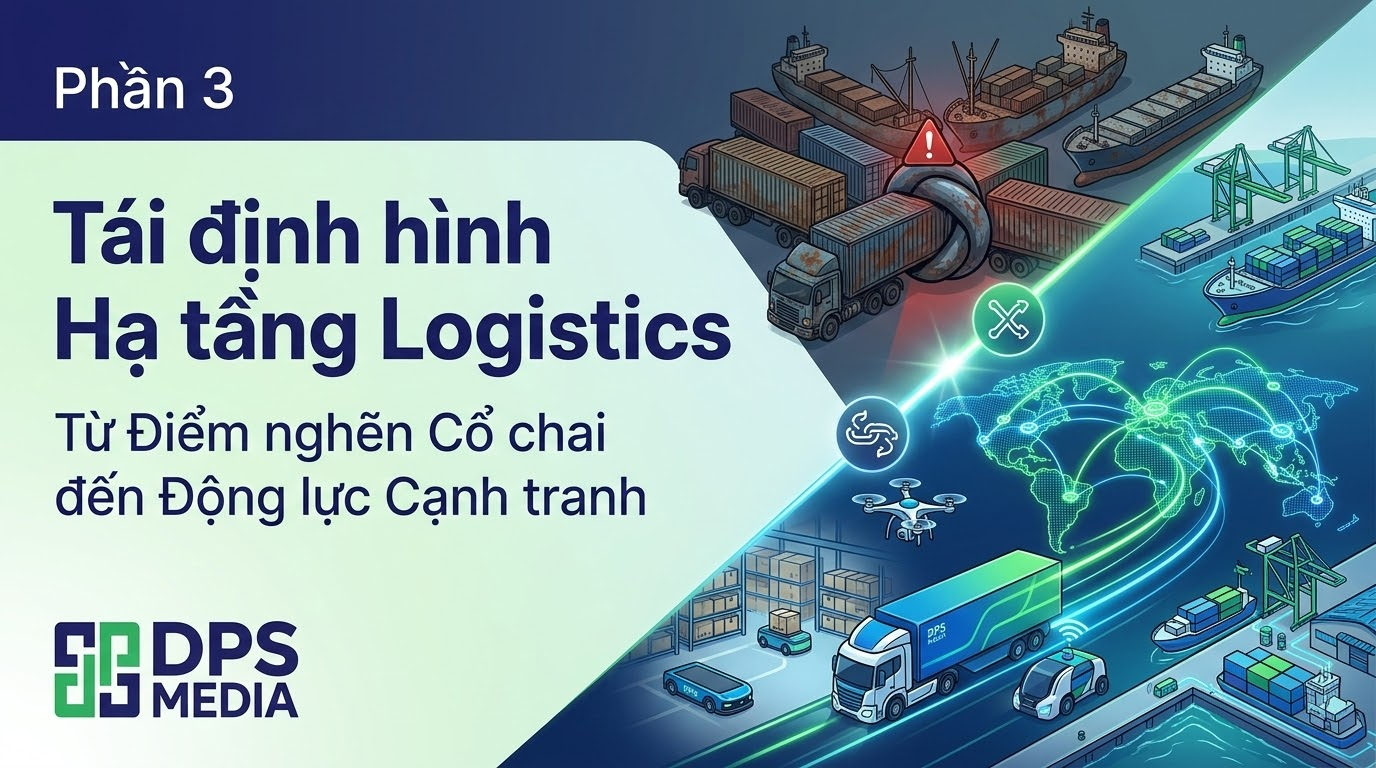
If raw materials are the flesh and blood, then the logistics infrastructure system is the circulatory system ensuring the circulation of the entire economy.
Weaknesses in movement, warehousing, and distribution not only exacerbate the impact of external shocks but also neutralize the price competitiveness of domestic products in the international market.
The Vietnam Logistics Report 2024 provides a comprehensive and independent assessment of the current state of this vital service industry, while pointing out systemic flaws.
The recent explosion of the e-commerce market and e-logistics services has acted as a massive catalyst, pushing the Vietnamese logistics industry to rapidly improve service quality to become more professional and efficient.
Despite the market's enormous growth potential, the internal reality of service providers reveals many weaknesses.
The report emphasizes that the majority of Vietnamese logistics enterprises are currently stuck in a small-scale and fragmented state.
Severe limitations in long-term investment capital and outdated technological platforms have hindered their capacity, leaving them almost unable to operate and compete fairly in the international market, mostly serving as tier 2 or tier 3 subcontractors for multinational logistics corporations.
Additionally, domestic logistics services are witnessing fierce competition and "price bleeding" among providers.
The lingering effects of the Covid-19 pandemic, which disrupted and broke global supply chains, still persist, creating heavy pressure on businesses with fragile profit margins.
Therefore, upgrading infrastructure is not just about expanding roads or building more warehouses, but a process of operational optimization and improving supply chain performance to ensure financial safety margins.
Recognizing this bottleneck, the Government has taken decisive intervention steps by issuing the Decision to amend and supplement Decision No. 200/QD-TTg regarding the Action Plan to improve competitiveness and develop logistics services in Vietnam until 2025.
This is considered a macro-strategic plan to re-establish the industry's position.
The plan has specified ambitious goals with clear quantitative indicators: by 2025, the contribution of logistics services to Gross Domestic Product (GDP) must reach 5% to 6%.
The growth rate of this service industry is expected to remain high, from 15% to 20% annually, accompanied by the goal of promoting the logistics outsourcing rate among manufacturing enterprises to 50% to 60%.
This goal is extremely important because outsourcing to professional logistics companies (3PLs/4PLs) will help manufacturing enterprises free up financial and human resources to focus maximally on their core competency: product innovation.
Furthermore, one of the most vital targets is reducing the logistics cost ratio to a level equivalent to 16% to 20% of GDP.
Minimizing these costs is decisive, as a high-performance domestic logistics system with low warehousing costs will create a solid financial buffer, giving import-export businesses enough room to absorb unexpected shocks in global maritime freight rates (such as the $4,000/container surcharge in the Red Sea analyzed previously).
Parallel to this, Vietnam aims to upgrade its national logistics service capacity to reach the top 50 or higher on the Logistics Performance Index (LPI) ranked by the World Bank.
The implementation roadmap of the Plan is methodically designed with clear milestones: continue implementing tasks until 2024, summarize implementation in 2025, and prepare the groundwork to build the Vietnam Logistics Service Development Strategy for the 2025–2035 period, with a vision extending to 2045.
To realize these ambitious macro goals, relying on manual labor and traditional methods is impossible.
The participation in creating shared infrastructure by the nation's leading postal, telecommunications, and technology corporations serves as a breakthrough lever.
The official opening of Viettel Post's first and largest smart sorting technology complex in Vietnam in early 2024 is a testament to this direction.
This sorting complex system is built as an automated nerve center for goods circulation, marking a transition from telecommunications/digital infrastructure to national logistics infrastructure.
Operating this complex directly contributes to the goal of optimizing logistics to reach 5-6% of GDP by 2025.
In terms of applied technology, Viettel Post's complex is a sophisticated combination of three core systems: the AGV (Automated Guided Vehicle) network, the Wheel Sorter Matrix system, and the Cross-belt Sorter system.
The special technological highlight lies in the AGV robot fleet, designed for 100% automated sorting of goods with difficult-to-handle physical characteristics: light, thin, non-standard shapes, and rolling capabilities.
This is a very specific segment of goods that accounts for a large proportion of e-commerce platforms, which has always been a nightmare for manual sorting due to high loss and damage rates.
Meanwhile, the Wheel Sorter Matrix system is fine-tuned to handle heavy loads and large parcels, while the Cross-belt Sorter system—a conveyor belt with active control and extreme capacity—handles the routing of standard parcels and Cash on Delivery (COD) packages.
Businesses participating in the supply chain can connect their Application Programming Interface (API) systems directly with units like Viettel Post to exploit the power of this shared infrastructure.
Leveraging these world-class automation complexes helps businesses radically reduce storage time, lower error rates, optimize cash flow, and eliminate over-dependence on manual transshipment zones that are highly sensitive to personnel disruptions.
Part 4: Digital Transformation and Technology Integration: The Central Nervous System Creating Agility

In the context of a highly uncertain business environment (VUCA), possessing abundant raw material supplies and large warehouse infrastructure only addresses the “muscle” of the supply chain.
To be able to identify, analyze, and react instantly to shocks, businesses must equip their systems with a “central nervous system.”.
This is the role of the Digital Transformation process.
This process is not merely the application of computer software, but a comprehensive redesign of logistics processes, models, and operations to improve performance, flexibility, and real-time responsiveness.
It spans from implementing individual solutions to building entirely new logistics models based on data ecosystems.
According to data from the 2025 Supply Chain Digital Transformation Trends Survey report published by the international auditing firm PwC, the adaptation and reshaping of the supply chain is being driven by four key technological pillars.
The first and most far-reaching pillar is Artificial Intelligence (AI) and Machine Learning.
Survey data indicates that approximately 57% of businesses have actively integrated AI into part or all of their organizational structure.
In supply chain management, AI is not just an automation tool, but a superior risk analysis engine.
By digesting and analyzing Big Data collected from thousands of logistics touchpoints, sales history, macroeconomic trends, and even weather information, AI has the ability to provide highly accurate forecasts of sudden market demand changes.
This system can help businesses identify potential bottlenecks on transport routes early, predict fluctuations in material prices, and thereby make automated decisions on increasing or decreasing inventory levels to cope with disruption scenarios.
The second pillar is the automation of complex business management processes through Enterprise Resource Planning (ERP) systems.
Modern ERP systems are no longer static data repositories, but act as a central brain seamlessly integrating every link in the chain: from production planning based on line capacity, procurement management, and warehouse space monitoring, to real-time global transport tracking.
By creating a continuous "single source of truth," ERP significantly reduces manual intervention, eliminates data entry errors, and provides leaders with real-time analytical reports for accurate crisis management decisions.
The third pillar is Blockchain technology, which brings the core value of transparency and absolute traceability that cannot be tampered with.
In the context of complex supply chains with many Tier 2 and Tier 3 suppliers, applying Blockchain helps businesses verify the origin of raw materials, build a reliable supply network, absolutely secure transaction data, and minimize the risks of commercial fraud or the infiltration of counterfeit goods.
Finally, the role of the Internet of Things (IoT) is indispensable, providing a network of smart sensors attached directly to goods and transport vehicles.
IoT helps collect and optimize the use of environmental resources and plays a vital role in providing continuous temperature and humidity data to protect exported agricultural and aquatic shipments.
The technological application landscape in the Vietnamese market is currently showing differentiation led by several spearhead sectors.
The Finance - Banking sector is pioneering with the development of Mobile Banking, Internet Banking, e-wallets, and the integration of Blockchain into transaction security, creating a seamless contactless payment flow for the supply chain.
Similarly, the E-commerce sector applies Big Data to personalize consumer behavior and uses AI in smart warehouse management and shopping trend prediction.
In industrial manufacturing, the Smart Factory model is gradually taking shape to improve international competitiveness, while the Healthcare and Education sectors are also transforming strongly with electronic medical records, telemedicine, and smart education platforms.
Specifically for the Logistics sector, the application of GPS satellite positioning, combined with Blockchain to ensure supply chain security and AI for warehouse coordination, has helped optimize routes and significantly reduce costs and delivery times.
However, the digital transformation picture for small and medium-sized enterprises (SMEs), which account for the overwhelming majority of the economy, is a worrying reality with many challenges and barriers.
The digital transformation status report indicates that most businesses are aware of the urgency of this process, but the execution is extremely confused.
Notably, up to 48.8% of businesses reported that they had implemented some digital tools or software but later decided to stop using them.
The reason is that these solutions were chosen hastily, were incompatible with core operating processes, or were only seen as a temporary measure (like remote work during the Covid-19 pandemic) rather than a long-term restructuring strategy.
Fragmented and disjointed digital transformation is common.
While over 40% of businesses apply technology well in accounting systems, and some prioritize multi-channel sales, marketing, and customer care (stages that directly generate revenue), the operational management system is left open.
Over 40% of businesses use almost no specialized digital software for inventory management, order tracking, or human resource management.
At the same time, over 60% of units only make limited use of vehicle and transport management systems, with only 23% achieving a high level of application.
This lack of direction is evidenced by the data: only 6.2% of surveyed businesses completed the task of clearly defining digital transformation goals, and only 7.6% established methodical short-term and long-term implementation roadmaps.
The rate of truly mastering technological tools and management software to automate data analysis and business decision-making remains very modest at 2.2%.
Most activities currently labeled as “digital transformation” merely stop at the step of raw data digitization (storing documents on computers at a rate of 35.3%).
To fundamentally resolve this barrier, experts from PwC recommend that businesses need to change their investment philosophy.
The digitization strategy must be built comprehensively, clearly defining business goals (reducing logistics costs, increasing warehouse operation accuracy, improving the buying experience), and establishing a roadmap from small-scale testing and efficiency evaluation before investing in system-wide scaling.
Businesses cannot grope in the dark alone but need to actively seek companionship and strategic support from specialized digital transformation consulting units to standardize operational processes before applying software, avoiding the “digitization of flawed processes” which wastes enormous resources.
Part 5: Digital Human Resource Bottlenecks and Change Management in Organizational Culture
If the technology system is the toolkit, then the human factor is the core execution capability that determines the success or failure of any effort to strengthen supply chain resilience.
A modern ERP platform or an AI supply-demand forecasting system will be worthless if the personnel lack the ability to operate it or have an attitude of resistance and boycott toward new tools.
In-depth research on the reality of Vietnamese enterprises shows that the largest and most difficult barrier to overcome in the transformation process lies not in financial or technological difficulties, but in a severe shortage of human capacity and conservatism in corporate culture.
Regarding Digital Literacy, Vietnamese businesses are experiencing a crisis in the shortage of high-quality experts.
The survey points to an alarming reality: up to 56.3% of businesses maintain a team of fewer than 3 personnel responsible for researching, designing, and implementing digital transformation strategies.
The situation in technology execution departments is no better, with 43.7% of businesses having fewer than 3 specialists working in the Information Technology (IT) department.
The shortage of engineers with deep understanding of Big Data architecture, AI operation, Blockchain structure analysis, and IoT network deployment leaves businesses disoriented when faced with a range of market solutions.
Without strong enough internal human resources for appraisal, many businesses implement incorrectly and suffer failure.
However, the most dangerous hidden sabotage barrier is the resistance from mindset and organizational culture.
In a supply chain environment where processes have been executed by habit for decades, introducing digital tools means breaking the old order, reshaping evaluation processes, making personal data transparent, and eliminating cumbersome intermediate steps.
This immediately triggers psychological defense mechanisms and resistance from employees.
Employees often harbor a sense of concern and anxiety that AI algorithms and automation software will directly diminish their individual roles, interfere with traditional ways of working, and ultimately eliminate them from the production line.
A lack of comprehensive understanding of the long-term benefits of digital transformation causes them to react with conservatism, delay approaching tools, or in many cases, engage in non-cooperation and silent opposition.
Therefore, the digital transformation process to respond to supply chain disruptions must be approached as a Change Management strategy focused on organizational culture.
Experience from leading consulting organizations confirms that a strong, open corporate culture that encourages creativity, accepts risk, and nurtures innovation will help personnel easily adapt to technological waves.
The solution to clear this bottleneck must start with building awareness and effective internal communication.
Senior management must act as ambassadors conveying transparent, clear messages through workshops, knowledge sharing, and using success stories from industry peers to inspire.
Employees need to understand that technology is created to automate boring manual tasks, thereby empowering them to take on higher-value analysis, control, and decision-making roles, not to replace them.
At the same time, policies protecting workers' rights during the reorganization of the apparatus when applying digitization (typical examples being commitments at Vietnamese commercial banks) need to be clearly stipulated in writing to create absolute peace of mind.
The next breakthrough step is Upskilling.
Businesses need to allocate budgets for long-term investment in intensive internal training programs, not only teaching technical operations but also training soft skills and data analysis mindsets for employees.
The close combination, forming a tripod between Technology, Process, and People, accompanied by a change in leadership philosophy from micro-management control to empowerment orientation, is the only formula to create a workforce ready to face all fluctuations.
Part 6: Integrating Sustainability Standards and ESG Responsibility into Supply Chain Operations
In the new era of trade, supply chain resilience is measured not only by the ability to supply goods continuously but is also rigorously evaluated through the lens of Sustainability and Environmental, Social, and Governance (ESG) standards.
Digital transformation and sustainable development have become two sides of the same coin, complementing and promoting each other.
From the perspective of intellectual property and innovation management experts, the supply chain is becoming the core arena for innovative business models in the context of increasing global environmental protection and technical barrier regulations.
In demanding markets like Europe and North America, proving that goods are produced using environmentally friendly processes, without exceeding carbon emission limits, and without violating labor ethics is a mandatory passport.
Therefore, applying digital technology solutions is not only to solve internal performance problems but is also a powerful tool supporting businesses in achieving the United Nations' Sustainable Development Goals (SDGs).
Specifically, the intersection of Big Data and the Internet of Things (IoT) provides businesses with the power to track, monitor, and optimize the consumption of natural resources (electricity, water, raw materials) on every square meter of the factory and warehouse.
Through smart algorithms, waste in the production process is eliminated, thereby directly reducing carbon emissions and industrial waste into the environment, helping businesses easily comply with international ecological regulations.
At the same time, technological solutions such as smart codes/barcodes or Blockchain distributed ledgers are applied to make the entire product traceability record transparent.
Publicly disclosing the product life cycle history from farm/factory to the end consumer is not only a sharp weapon against counterfeit goods and commercial fraud but also a way to consolidate prestige and position a positive brand image in the eyes of customers and institutional investors.
Participating in global green transformation initiatives, utilizing renewable energy, practicing sustainable agriculture, and establishing smart urban infrastructure (such as the GIC 2025 strategy) will create a strong defensive barrier, helping Vietnamese businesses maintain market share and improve competitiveness in the global value chain.
The digital gap between large corporations with completed logistics systems and the group of small and medium-sized enterprises, especially in the agricultural sector, needs effort to narrow over the next 5 to 10 years through synchronized policies ranging from technology to finance.
Part 7: Legal Framework, Institutional Support Policies, and Market Diversification Strategies
Macroeconomic fluctuations such as global logistics disruptions or changes in international trade regulations are beyond the control of any single enterprise.
To respond to challenges at this level, participation in creating protectionist policy frameworks, legal support, and resource financing from State management agencies plays a crucial role as a vital protective umbrella.
Delays in delivery due to maritime transport disruptions often lead to risks of exploding international trade contract disputes, penalties for delivery violations, and insurance complications.
In order to establish a solid legal protection corridor for the domestic business sector, the Ministry of Industry and Trade officially issued Decision No. 332/QD-BCT, approving a Comprehensive Legal Support Plan for enterprises, with a special focus on small and medium-sized enterprises and business households in 2026.
Based on the principles of focused, transparent support and avoiding resource waste, the Plan sets the ultimate goal of equipping businesses with the ability to access current legal regulations related to investment, production, and import-export activities quickly, fully, and accurately.
By mastering sanctions and defense mechanisms, businesses can anticipate and neutralize potential legal risks.
On a macro level, state management agencies such as the Department of Legal Affairs and the Department of Planning and Finance are assigned to lead a comprehensive review and evaluation to propose improvements to the 2017 Law on Support for Small and Medium-Sized Enterprises, while simultaneously drafting a new decree to replace Decree No. 55/2019/ND-CP to create a more synchronized and substantive inter-sectoral legal support mechanism for the 2026–2030 period.
Support is expanded to the most specialized and practical aspects, including regulations on goods circulation, e-commerce management, international economic integration agreements, competition monitoring, and especially trade defense dossier preparation skills.
The National Legal Portal will be continuously updated with case law, administrative violation handling decisions, and guidance documents for resolving legal issues proposed by businesses to create a reference database, combined with multi-platform media programs, digitalization, and specialized dialogue forums to directly answer questions for business owners.
Parallel to strengthening the legal defense line, the risk dispersion strategy through diversifying export markets and seeking alternative supply sources is also being strongly promoted by the Government.
Decision No. 3838/QD-BCT approving the 2026 National Trade Promotion Program of the Ministry of Industry and Trade is a strategic orientation document in this effort.
The program mobilizes public resources to provide financial and organizational support for enterprises and cooperatives to directly participate in large-scale international trade fairs and exhibitions both domestically and abroad.
Core activities include organizing specialized trade missions abroad for market research, welcoming foreign buying delegations (buyers) to Vietnam to directly appraise production capacity, and organizing business matching (B2B) conferences between domestic suppliers and global distributors.
Notably, to adapt to the possibility of physical movement being hindered by disruptions, the Program focuses on expanding trade promotion activities on digital platforms, combining face-to-face and online interaction methods (hybrid events).
The program also allocates resources for intensive training on improving product design and development capacity, promoting the protection of geographical indications, and building Vietnam's collective trademarks on the international stage.
The combination of these promotion campaigns with efforts to maximize and effectively exploit tariff reduction advantages from Free Trade Agreements (FTAs) will help businesses boost exports to markets with high standard requirements such as Japan and South Korea.
Diversifying the customer network helps businesses avoid dependence on any single economic region or maritime route, minimizing the risk of localized collapse.
This support mindset is also being transformed into breakthrough actions at the local level.
Typically, in Dong Thap, the provincial government has clearly identified the philosophy of taking science, technology, digital transformation, and innovation as the key driving force to enhance the competitiveness of the business community in the 2025-2030 socio-economic planning cycle.
Demonstrating strong political commitment, Dong Thap province has proactively allocated a huge budget, with a total estimate of over 6,492 billion VND for the 2026-2030 period, dedicated to investing in creating scientific and innovation resources.
This financial source acts as a seed fund, directly financing support programs for small and medium-sized enterprises to implement pilot system digitalization, R&D for new product development, and the realization of creative business models.
The local government directly designs specific incentive mechanisms to attract FDI investment projects using high technology, environmentally friendly clean technology production, and gives special priority to projects capable of creating large added value accompanied by commitments to link and develop supply chains with local satellite businesses.
The rhythmic coordination from central macro-legal policies to local empirical financial support funds will create a safe ecosystem, serving as a solid foundation for the business community to carry out system restructuring.
Part 8: 5-Step Strategic Action Roadmap to Overcome Supply Chain Disruptions
Based on a comprehensive analysis of structural bottlenecks and the current state of technology application, along with recommendations from experts at national orientation forums, Vietnamese enterprises, regardless of differences in scale or industry, need to establish a highly disciplined action roadmap.
According to Mr. Pham Van Quan – a national digital transformation expert, the process of rebuilding supply chains through digital application towards sustainable development needs to be strictly implemented according to a loop of 5 core strategic steps.
Step 1: Comprehensive survey and assessment of the organization's current digitalization status: This is the “pulse-taking” phase for the business.
Before making any investment in software or equipment, businesses must conduct a measurement of transformation readiness based on pillars: the leadership's strategic vision, current information technology infrastructure capacity, data security levels, internal supply chain flexibility, and especially the awareness and capacity of the personnel team.
This assessment helps businesses accurately determine where they stand, what the percentage of foreign-dependent raw materials is, and at which stage critical breakdown points might occur to serve as a basis for investment decisions.
Step 2: Planning and building a long-term digital transformation roadmap with quantitative goals: Based on the diagnosis results in Step 1, businesses cannot approach digitalization with temporary, short-term, and fragmented software solutions.
It is necessary to build an overall structural strategy, organically linked to core strategic business goals (e.g., target of reducing warehousing and transport costs by 15%, increasing the domestic supply autonomy rate to 40%, shortening disruption incident handling time to 24 hours).
The roadmap must be clearly phased from small-scale pilot projects (Proof of Concept) in one department, evaluated for lessons learned, before funding expansion across the entire supply network.
In this step, in addition to technology solutions, restructuring the business organization to suit new processes is a prerequisite.
Step 3: Selecting appropriate technology platforms, software, and creating an ecosystem: The chosen technology must be a tool that solves the business's specific "pain points" rather than chasing flashy trends.
If a business faces obstacles in coordinating internal information between the warehouse and the production workshop, investing in an ERP central management system is the top priority.
If product characteristics are perishable, such as agricultural and aquatic products, integrating IoT sensors and a logistics management system with route optimization algorithms must be placed above all else.
More importantly, no business can withstand challenges alone.
They need to build collaborative solutions, proactively connecting into an open ecosystem with technology startups, consultants, capital investors, shared logistics infrastructure partners (such as Viettel Post), and state policy-making agencies to create a collective strength linkage chain.
Step 4: Retraining human resources and implementing cultural change management: The success or failure of the project lies in this step.
Businesses need to focus on investing budgets to organize training courses and skill conversion for the workforce to help them become familiar with, master, and adapt to new software systems.
The training process includes not only technical operation skills but must be linked with communication to change mindsets, eliminate the fear of being replaced by technology, and spark the spirit of innovation within each individual employee.
Step 5: Establishing a performance measurement mechanism and continuous refinement and improvement: All supply chain management activities must be quantified through key performance indicators (KPIs) monitored in real-time on system dashboards.
Every delivery delay, sudden cost increase, or defect rate must be recorded and data-analyzed to find the root cause.
From there, businesses continuously refine software algorithms, adjust operating processes, and improve system quality to achieve the most sustainable optimal state.
Summary
The state of supply chain disruption is no longer a temporary shock, but has been redefined as a permanent risk constant in a volatile global economic-political environment.
From structural vulnerabilities caused by the health pandemic that collapsed physical production models to the far-reaching consequences of geopolitical conflicts that paralyzed strategic maritime arteries, the supply systems of Vietnamese enterprises are being tested to their final limits.
Dangerous structural gaps, especially the heavy dependence on imported raw materials while the localization rate in key industries such as textiles and electronics remains at alarmingly low levels, have made the nation's export advantages extremely fragile.
To be able to transform from a passive defensive state to a proactive stance in creating resilience and recovery, the Vietnamese business community must implement a comprehensive rebuilding revolution.
The core of this restructuring is the aggressive promotion of the digital transformation process, making artificial intelligence, big data technology, ERP automation processes, and Blockchain transparency the nervous system controlling every goods movement decision.
However, technology only exerts its power when placed on the foundation of an open corporate culture, where employees' psychological barriers are removed through transparent communication strategies and large-scale human resource retraining programs.
The accompaniment of legal frameworks from the state in minimizing trade contract risks, combined with market expansion promotion programs and investment in shared smart logistics infrastructure by national corporations, will be important supports to clear cost bottlenecks.
Finally, deeply integrating sustainable development and ESG standards into every link of the supply chain is not only a solution to comply with the ecological barriers of Western markets but also a strategic card to reposition Vietnamese brands.
Only when solving the problem synchronously from institutions, infrastructure, technology to people, can Vietnamese enterprises build a flexible, resilient supply chain, ready to confront and rise strongly amidst the whirlwinds of risks in the new era.
References:
- Proposing urgent solutions to support businesses and avoid disruptions in production and supply chains
- Exporting enterprises face a series of risks from Middle East hostilities...
- Clearing the raw material “bottleneck,” creating motivation for localization in the textile and garment industry
- Bao Moi – 24H News, read the latest news fastest today
- Vietnam Logistics Report 2024 – Valoma
- Action plan to improve competitiveness and develop logistics services
- Viettel Post opens Vietnam's first smart sorting technology complex
- Determined to lead the Vietnamese logistics market with technology – Viettel Post
- PwC announces survey on digital transformation trends in the supply chain...
- Digital transformation for small and medium-sized enterprises in Vietnam – Current status and policy recommendations
- Digital transformation in the supply chain | Nhan Dan Online Newspaper
- Ministry of Industry and Trade implements legal support plan for businesses...
- Ministry of Industry and Trade approves the 2026 National Trade Promotion Program
- Supporting businesses to take advantage of FTAs, expanding export markets
- Dong Thap uses science and technology as a lever to elevate businesses
- Improving operational efficiency and competitiveness for Vietnam's logistics industry